NG Interface in 5G Explained
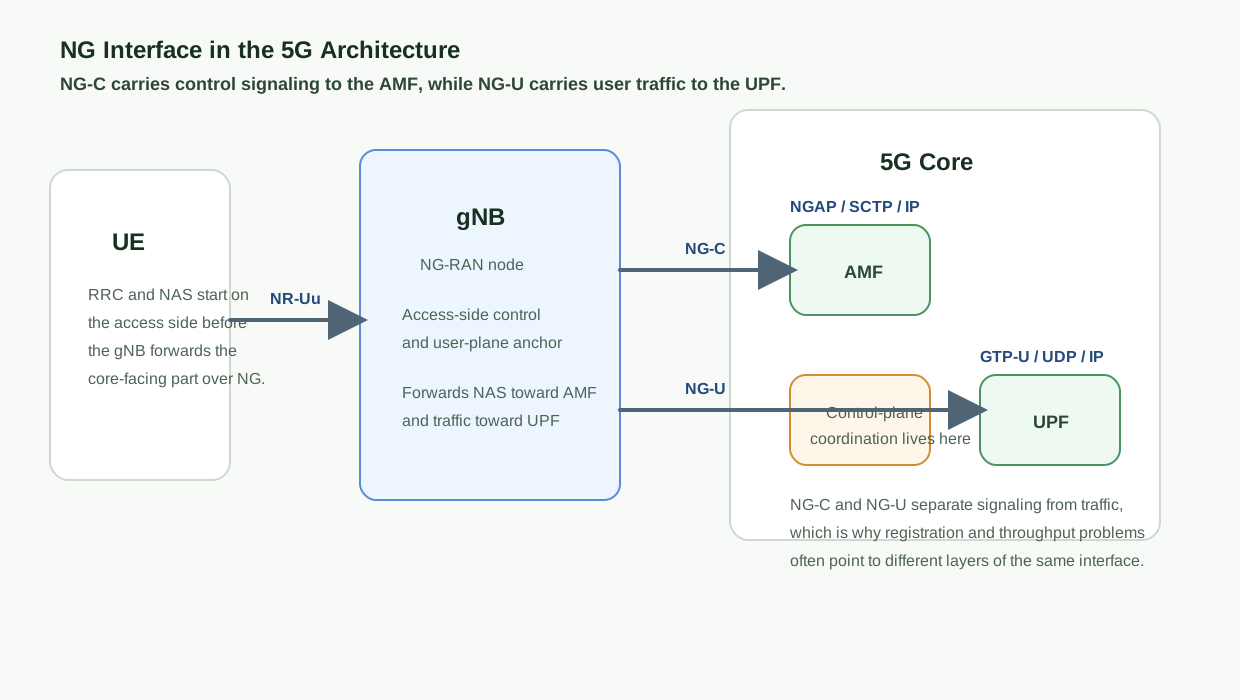
The NG interface is the interface between the NG-RAN and the 5G Core. It is split into NG-C between the gNB and the AMF for control-plane signaling, and NG-U between the gNB and the UPF for user-plane traffic.
This split is one of the clearest architectural ideas in 5G. The control path that carries access signaling, NAS transport, paging, and UE context handling is separated from the data path that carries actual user packets toward the 5GC and data networks.
Quick facts
| What it is | The NG interface connects NG-RAN to the 5G Core. |
|---|---|
| Control-plane side | NG-C connects the gNB to the AMF and typically carries NGAP over SCTP/IP. |
| User-plane side | NG-U connects the gNB to the UPF and typically carries GTP-U over UDP/IP. |
| Main engineering use | It is the access-to-core boundary for registration, paging, UE context control, mobility coordination, and user-plane activation. |
| What to pair it with | Use this page with 5G NGAP messages, initial registration, PDU session establishment, and handover call flows. |
| Specification baseline | 3GPP TS 38.401, TS 38.413, and TS 23.501. |
Why this matters
If a 5G procedure leaves the radio side and becomes visible to the core, it usually crosses NG. Registration, paging, context setup, handover coordination, and PDU session resource control all depend on this boundary between the access network and the 5GC.
That makes NG one of the most useful interfaces for practical troubleshooting. A clean radio setup with a bad NG path often looks like a core problem to the user, even though the fault may actually be in NGAP, SCTP, transport reachability, or NG-U forwarding between the gNB and UPF.
Where it fits in the network
| Side | Role around NG |
|---|---|
| NG-RAN | The gNB uses NG-C toward the AMF and NG-U toward the UPF, making NG the main access-to-core boundary. |
| AMF | Handles access and mobility signaling on the control-plane side of NG through NG-C. |
| UPF | Handles user-plane forwarding on the NG-U side and passes traffic toward data networks or IMS-facing paths. |
| UE procedures | The UE does not speak NG directly, but many RRC and NAS procedures become NG-visible once the gNB forwards them toward the 5GC. |
NG interface in the 5G architecture
Main nodes / functions / entities
| Node or function | What it does around NG |
|---|---|
| gNB | Terminates the radio side, transports NAS toward the AMF, holds RAN-side UE context, and forwards user-plane traffic toward the UPF. |
| AMF | Acts as the control-plane anchor on NG-C for access management, mobility signaling, paging, and UE context coordination. |
| UPF | Acts as the user-plane peer on NG-U, carrying packets between the access network and the wider 5G data path. |
| UE-associated NG context | On the control side, NGAP procedures track individual UE state with identifiers that let the gNB and AMF correlate the same UE context. |
| Non-UE-associated signaling | Some NG-C procedures affect the whole gNB to AMF relationship rather than one UE, such as setup, reset, and interface-level management. |
NG-C and NG-U
| Part | Connects | Plane | Main purpose |
|---|---|---|---|
| NG-C | gNB and AMF | Control plane | NAS transport, UE context setup and release, paging, mobility signaling, and PDU session resource control coordination. |
| NG-U | gNB and UPF | User plane | User packet transport, downlink and uplink forwarding, and mobility-related path continuity after session setup. |
The simplest way to read NG is to separate control decisions from traffic forwarding. If the procedure is about signaling, IDs, paging, context, or coordination, think NG-C. If the issue is about packets, throughput, or path continuity, think NG-U.
Protocols used
| NG side | Typical stack | What to watch |
|---|---|---|
| NG-C | NGAP over SCTP over IP | Control-plane failures often come from missing NG setup, broken SCTP association, procedure rejection, reset scope, or bad UE-context handling. |
| NG-U | GTP-U over UDP/IP | User-plane failures often look like packet loss, missing tunnels, path-switch mismatch, or UPF forwarding issues after otherwise healthy control signaling. |
On NG-C, NGAP is the main signaling family to know. On NG-U, the engineering view is usually a GTP-U transport path between the gNB and the UPF. This split is why a registration trace and a throughput trace often point to different problem layers.
Used in procedures
- 5G Initial Registration shows how the first NAS message becomes NG-C signaling toward the AMF.
- 5G PDU Session Establishment shows the split between control on NG-C and traffic activation on NG-U.
- 5G Paging Procedure shows how the AMF triggers access-side paging through the NG control path.
- 5G N2 Handover shows mobility behavior when the core participates directly in the handover path.
- 5G Xn Handover is a useful companion for comparing NG-based mobility with direct inter-gNB coordination.
Common troubleshooting notes
| Symptom | What to check on NG |
|---|---|
| gNB cannot anchor 5G access | Check whether NG setup completed successfully and whether the SCTP control path to the AMF is healthy. |
| Registration stalls after RRC setup | Check whether the first NAS message was forwarded into NG-C and whether the AMF accepted the UE-associated context. |
| Control looks healthy but traffic is missing | Check NG-U path creation, GTP-U reachability, UPF forwarding, and whether the user-plane path was switched correctly after session setup or mobility. |
| Paging fails | Check the AMF-to-gNB control path, paging coordination on NG-C, and the handoff from core trigger to radio-side execution. |
| Mobility breaks during handover | Check whether the issue is on direct RAN coordination, NG-C signaling toward the AMF, or the NG-U path update toward the UPF. |
| Many UEs fail at once | Look for reset scope, transport outage, or non-UE-associated NG-C failure rather than a single UE-context problem. |
FAQ
What is the NG interface in 5G?
The NG interface is the interface between the NG-RAN and the 5G Core. It is split into NG-C for control plane and NG-U for user plane.
What is the difference between NG-C and NG-U?
NG-C connects the gNB to the AMF for control-plane signaling, while NG-U connects the gNB to the UPF for user-plane traffic.
What protocol runs on NG-C?
The main signaling protocol on NG-C is NGAP, typically carried over SCTP and IP.
Does NG carry NAS signaling?
Yes. NAS signaling between the UE and AMF is carried across the access side and becomes NG-C signaling when the gNB forwards it toward the AMF.
Is NG the 5G successor to LTE S1?
Yes, conceptually. It is the main access-to-core interface in 5G, but it is split into NG-C and NG-U to match the 5GS control-plane and user-plane separation.
Key takeaways
- The NG interface is the main access-to-core interface between the gNB and the 5GC.
- NG-C carries control signaling toward the AMF, while NG-U carries user traffic toward the UPF.
- NGAP is the main protocol family to know on NG-C, while GTP-U is the practical user-plane transport to know on NG-U.
- Registration, paging, context setup, session resource control, and handover all become easier to read once the NG split is clear.
- Good radio behavior does not guarantee good NG behavior, so NG is one of the first places to look when access and core symptoms overlap.