5G Home-Routed Roaming Registration Call Flow
5G home-routed roaming registration is the registration path used when a UE enters a visited network but still depends on home-network subscriber and policy control to complete service access.
It combines visited NR access, roaming-aware NAS registration, and home-side validation into one end-to-end registration workflow.
Introduction
Roaming registration is rarely just a local access problem. It is a cross-network procedure where identity, authentication, slice entitlement, and service restrictions can all depend on home-side decisions.
That means a clean radio trace can still hide a roaming-policy failure, and a successful Registration Accept can still lead to limited later service if the allowed roaming profile is narrower than expected.
What Is Home-Routed Roaming Registration in Simple Terms?
- What starts the procedure: A roaming UE needs fresh 5GS registration in a visited PLMN.
- What the UE and network want to achieve: Complete registration through the visited network while applying the home-routed roaming policy model.
- What success looks like: The UE receives Registration Accept, returns Registration Complete, and can continue to allowed services.
- What failure means: Roaming authorization, authentication, or policy coordination failed before the UE reached usable service state.
Why this procedure matters
Roaming failures often waste engineering time because the visible symptom sits in the visited access trace while the real root cause lives in home-side policy, identity, or authorization logic. A complete article keeps both sides of the registration story in view.
Quick Fact Sheet
| Procedure name | 5G Home-Routed Roaming Registration |
|---|---|
| Domain | 5G roaming registration with home-routed core control and service anchoring |
| Main trigger | Roaming UE powers on or needs fresh registration while visiting a foreign PLMN |
| Start state | UE is camped on a visited network but does not yet have usable 5GS roaming registration context |
| End state | UE is registered through the visited access network with home-routed control and service treatment as allowed by roaming policy |
| Main nodes | UE, visited gNB, visited AMF, home UDM or AUSF, home policy and session functions |
| Main protocols | RRC, NAS, NGAP, roaming control interfaces, authentication and subscription signaling |
| Main success outcome | UE completes roaming registration and can use service under the allowed home-routed policy model |
| Main failure outcome | Registration is rejected because roaming is not allowed, identifiers mismatch, or home-network policy or authentication cannot be completed |
| Most important messages | Registration Request, Authentication Request/Response, Security Mode, Registration Accept, Registration Complete |
| Main specs | TS 23.501, TS 23.502, TS 24.501, TS 29.510 family, TS 38.300 |
Preconditions
- The UE is in a visited PLMN with coverage and allowed basic access.
- A roaming agreement and subscriber entitlement exist between home and visited networks.
- The UE can provide valid identity context for roaming registration.
- Home-side subscriber and authentication systems are reachable from the visited core path.
Nodes and Interfaces
Nodes involved
| Node | Role in this procedure |
|---|---|
| UE | Starts registration in the visited network, presents roaming-related identity context, and completes NAS authentication and security. |
| Visited gNB | Provides NR access and transports the roaming registration NAS messages toward the visited core side. |
| Visited AMF | Anchors the access-side registration flow in the visited network and coordinates with home-side subscription or authentication functions. |
| Home UDM / AUSF | Provide subscriber data, authentication support, and roaming authorization logic from the home network perspective. |
| Home policy and session functions | Define what slices, services, or session behavior are allowed once registration succeeds under home-routed treatment. |
Interfaces used
| Interface | Path | Role |
|---|---|---|
| NR-Uu | UE <-> visited gNB | Carries the radio access path for the roaming registration procedure. |
| N1 | UE <-> visited AMF | Carries Registration Request, authentication, security, and acceptance signaling. |
| N2 | visited gNB <-> visited AMF | Carries access-side UE context and NAS relay signaling. |
| Roaming control interfaces | visited core <-> home core | Carry subscriber, authentication, and roaming-policy coordination needed for registration. |
End-to-End Call Flow
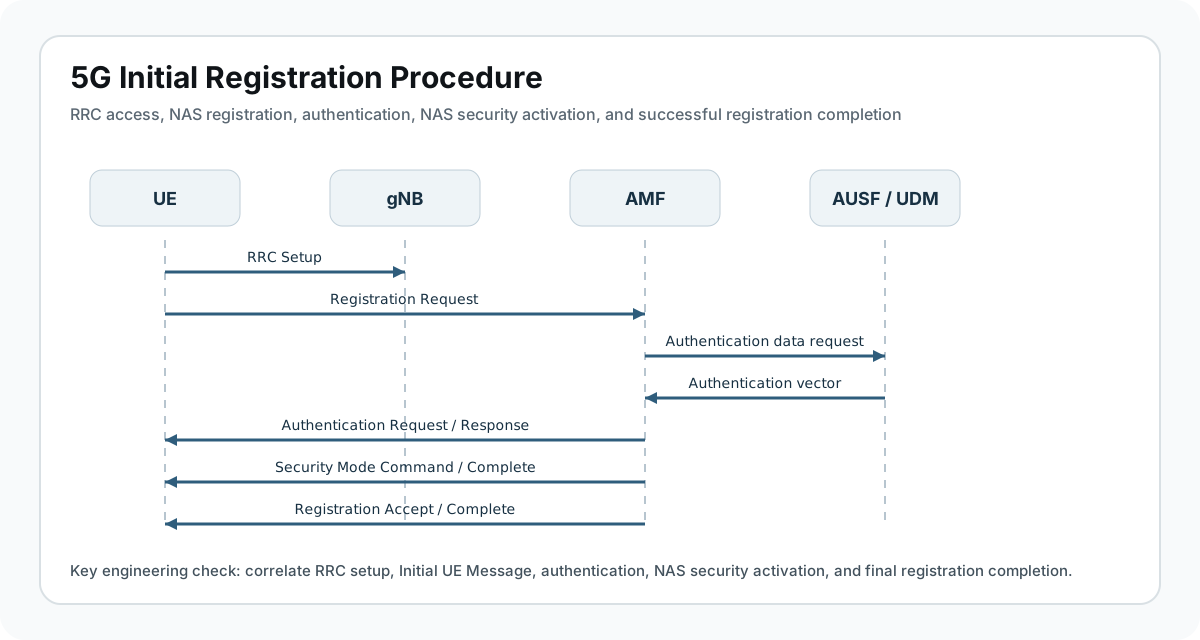
UE             visited gNB         visited AMF        home functions
|                  |                  |                    |
|-- Registration Request -----------> |                    |
|                  |----------------->|-- subscriber/auth ->|
|                  |                  |<-- allow / vectors --|
|<-- Authentication / Security ------|                    |
|<-- Registration Accept ------------|                    |
|-- Registration Complete ---------->|                    |
|==== roaming registration active under policy ==========>|
Major Phases
| Phase | What happens |
|---|---|
| 1. Visited access selection | The UE selects the visited PLMN and creates the access path needed to start roaming registration. |
| 2. Registration start | The UE sends Registration Request with the identity and roaming context needed by the network. |
| 3. Home-side validation | The visited core coordinates with home-side subscriber and authentication functions to validate the roaming subscriber. |
| 4. NAS security and acceptance | After successful validation, security is activated and the network returns Registration Accept. |
| 5. Completion and service readiness | The UE confirms with Registration Complete and can proceed to service under the allowed home-routed roaming model. |
Step-by-Step Breakdown
UE camps on the visited network
Sender -> receiver: UE -> visited gNB
Message(s): Cell selection and access establishment
Purpose: Prepare the radio path for a roaming registration attempt in the visited PLMN.
State or context change: The UE is ready to send the first NAS registration message through the visited network.
Note: Correct PLMN selection is essential. Many apparent registration problems are really wrong-network-selection issues at the start.
UE sends Registration Request
Sender -> receiver: UE -> visited gNB -> visited AMF
Message(s): Registration Request
Purpose: Start the 5GS registration using identity and roaming context relevant to the visited location.
State or context change: The visited AMF creates an early roaming registration context and begins validation.
Note: Inspect identity form, roaming indication, and slice or service context because they heavily influence what the visited network can do next.
Visited and home networks validate the subscriber
Sender -> receiver: Visited AMF <-> home UDM / AUSF
Message(s): Subscriber and authentication coordination
Purpose: Confirm that the UE is allowed to roam and that the home network supports the requested registration path.
State or context change: The roaming attempt moves from provisional access toward authenticated subscriber treatment.
Note: Many roaming failures are not radio or NAS formatting problems at all, but policy or authorization mismatch between home and visited sides.
Security activation and Registration Accept
Sender -> receiver: Visited AMF -> UE
Message(s): Authentication Request, security procedure, Registration Accept
Purpose: Protect the roaming NAS exchange and deliver the accepted registration context.
State or context change: The UE gains a protected, valid 5GS registration under the roaming model.
Note: Always verify that the roaming acceptance also matches the slices and service restrictions expected for the subscriber.
UE completes registration
Sender -> receiver: UE -> visited AMF
Message(s): Registration Complete
Purpose: Confirm that the UE accepted the returned registration context and can continue toward service setup.
State or context change: The roaming registration is finished and ready for subsequent session procedures.
Note: A missing Complete can leave the trace looking half-successful even though the UE never truly closed the registration transaction.
Important Messages in This Flow
| Message | Protocol | Direction | Purpose in this procedure | What to inspect briefly |
|---|---|---|---|---|
| Registration Request | NAS | UE -> visited AMF | Starts the roaming registration procedure. | Inspect identity, requested registration behavior, and context relevant to roaming authorization. |
| Authentication Request | NAS | Network -> UE | Challenges the UE after home-side subscriber validation begins or completes. | Check that the roaming authentication path is progressing rather than stalling on authorization. |
| Registration Accept | NAS | visited AMF -> UE | Confirms successful registration in the roaming environment. | Inspect allowed service or slice context and roaming-related timer values. |
| Registration Complete | NAS | UE -> visited AMF | Closes the roaming registration transaction. | Verify that it reaches the network if later service still fails unexpectedly. |
Important Parameters to Inspect
| Parameter | What it is | Where it appears | Why it matters | Common issues |
|---|---|---|---|---|
| SUPI / SUCI or temporary identity | The identity presented for roaming registration. | Registration Request | Home and visited networks must correlate the subscriber correctly. | Identity mismatch causes confusing roaming rejection. |
| Visited PLMN / TAC context | Where the UE is trying to register. | Access and Registration Request | Explains which roaming agreement and visited policy set should apply. | Wrong PLMN selection invalidates the whole procedure. |
| Allowed NSSAI and roaming restrictions | Slices and services the roaming UE may use. | Registration Accept and home or visited policy handling | Crucial for understanding what the UE may do after registration. | Registration can succeed while later service fails due to slice restriction. |
| Authentication and subscription state | Home-side subscriber approval and AKA context. | Home validation and NAS security path | Determines whether the UE may continue beyond early registration. | Home authorization failure is often misread as generic NAS failure. |
| Roaming model implications | How home-routed policy affects later session handling. | Overall roaming context | Explains why service and routing differ from local registration behavior. | Ignoring the roaming model causes wrong troubleshooting assumptions later. |
Success Criteria
- The visited network relays a valid Registration Request with correct roaming identity context.
- Home-side subscriber and authentication checks succeed.
- The UE completes NAS security and accepts the roaming registration context.
- Later service procedures inherit the expected roaming restrictions and entitlements.
Common Failures and Troubleshooting
| Symptom | Likely cause | Where to inspect | Relevant message(s) | Relevant interface(s) | Likely next step |
|---|---|---|---|---|---|
| Registration is rejected in the visited network | Roaming is not allowed, identity is inconsistent, or home-side authorization failed. | Registration Request context and home or visited policy logs. | Registration Request, Registration Reject | N1, roaming interfaces | Start with roaming authorization, not radio blame. |
| Authentication never progresses cleanly | Home-side subscriber or security coordination is incomplete or failing. | Authentication timing and home-network interaction. | Authentication Request/Response | N1, roaming interfaces | This is often a cross-network coordination issue rather than a UE-only problem. |
| Registration Accept arrives but service remains restricted | Roaming registration succeeded, but slice or service policy limits later procedures. | Allowed NSSAI, roaming restrictions, and later session requests. | Registration Accept | N1, policy | Registration success does not guarantee unrestricted service. |
| UE never finalizes with Registration Complete | The UE did not accept the context fully or the return message was lost. | NAS completion and access continuity after Accept. | Registration Complete | N1, NR-Uu | Check whether the UE really moved into the expected registered state. |
Related Pages
Related sub-procedures
- 5G Initial Registration
- 5G Network Slice Selection
- 5G PDU Session Establishment
- 5G Authentication Procedure
Related message reference pages
Related troubleshooting pages
FAQ
What is home-routed roaming registration?
It is the 5G registration path used when a roaming UE attaches through a visited network while home-network control or policy remains central to the service model.
Why is it different from normal registration?
Because the registration depends on both visited access behavior and home-side subscriber or policy validation.
What confirms success?
A good Registration Accept followed by Registration Complete and later allowed service behavior under the roaming profile.
Can registration succeed but service still be limited?
Yes. Roaming restrictions can allow registration while limiting slices, sessions, or certain services afterward.
What should I inspect first?
Start with the identity in Registration Request, the visited PLMN, and the home-side authorization path.