5G RRC Release Procedure Call Flow
5G RRC Release is the procedure that ends an active connected-state radio session when the network no longer needs to keep dedicated radio resources allocated.
It is where a UE leaves active radio handling and returns to a reachability model based on paging, resume, or fresh setup later.
Introduction
This procedure is normal and useful, but it is also a common place where engineers first notice bad timer tuning or poor return-to-service behavior.
That is why release should be read together with what happens next: paging, RRC Resume, or a new RRC Setup.
What Is RRC Release in Simple Terms?
- What starts the procedure: The network decides active connected-mode radio resources are no longer required.
- What the UE and network want to achieve: End dedicated radio use while keeping the UE reachable for future service.
- What success looks like: The UE exits connected mode cleanly and can later return to service when needed.
- What failure means: Release happens prematurely or the later reachability and recovery path does not work.
Why this procedure matters
RRC Release is a state-control checkpoint, not just a teardown message. It strongly influences latency, paging success, service continuity perception, and how often the network must rebuild access later.
Quick Fact Sheet
| Procedure name | 5G NR RRC Release Procedure |
|---|---|
| Domain | 5G NR connected-state exit and radio resource cleanup |
| Main trigger | The network decides the active RRC connection is no longer needed or wants the UE to leave connected mode |
| Start state | UE is in RRC Connected with active or recently active context |
| End state | UE leaves connected mode and moves to idle or inactive behavior depending on the release design |
| Main nodes | UE, gNB, optionally AMF as part of the broader service state |
| Main protocols | RRC, NGAP, paging context |
| Main success outcome | Radio resources are released cleanly and the UE transitions into the intended lower-activity state |
| Main failure outcome | Release comes unexpectedly, the UE cannot continue service afterward, or repeated setup loops follow |
| Most important messages | RRC Release, Paging, later RRC Resume or RRC Setup |
| Main specs | TS 38.331, TS 38.300, TS 23.502 |
Preconditions
- The UE is already in connected mode.
- The network believes active radio resources can be reduced safely.
- Later reachability methods such as paging remain available.
- The service pattern permits leaving connected mode or the network accepts the tradeoff.
Nodes and Interfaces
Nodes involved
| Node | Role in this procedure |
|---|---|
| UE | Receives the release, applies the new lower-activity behavior, and later follows paging or fresh access procedures if needed. |
| gNB | Decides that the connected-state radio context should be released and signals the state change to the UE. |
| AMF | May indirectly influence the later reachability model through paging and service-restoration behavior after release. |
Interfaces used
| Interface | Path | Role |
|---|---|---|
| NR-Uu | UE <-> gNB | Carries the release command and the last connected-state radio exchange. |
| N2 | gNB <-> AMF | Carries the access-side context impact of moving the UE away from connected mode. |
End-to-End Call Flow
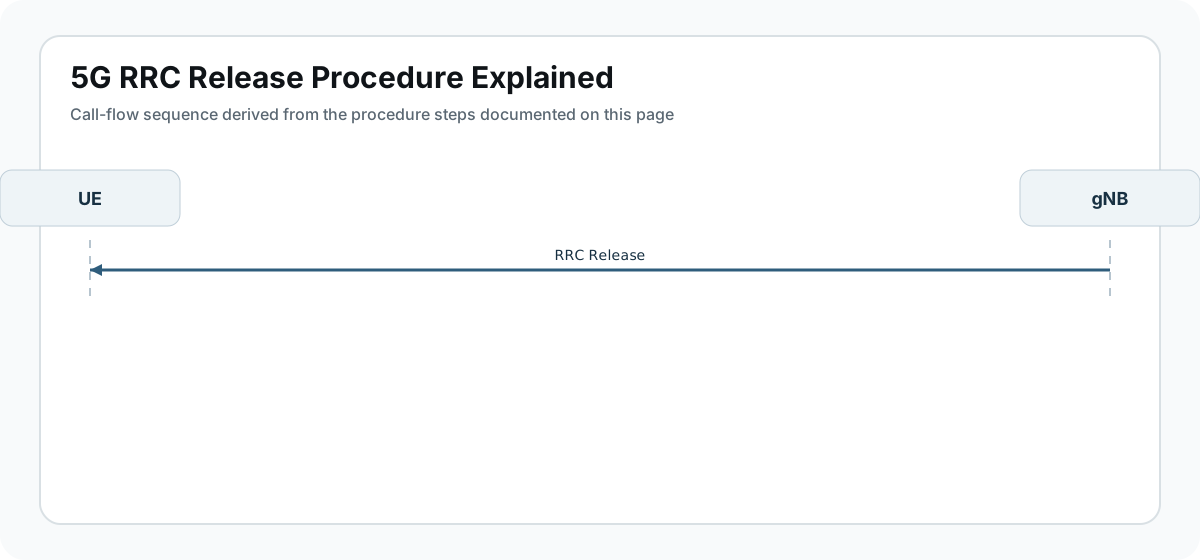
UE                    gNB                    AMF
|                     |                       |
|<- RRC Release ------|                       |
|==== Connected mode ends ====|              |
|<----------- later Paging if needed --------|
|-- Resume or fresh Setup when service returns -->
Major Phases
| Phase | What happens |
|---|---|
| 1. Connected-mode inactivity or policy decision | The network decides that the UE no longer needs active radio resources. |
| 2. Release delivery | The gNB sends the release command and the UE exits connected mode. |
| 3. Reachability transition | The UE returns to idle or inactive-style behavior and later depends on paging, resume, or fresh setup. |
Step-by-Step Breakdown
Network decides to end active radio use
Sender -> receiver: gNB internal logic
Message(s): Inactivity timer expiry, policy action, session-completion logic, or mobility optimization
Purpose: Free active radio resources when the UE no longer needs continuous connected-mode handling.
State or context change: The UE is still connected, but the network is preparing a state reduction.
Note: Unexpected release often reflects timer policy or service inactivity, not necessarily a fault in itself.
gNB sends RRC Release
Sender -> receiver: gNB -> UE
Message(s): RRC Release
Purpose: Tell the UE to leave connected mode and apply the post-release behavior.
State or context change: The active connected-state radio leg is torn down.
Note: Check whether the release was expected by the service lifecycle or arrived while traffic was still needed.
UE enters a lower-activity reachability state
Sender -> receiver: UE internal transition
Message(s): Post-release cell camping or inactive-style reachability behavior
Purpose: Continue conserving resources while remaining reachable for future service.
State or context change: The next access event will depend on paging, resume, or fresh setup.
Note: When users complain about dropped sessions, the real question is whether the release happened too early or the later recovery path failed.
Important Messages in This Flow
| Message | Protocol | Direction | Purpose in this procedure | What to inspect briefly |
|---|---|---|---|---|
| RRC Release | RRC | gNB -> UE | Ends the active connected-state radio leg. | Inspect release timing, linked inactivity logic, and the intended post-release state. |
| Paging | RRC | Network -> UE | May be the next major event after release when downlink service is needed again. | Use it to understand whether reachability still works after release. |
| RRC Resume or RRC Setup | RRC | UE <-> gNB | Represents the later recovery path back into active service. | A release issue may only become visible when the UE tries to return to active mode. |
Important Parameters to Inspect
| Parameter | What it is | Where it appears | Why it matters | Common issues |
|---|---|---|---|---|
| Inactivity timer | How long the network waits before releasing connected mode. | gNB policy and release timing | Explains whether the release was expected or overly aggressive. | Short timers can create repeated setup or resume churn. |
| Release reason or policy context | The operational reason behind the release. | Release decision logic | Separates normal cleanup from suspicious early release. | If absent from logs, engineers may misread normal behavior as failure. |
| Post-release state behavior | Whether the UE should behave more like idle or preserve faster return capability. | Release handling and later trace behavior | Predicts whether paging, resume, or setup should follow. | Wrong expectation here causes confusing troubleshooting later. |
| Paging reachability context | How the network will find the UE after release. | AMF and gNB context after release | Critical for mobile-terminated traffic after connected mode ends. | Stale TAC or wrong reachability data leads to later paging failure. |
| Service continuity expectation | Whether user traffic was really complete when release occurred. | Application, session, and access traces | Helps decide whether the release was correct or premature. | Premature release can look like intermittent app failure. |
Success Criteria
- Release occurs at the right service moment rather than during needed traffic.
- The UE transitions cleanly into lower-activity reachability behavior.
- Later paging or service return works without abnormal delay or repeated failures.
- The network reduces radio overhead without harming the user journey.
Common Failures and Troubleshooting
| Symptom | Likely cause | Where to inspect | Relevant message(s) | Relevant interface(s) | Likely next step |
|---|---|---|---|---|---|
| Release happens too early | The network exits connected mode while the service still needed stable access. | Timer policy, traffic pattern, and session continuity expectations. | RRC Release and later traffic interruption | NR-Uu, N2, N3 | This often appears as user-plane instability rather than a raw RRC defect. |
| UE cannot recover after release | The later paging, resume, or setup path is broken. | Post-release reachability and the next access attempt. | Paging, RRC Resume, RRC Setup | NR-Uu, N2 | Do not blame the release message alone if the real fault is in return-to-service handling. |
| Frequent release and reconnect loops | Timer tuning or service pattern mismatch is causing churn. | Release interval, resume success, and application behavior. | RRC Release and repeated follow-on access | NR-Uu | This is often a policy-optimization issue rather than a protocol decode issue. |
| Mobile-terminated traffic is missed after release | The network released correctly but lost effective reachability afterward. | Paging context, UE camping behavior, and TA alignment. | Paging after release | N2, NR-Uu | Track the full paging-to-service journey, not only the release point. |
What to Check in Logs and Traces
- Correlate the release with actual traffic inactivity rather than assuming it was premature.
- Inspect the next event after release: paging, resume, or fresh setup.
- If churn exists, compare inactivity timer policy with the real app traffic pattern.
- Treat user complaints after release as an end-to-end reachability question, not a single-message question.
Related Pages
Related sub-procedures
Related message reference pages
Related troubleshooting pages
FAQ
What is 5G RRC Release?
It is the procedure that ends the active connected-state radio leg and returns the UE to a lower-activity reachability state.
Does RRC Release always mean the UE goes to idle?
Not always. The exact operational behavior depends on how the network manages post-release reachability.
Is RRC Release always bad?
No. It is a normal resource-optimization procedure when active service is no longer needed.
What should I inspect if users see intermittent drops?
Check whether release happened too early and whether the later paging or service-restoration path worked.
How is RRC Release different from RRC Suspend?
Suspend is designed around inactive-state context preservation for faster resume, while release is the broader connected-mode exit procedure.