VoNR Mobile Terminated Call Procedure
VoNR Mobile Terminated Call is the incoming-call procedure where the network has to find the called UE, restore service if needed, and then deliver the IMS voice session.
That means MT analysis is never only about SIP. It combines paging, reachability recovery, and IMS dialog setup into one end-to-end user journey.
Introduction
When a voice call is terminated toward a VoNR-capable UE, the network first checks whether the subscriber is already active enough to receive SIP signaling.
If not, the AMF and gNB page the UE and restore service context before the incoming INVITE can be processed. Only then does the normal alerting and answer sequence begin.
What Is VoNR Mobile Terminated Call in Simple Terms?
- What starts the procedure: An incoming IMS voice call is routed toward the called UE.
- What the UE and network want to achieve: Restore reachability if needed, deliver the call, and establish media cleanly.
- What success looks like: The phone rings, the user answers, and the voice session becomes active.
- What failure means: Paging, service restoration, SIP delivery, or media continuity breaks before the call becomes usable.
Why this procedure matters
MT call delivery is one of the clearest proofs that registration, paging, and IMS service continuity really work together in the live network.
Quick Fact Sheet
| Procedure name | VoNR Mobile Terminated Call |
|---|---|
| Domain | Native 5G incoming voice call delivery over IMS and NR |
| Main trigger | The called UE receives an incoming voice session while already provisioned for VoNR |
| Start state | The called UE is reachable in 5GS and registered in IMS, but may be in RRC Idle or RRC Inactive |
| End state | The UE is paged if needed, the SIP dialog completes, and voice media starts |
| Main nodes | Called UE, AMF, gNB, IMS core, remote calling side |
| Main protocols | Paging, service restoration, SIP INVITE, SDP, RTP |
| Main success outcome | Paging succeeds, INVITE reaches the UE, 200 OK and ACK complete, and media flows |
| Main failure outcome | The call is lost because paging, service restoration, IMS routing, or media negotiation fails |
| Most important messages | Paging, Service Request or Resume, INVITE, 180 Ringing, 200 OK, ACK |
| Main specs | TS 23.502, TS 24.501, TS 24.229, TS 38.331 |
Preconditions
- The called UE is registered in 5GS and has a valid IMS registration.
- The network has enough subscriber reachability context to locate the UE.
- Paging and service-restoration handling are available when the UE is not already connected.
- The voice media path and QoS support can be established after answer.
Nodes and Interfaces
Nodes involved
| Node | Role in this procedure |
|---|---|
| Calling side and IMS core | Generate the incoming voice session and route it through the IMS signaling path toward the called UE. |
| AMF | Locates the called UE and starts paging or service-restoration handling if the UE is not already active. |
| gNB | Broadcasts paging on NR and restores radio connectivity before SIP call delivery. |
| Called UE | Responds to paging, restores service state, receives INVITE, and accepts or rejects the call. |
Interfaces used
| Interface | Path | Role |
|---|---|---|
| NR-Uu | UE <-> gNB | Carries paging reception, service restoration, and later voice radio continuity. |
| N1 and N2 | UE/gNB <-> AMF | Carry service request or resume handling after paging. |
| IMS SIP path | IMS core <-> called UE | Carries INVITE, progress responses, answer, and ACK. |
| User-plane RTP path | Calling side <-> called side | Carries voice media after the SIP dialog is established. |
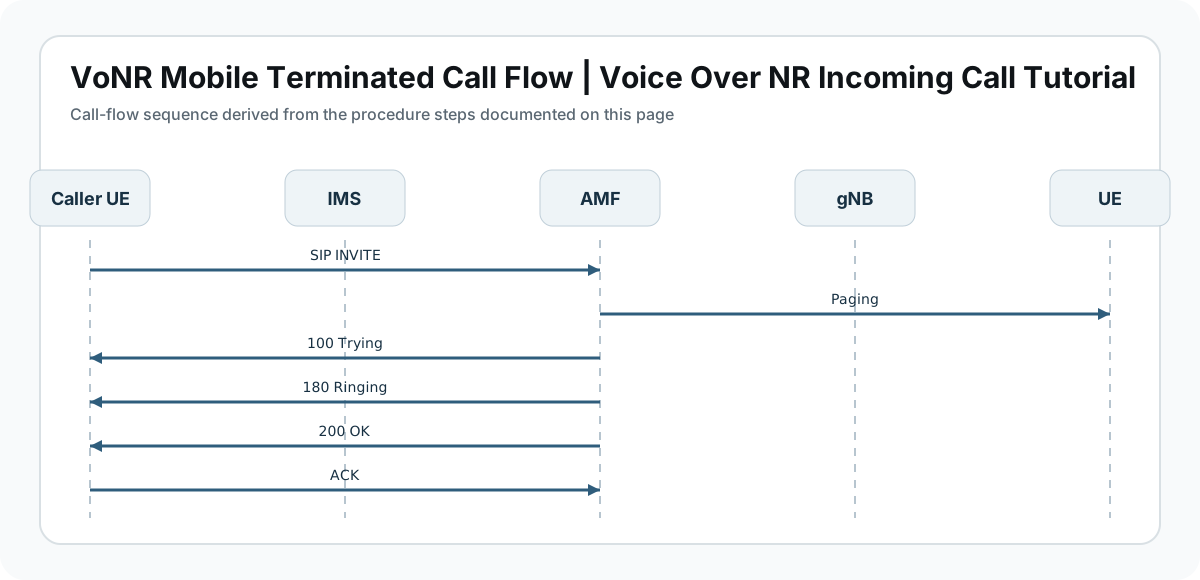
End-to-End Call Flow
Remote side        IMS / AMF / gNB        Called UE
|-- incoming call --->|                     |
|                     |-- Paging --------->|
|                     |<-- Service restore -|
|--------------------- INVITE ------------->|
|<-------------------- 180 Ringing ---------|
|<-------------------- 200 OK --------------|
|--------------------- ACK ---------------->|
|=============== RTP voice media ===========|
Major Phases
| Phase | What happens |
|---|---|
| 1. Incoming call reaches IMS | The remote side generates a new SIP dialog for the called subscriber. |
| 2. Reachability recovery | If the UE is idle or inactive, paging and service restoration must happen first. |
| 3. SIP call delivery | The INVITE reaches the UE and the called side starts alerting. |
| 4. Answer and media establishment | 200 OK, ACK, and RTP complete the incoming call setup. |
Step-by-Step Breakdown
IMS identifies the called subscriber and checks reachability
Sender -> receiver: Remote IMS side -> AMF and called-side context
Message(s): Incoming INVITE and subscriber reachability handling
Purpose: Decide whether the called UE is already active or must first be paged and restored.
State or context change: The network turns a generic incoming call into a UE-specific reachability problem.
Note: Many MT issues happen before the INVITE reaches the UE because the called side is not yet restored for service.
AMF and gNB page the UE if it is idle or inactive
Sender -> receiver: AMF -> gNB -> UE
Message(s): Paging and follow-on service restoration
Purpose: Bring the UE back into a state where IMS signaling can be delivered reliably.
State or context change: The called UE transitions from background reachability into active service handling.
Note: Separate paging failure from SIP failure early. If paging breaks, the voice dialog never gets a fair chance.
The called UE receives INVITE and returns provisional progress
Sender -> receiver: IMS core -> called UE
Message(s): INVITE, 100 Trying, 180 Ringing
Purpose: Deliver the incoming call and confirm that the user is being alerted.
State or context change: The session is now visible to the called subscriber but not yet answered.
Note: Ringing proves much more than basic registration. It proves that paging, service restoration, and IMS delivery all worked together.
The called UE answers and voice media starts
Sender -> receiver: Called UE -> remote side
Purpose: Complete the incoming dialog and begin the actual voice session.
State or context change: The MT call leaves alerting state and becomes an active bidirectional voice call.
Note: Final success means both signaling and media continuity are clean. A 200 OK without good media is only partial success.
Important Messages in This Flow
| Message | Protocol | Direction | Purpose in this procedure | What to inspect briefly |
|---|---|---|---|---|
| Paging | RRC | AMF / gNB -> UE | Recover reachability for the called UE. | Check the paging identity and whether the UE responded in time. |
| Service Request | NAS | UE -> AMF | Restore active service continuity after paging. | Useful when the UE was idle and needed uplink restoration before SIP delivery. |
| INVITE | SIP | IMS -> called UE | Deliver the incoming call setup request. | Inspect Request-URI, SDP, and whether it arrived only after service restoration was complete. |
| 180 Ringing | SIP | Called UE -> IMS | Shows the user is being alerted. | If missing, inspect UE alerting logic and remote routing. |
| 200 OK | SIP | Called UE -> remote side | Confirms call acceptance. | Inspect the negotiated media profile and codec answer. |
Important Parameters to Inspect
| Parameter | What it is | Where it appears | Why it matters | Common issues |
|---|---|---|---|---|
| Reachability state | Whether the UE is connected, idle, or inactive before the call. | Before paging and INVITE delivery | Explains whether the MT case is mainly a reachability problem or directly an IMS problem. | Misreading the initial state sends troubleshooting to the wrong layer. |
| Paging identity | Identifier used to page the called subscriber. | Paging | Confirms the network is really targeting the expected UE. | Identity mismatch leads to a silent paging failure. |
| Service restoration timing | How long it takes the UE to become active enough for SIP delivery. | Paging and NAS restore stage | Critical for incoming-call setup delay and missed-call behavior. | Slow restoration can make IMS timers expire. |
| INVITE SDP offer | The media proposal for the incoming session. | INVITE | Needed to understand codec compatibility and early media handling. | Malformed or incompatible SDP breaks the session after successful reachability. |
| Answer and ACK continuity | Whether the final call-accept path really completes. | 200 OK and ACK | Confirms the session moved from alerting into a stable established call. | Missing ACK creates half-open answered-call symptoms. |
Success Criteria
- The called UE is restored into a service-ready state in time.
- The INVITE reaches the called UE and alerting starts normally.
- The answer path completes with 200 OK and ACK.
- Media continuity is stable after the call is answered.
Common Failures and Troubleshooting
| Symptom | Likely cause | Where to inspect | Relevant message(s) | Relevant interface(s) | Likely next step |
|---|---|---|---|---|---|
| Paging fails and the phone never rings | The called UE was not successfully restored for service. | Paging identity, UE response, and service-request timing. | Paging, Service Request | NR reachability | Do not misclassify this as an IMS routing problem if the UE never became active. |
| Ringing appears but answer does not complete | The call reached the UE, but final SIP answer handling failed. | INVITE, 180 Ringing, 200 OK, and ACK continuity. | 180 Ringing, 200 OK | IMS SIP path | This is later in the flow than pure paging trouble. |
| Call answers but audio is poor or absent | Media negotiation or QoS continuity failed after signaling success. | SDP answer, RTP path, and QoS treatment. | 200 OK, RTP start | User plane | Treat this as post-setup media failure, not call-delivery failure. |
| Incoming-call setup is slow | Reachability recovery or IMS routing is taking too long. | Paging-to-service timing and provisional SIP progress. | Paging, INVITE, 180 Ringing | Cross-layer timing | Timing analysis is usually more useful than single-message inspection here. |
What to Check in Logs and Traces
- Start by classifying the called UE as connected, idle, or inactive.
- Separate paging success from later SIP call delivery.
- Use Ringing versus no Ringing as a strong split between reachability and later IMS issues.
- After answer, switch quickly to media and QoS inspection if user symptoms are audio-related.
Related Pages
Related sub-procedures
- VoNR Registration
- Paging Procedure
- Mobile-Terminated Data / Paging-to-Service Recovery
- VoNR Call Termination
Related message reference pages
Related troubleshooting pages
FAQ
What is a VoNR Mobile Terminated Call?
It is the incoming-call flow where the network must reach the called UE, restore service if needed, and then complete IMS call delivery over 5G.
Why is paging important here?
Because many called UEs are not already in a fully active radio state when the incoming call arrives.
What proves success?
The UE is paged successfully, the call rings, 200 OK and ACK complete, and RTP media starts normally.
What should I inspect first?
Start with the called UE reachability state, then paging and service restoration, and only then move into SIP call-delivery analysis.
Why can the call ring but still fail?
Because final answer handling, media negotiation, or post-answer voice continuity can still break after the alerting stage.