LTE 1xCSFB / CDMA2000 Fallback Procedure Call Flow
LTE 1xCSFB / CDMA2000 fallback is the legacy voice branch where LTE sends the UE toward CDMA2000-based voice handling instead of staying on EPS voice service.
This page focuses on the LTE-side fallback path, target-system move, and the point where voice service leaves LTE for CDMA2000 continuation.
Introduction
The generic fallback logic is still similar to other CSFB branches, but the target system here is CDMA2000 and the interworking context is different from UMTS or GSM fallback. The LTE side prepares the move, sends the UE toward the CDMA2000 target, and stops being the main voice service layer.
The main nodes are the UE, eNB, MME, and the CDMA2000 target side.
What Is 1xCSFB / CDMA2000 Fallback Procedure in Simple Terms?
- What starts the procedure: Legacy voice fallback selects CDMA2000 as the target system.
- What the UE and network want to achieve: Move the UE from LTE toward CDMA2000 for voice continuation.
- What success looks like: The UE leaves LTE and the voice attempt continues on the CDMA2000 side.
- What failure means: The LTE preparation looks normal, but the target move or target continuation fails.
Why this procedure matters
This branch matters in networks that still depend on CDMA2000 voice continuity. The target-system details are different enough that generic CSFB analysis is often not sufficient.
Quick Fact Sheet
| Procedure name | LTE 1xCSFB / CDMA2000 Fallback Procedure |
|---|---|
| Domain | LTE to CDMA2000 voice fallback |
| Main trigger | Fallback selects CDMA2000 as the target voice system |
| Start state | Generic LTE fallback branch is already active |
| End state | UE moves from LTE toward CDMA2000 voice service |
| Main nodes | UE, eNB, MME, CDMA2000 target side |
| Main protocols | RRC, NAS, interworking support |
| Main success outcome | The UE reaches the CDMA2000 side and voice continuation proceeds |
| Main failure outcome | The UE leaves LTE but the CDMA2000 continuity branch fails |
| Most important messages | Fallback trigger, target command, CDMA2000 continuation |
| Main specs | TS 23.272 and interworking context |
Preconditions
- The generic fallback branch has already started.
- A usable CDMA2000 target exists for continuation.
- The UE can move from LTE to the CDMA2000 target side.
Nodes and Interfaces
Nodes involved
| Node | Role in this procedure |
|---|---|
| UE | Leaves LTE and moves toward the selected CDMA2000 target system. |
| eNB | Commands the LTE-side move away from LTE. |
| MME | Maintains the LTE-side fallback preparation before target continuation. |
| CDMA2000 target side | Takes over the voice attempt after LTE is left. |
Interfaces used
| Interface | Path | Role |
|---|---|---|
| LTE Uu | UE <-> eNB | Carries the LTE-side command that starts the target move. |
| S1-MME | eNB <-> MME | Carries fallback coordination on the LTE side. |
| CDMA2000 target access | UE <-> target side | Carries the target-system continuation after LTE exit. |
End-to-End Call Flow
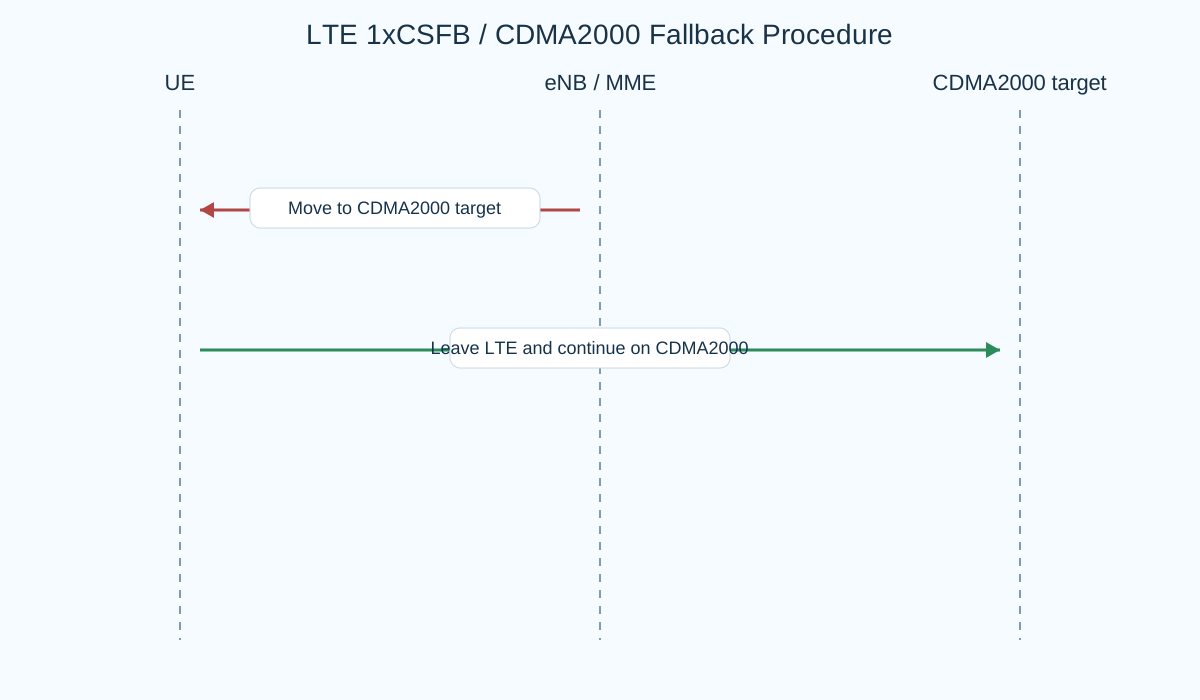
UE            eNB / MME             CDMA2000 target
|--fallback trigger->|                     |
|<--move to target---|                     |
|------leave LTE and continue on target--->|
Major Phases
| Phase | What happens |
|---|---|
| 1. Target selection | The fallback branch selects CDMA2000 as the target system. |
| 2. LTE exit command | The UE receives the target move command. |
| 3. Target acquisition | The UE leaves LTE and reaches the CDMA2000 side. |
| 4. Voice continuation | The voice attempt continues on the target side. |
Step-by-Step Breakdown
Step 1: Identify the CDMA2000 target branch
Sender -> receiver: MME / eNB
Message(s): Fallback target selection
Purpose: Choose CDMA2000 as the continuation system.
State or context change: The fallback branch now has a specific target technology.
Note: This is the point where analysis becomes CDMA2000-specific rather than generic CSFB.
Step 2: Send the target move command
Sender -> receiver: eNB -> UE
Message(s): Interworking move command toward CDMA2000
Purpose: Tell the UE where to go after leaving LTE.
State or context change: The UE exits LTE and starts target acquisition.
Note: The exact target information here decides whether the move can work at all.
Step 3: Continue on the target side
Sender -> receiver: UE -> CDMA2000 target side
Message(s): Target continuation
Purpose: Move the voice attempt onto the CDMA2000 system.
State or context change: The call is now outside LTE.
Note: The LTE trace explains the preparation, but the target side proves the continuity result.
Important Messages
| Message | Protocol | Direction | Purpose in this procedure | What to inspect briefly |
|---|---|---|---|---|
| Extended Service Request | NAS | UE -> MME | Useful early fallback trigger behind the LTE branch. | Check whether the fallback reason matches the expected voice continuation path. |
| Target move command | RRC / interworking support | eNB -> UE | Commands the UE away from LTE toward CDMA2000. | Check the target-system details and timing of the move. |
| Target continuation | Target RAT | UE -> CDMA2000 target side | Shows that the UE really reached the target side after leaving LTE. | Check whether the intended CDMA2000 target was reachable and valid. |
Important Parameters to Inspect
| Parameter | What it is | Where it appears | Why it matters | Common issues |
|---|---|---|---|---|
| CDMA2000 target details | The target-system information used after LTE exit. | Target move command | Explains where the UE was sent after LTE. | The UE is sent to an unusable or wrong target. |
| Fallback timing | The gap between LTE trigger and target move. | Full branch | Useful for late fallback or user-visible delay. | The target move is too slow for smooth voice continuation. |
| Legacy continuity state | Whether the target voice context stayed valid until the move. | Before target continuation | Shows whether the voice attempt was still alive when the UE reached the target side. | The UE reaches the target side too late for continuation. |
| Target acquisition result | Whether the UE actually reached the intended target system. | Target continuation | Separates wrong target command from later target-service problems. | The LTE side looks normal, but the target side never stabilizes. |
| Service direction | Whether the branch started from MO or MT voice context. | Early branch | Helps explain the earlier trigger and expected message order. | The wrong service direction is assumed during analysis. |
Successful Completion
Success means the LTE fallback branch sends the UE to the intended CDMA2000 target and the voice attempt continues there.
Common Failures and Troubleshooting
| Symptom | Likely cause | Where to inspect | Relevant message(s) | Relevant interface(s) | Likely next step |
|---|---|---|---|---|---|
| Target move exists but the UE never reaches stable continuation | The CDMA2000 target side is wrong, unreachable, or not ready. | Target move details and the result after LTE exit. | Target move command | LTE Uu, target access | Check the exact target information before treating it as a generic LTE-side failure. |
| Fallback branch is slow before target acquisition | The LTE trigger or target preparation is delayed. | Fallback trigger, early coordination, and move timing. | Extended Service Request, target move command | NAS, LTE Uu | Compare the branch timing against the user-visible failure moment. |
What to Check in Logs and Traces
- Use the generic fallback branch first, then pivot to the exact CDMA2000 target details.
- Check whether the UE received a usable target-system command.
- Separate LTE-side preparation from target-side continuity failure after LTE exit.
Related Pages
Related sub-procedures
Related message reference pages
Related troubleshooting pages
Notes
This page focuses on the CDMA2000-specific target branch. Start with generic CSFB analysis when the exact target system is still unclear.
FAQ
What is LTE 1xCSFB?
It is the fallback branch where LTE sends the UE toward CDMA2000 voice handling.
Why separate this from generic CSFB?
Because the target-system preparation and continuation details differ from UMTS and GSM fallback.