LTE Bearer Modification Procedure Call Flow
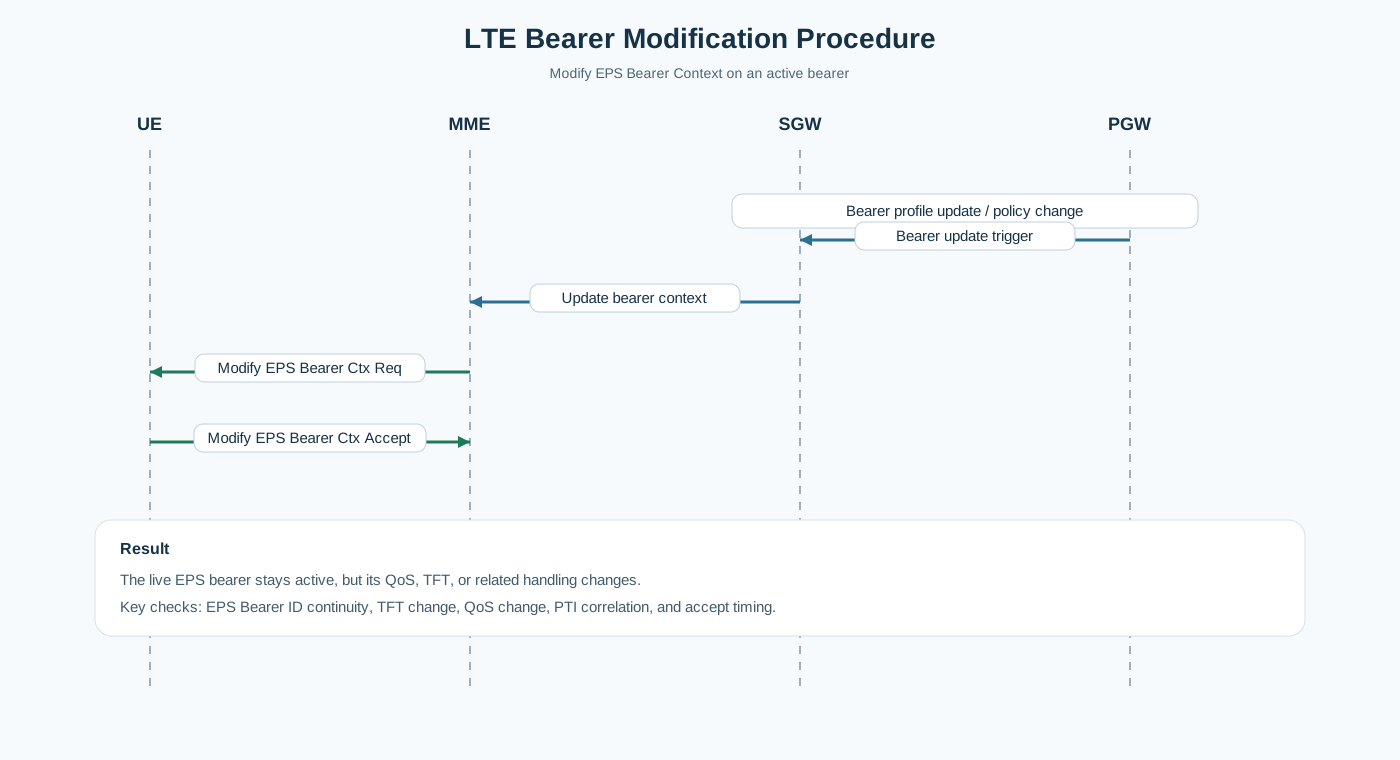
LTE Bearer Modification Procedure updates an existing EPS bearer without fully releasing and recreating it. It is used when the network needs to change the bearer profile, QoS relation, TFT content, or other session-side handling while keeping the bearer active.
The main NAS pair is Modify EPS Bearer Context Request and Modify EPS Bearer Context Accept.
Introduction
The bearer modification path appears after a bearer already exists and the network wants to adjust how that bearer is treated. The change may come from policy control, service adaptation, application behavior, or later EPC-side updates.
The main nodes are the UE, MME, SGW, and PGW. The eNB may also need matching radio-side updates if the change affects the access side.
What Is LTE Bearer Modification Procedure in Simple Terms?
- What starts the procedure: The network decides an existing bearer needs updated handling.
- What the UE and network want to achieve: Refresh the live bearer context without rebuilding the whole session.
- What success looks like: The UE receives Modify EPS Bearer Context Request and returns Modify EPS Bearer Context Accept.
- What failure means: The bearer stays on the old profile, enters an inconsistent state, or is released later.
Why this procedure matters
This procedure explains how a live bearer changes after initial setup, especially when QoS or TFT handling does not match the earlier bearer profile.
Quick Fact Sheet
| Procedure name | LTE Bearer Modification Procedure |
|---|---|
| Domain | Live EPS bearer update |
| Main trigger | Policy, QoS, or filter change on an existing bearer |
| Start state | UE already has an active EPS bearer |
| End state | Existing bearer remains active with updated parameters |
| Main nodes | UE, MME, SGW, PGW |
| Main protocols | NAS, GTPv2-C |
| Main success outcome | Bearer stays active with the new context |
| Main failure outcome | Bearer update is not accepted or later service becomes inconsistent |
| Most important messages | Modify EPS Bearer Context Request, Modify EPS Bearer Context Accept |
| Main specs | TS 24.301, TS 23.401, TS 29.274 |
Preconditions
- The UE already has an active default or dedicated bearer.
- The EPC already has a live session context for the bearer being modified.
- The network has a reason to refresh QoS, TFT, or related session attributes.
Nodes and Interfaces
Nodes involved
| Node | Role in this procedure |
|---|---|
| UE | Applies the updated bearer parameters. |
| MME | Delivers the NAS bearer modification toward the UE. |
| SGW | Keeps the serving session context aligned. |
| PGW | Provides the PDN-side change source for the bearer profile. |
Interfaces used
| Interface | Path | Role |
|---|---|---|
| S11 | MME <-> SGW | Updates bearer handling between control-plane nodes. |
| S5/S8 | SGW <-> PGW | Propagates the PDN-side bearer change. |
| NAS | UE <-> MME | Carries the bearer modification toward the UE. |
End-to-End Call Flow
UE               MME               SGW               PGW
|                 |                 |-- Bearer update -->|
|                 |                 |<-- Update result ---|
|<- Modify EPS Bearer Ctx Req ------|                    |
|-- Modify EPS Bearer Ctx Accept --->|                   |
|   bearer stays active with changes  |                  |
Major Phases
| Phase | What happens |
|---|---|
| 1. EPC update decision | The core decides the live bearer needs updated handling. |
| 2. NAS bearer modification | The MME sends the new bearer context toward the UE. |
| 3. UE confirmation | The UE confirms the updated context if the change is accepted. |
Step-by-Step Breakdown
Step 1: Bearer update in the EPC
Sender -> receiver: PGW -> SGW -> MME
Message(s): GTPv2-C bearer update handling
Purpose: Refresh the live bearer profile before the UE-side update.
State or context change: The core now holds the new bearer parameters.
Note: This is where policy-triggered QoS changes usually become visible first.
Step 2: Modify bearer context
Sender -> receiver: MME -> UE
Message(s): Modify EPS Bearer Context Request
Purpose: Tell the UE which live bearer parameters have changed.
State or context change: The UE receives the updated EBI, TFT, QoS, or related context.
Note: EBI continuity matters because the bearer is being modified, not recreated.
Step 3: UE accept
Sender -> receiver: UE -> MME
Message(s): Modify EPS Bearer Context Accept
Purpose: Confirm that the UE accepted the live update.
State or context change: The bearer remains active on the new profile.
Note: Missing uplink confirmation often leaves traces that look only partially updated.
Important Messages in This Flow
| Message | Protocol | Direction | Purpose in this procedure | What to inspect briefly |
|---|---|---|---|---|
| Modify EPS Bearer Context Request | NAS | MME -> UE | Updates the live bearer context. | EBI, TFT changes, QoS values, and transaction timing. |
| Modify EPS Bearer Context Accept | NAS | UE -> MME | Confirms that the update was accepted. | Return timing and correlation to the same bearer identity. |
Important Parameters to Inspect
| Parameter | What it is | Where it appears | Why it matters | Common issues |
|---|---|---|---|---|
| EPS Bearer ID | The identity of the bearer being modified. | Bearer modification request and accept | Keeps the update tied to the correct live bearer. | Wrong bearer correlation. |
| TFT | Traffic filter rules applied to the bearer. | Modify EPS Bearer Context Request | Explains which traffic should use the updated bearer path. | Malformed or unexpected filter changes. |
| QoS / QCI / ARP | The refreshed service profile for the bearer. | Modify request and EPC update path | Shows why the modification happened. | Policy mismatch or unsupported values. |
| PTI | The ESM transaction identity for the procedure. | NAS bearer modification | Helps correlate the live transaction cleanly. | PTI mismatch or stale transaction context. |
Successful Completion
Success is confirmed when the UE accepts the modify request and the bearer remains active with the updated parameters across NAS and EPC context views.
Common Failures and Troubleshooting
| Symptom | Likely cause | Where to inspect | Relevant message(s) | Relevant interface(s) | Likely next step |
|---|---|---|---|---|---|
| Modify request appears, but service behavior does not change | TFT or QoS update was not applied correctly. | Compare old and new bearer fields. | Modify EPS Bearer Context Request | NAS, S11, S5/S8 | Check whether the new profile actually differs from the previous one. |
| Accept does not return | UE rejected or did not complete the update. | Look for missing uplink confirmation and later bearer cleanup. | Modify request, later deactivation or retry handling | NAS, LTE Uu | Separate UE-side rejection from transport loss. |
What to Check in Logs and Traces
- Confirm the bearer already existed before the modify branch started.
- Check EBI, PTI, TFT, and QoS continuity between the old and new context.
- Align the NAS modify request with the EPC-side bearer update trigger.
Related Pages
Related sub-procedures
- LTE Default EPS Bearer Establishment
- LTE Dedicated EPS Bearer Establishment
- LTE E-RAB Modify Procedure
Related message reference pages
Related troubleshooting pages
Notes
Bearer modification keeps the bearer identity alive. It changes a live context instead of creating a new bearer from the beginning.
FAQ
What does LTE Bearer Modification Procedure do?
It updates the profile of an existing EPS bearer without releasing it.
Which fields are most important?
EBI, TFT, QoS, and PTI are the quickest checks for correlation and intent.