LTE Cell Reselection Procedure Call Flow
LTE Cell Reselection is the idle-mode mobility procedure that moves the UE from one suitable cell to another without a connected handover. It operates while the UE is in idle behavior and directly affects later paging, tracking area update, and service return.
This is an idle mobility workflow, not a connected handover procedure.
Introduction
The cell reselection procedure runs while the UE is not in active connected signaling. The UE evaluates neighbor cells, applies idle mobility rules, and chooses a more suitable cell when needed.
The main node is the UE, with network behavior appearing through system information, neighbor definitions, and later idle-side continuation.
What Is LTE Cell Reselection in Simple Terms?
- What starts the procedure: The UE in idle mode finds that another cell is more suitable than the current one.
- What the UE and network want to achieve: Keep the UE on a suitable idle-serving cell for reachability and later access.
- What success looks like: The UE camps on a better cell and later procedures continue from that new idle context.
- What failure means: The UE remains on a poor cell, oscillates, or later paging and access behavior becomes unstable.
Why this procedure matters
This procedure explains many idle-side issues that later appear as paging misses, TAU surprises, or unstable return to connected mode.
Quick Fact Sheet
| Procedure name | LTE Cell Reselection Procedure |
|---|---|
| Domain | Idle-mode mobility |
| Main trigger | Another cell becomes more suitable for camping |
| Start state | UE is in RRC_IDLE |
| End state | UE camps on a new suitable cell |
| Main nodes | UE, serving cell, candidate cell |
| Main protocols | RRC system information and idle mobility rules |
| Main success outcome | UE remains reachable and stable on the new idle cell |
| Main failure outcome | Poor idle camping, oscillation, or later service instability |
| Most important messages | System information and later follow-up branches such as TAU or Service Request |
| Main specs | TS 36.304, TS 36.331 |
Preconditions
- The UE is already in idle mode.
- The UE has system information for the serving and candidate cells.
- Idle mobility rules allow evaluation and camping on a new suitable cell.
Nodes and Interfaces
Nodes involved
| Node | Role in this procedure |
|---|---|
| UE | Measures, evaluates, and chooses the next suitable idle cell. |
| Serving cell | Provides the current camped context and related system information. |
| Candidate cell | Becomes the next camped cell if selected. |
Interfaces used
| Interface | Path | Role |
|---|---|---|
| LTE Uu | UE <-> cells | Provides system information and the radio environment for idle camping. |
| Idle mobility rules | UE internal | Control measurement evaluation and reselection decisions. |
End-to-End Call Flow
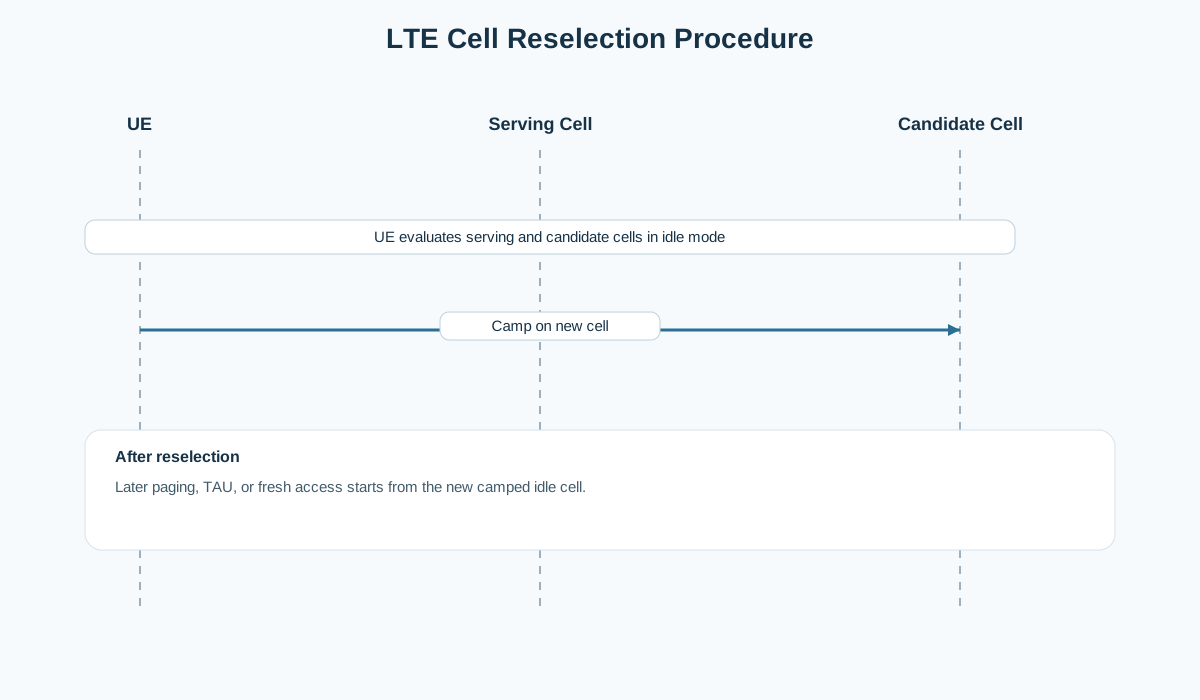
UE            Serving Cell         Candidate Cell
|   camped          |                    |
|-- evaluate radio quality ------------>|
|   compare idle criteria               |
|---------------------------- camp on new cell
|   later paging / TAU / access start on new cell |
Major Phases
| Phase | What happens |
|---|---|
| 1. Idle evaluation | The UE compares the current cell with candidate cells. |
| 2. Reselection decision | The UE decides another cell is more suitable. |
| 3. Camping | The UE camps on the new cell. |
| 4. Later idle continuation | Paging, TAU, or later access begins from the new camped cell. |
Step-by-Step Breakdown
Step 1: Idle evaluation and reselection
Sender -> receiver: UE internal mobility handling
Message(s): No dedicated connected-mode signaling
Purpose: Choose the most suitable idle-serving cell.
State or context change: The UE changes from one camped cell to another.
Note: Problems here often appear later as paging misses or unstable access rather than as a clear reselection failure message.
Important Messages in This Flow
| Message | Protocol | Direction | Purpose in this procedure | What to inspect briefly |
|---|---|---|---|---|
| System Information | RRC | Cell -> UE | Provides the idle mobility configuration used for reselection. | Cell-selection and reselection parameters, TAC, and neighbor-related context. |
| Tracking Area Update Request | NAS | UE -> MME | May appear later if the new cell places the UE in a different tracking area. | Whether reselection led to a mobility update. |
Important Parameters to Inspect
| Parameter | What it is | Where it appears | Why it matters | Common issues |
|---|---|---|---|---|
| Idle reselection criteria | The rules the UE uses to compare cells. | System information | Explain why the UE stayed or moved. | Wrong cell priorities or poor idle tuning. |
| TAI / TAC | The tracking-area identity of the new cell. | System information and later TAU behavior | Shows whether reselection should trigger a mobility update. | Unexpected TAU after cell change. |
| Camped cell stability | The behavior after the UE changes cells. | Later paging or access attempts | Confirms whether the new cell was actually usable. | Ping-pong camping or paging miss pattern. |
Successful Completion
Success means the UE camps stably on the new suitable cell and later idle-side procedures continue normally from that context.
Common Failures and Troubleshooting
| Symptom | Likely cause | Where to inspect | Relevant message(s) | Relevant interface(s) | Likely next step |
|---|---|---|---|---|---|
| UE camps on the wrong cell or oscillates | Idle mobility settings or radio quality conditions are unstable. | System information and later camping behavior. | System Information, later TAU or access messages | LTE Uu | Check idle tuning and whether the new cell really stayed suitable. |
| Paging fails after reselection | The UE is reachable on the wrong cell or later mobility update did not align with the new area. | Reselection timing and later paging or TAU behavior. | Paging, TAU Request | LTE Uu, NAS | Check whether the UE moved into a new tracking area and updated registration correctly. |
What to Check in Logs and Traces
- Check whether the UE was in idle mode before the cell change.
- Inspect system information and the resulting camped cell behavior.
- Follow the next idle-side branch such as paging, TAU, or fresh access.
Related Pages
Related sub-procedures
Related message reference pages
Related troubleshooting pages
Notes
Cell reselection is idle mobility, not handover. It changes the camped cell without using a connected handover branch.
FAQ
What is LTE Cell Reselection?
It is the idle-mode procedure that moves the UE from one suitable LTE cell to another.
Can reselection trigger TAU?
Yes. If the new camped cell belongs to a different tracking area, a later TAU may follow.