LTE Conditional Handover / Conditional Reconfiguration Call Flow
LTE conditional handover is a mobility approach where the network prepares one or more candidate targets in advance and the UE executes the move only when the configured condition becomes true. The preparation and the execution trigger are separated in time.
This page focuses on the prepared-but-not-yet-executed nature of conditional mobility.
Introduction
The source side builds conditional reconfiguration toward one or more candidate targets, sends the condition-bearing mobility configuration to the UE, and the UE later executes the move only if the configured condition is met during connected service.
This page is useful when the trace shows handover preparation long before the actual mobility execution moment.
What Is Conditional Handover / Conditional Reconfiguration in Simple Terms?
- What starts the procedure: The network wants to prepare mobility early but delay execution until a condition is met.
- What the UE and network want to achieve: Reduce late preparation delay by separating target preparation from final execution.
- What success looks like: The UE stores the prepared target information and later executes the right target branch when the condition is met.
- What failure means: The prepared branch expires, the wrong target is chosen, or execution never starts when expected.
Why this procedure matters
Conditional handover is different from normal immediate handover because the command and the actual move do not happen at the same time. This page helps explain that gap.
Quick Fact Sheet
| Procedure name | LTE Conditional Handover / Conditional Reconfiguration |
|---|---|
| Domain | Prepared LTE mobility with delayed execution |
| Main trigger | Conditional mobility policy and later UE-side condition match |
| Start state | UE is connected and receives a prepared mobility configuration |
| End state | UE executes the prepared target move or the prepared branch is not used |
| Main nodes | UE, source eNB, candidate target eNBs |
| Main protocols | RRC and handover preparation signaling |
| Main success outcome | Prepared target is used when the configured trigger becomes true |
| Main failure outcome | Condition never matches or execution fails when triggered |
| Most important messages | Conditional Reconfiguration, Measurement Report, later mobility execution |
| Main specs | TS 36.331 and related LTE mobility behavior |
Handover Concept
This illustration shows the basic handover concept used in this procedure: the UE leaves the serving side after the mobility decision and continues on the target side once the target path is ready.
Preconditions
- The UE is already in connected LTE service.
- The network has candidate targets it can prepare in advance.
- Conditional mobility support is available in the scenario being traced.
Nodes and Interfaces
Nodes involved
| Node | Role in this procedure |
|---|---|
| UE | Stores the prepared target data and later executes the move only when the condition becomes true. |
| Source eNB | Prepares candidate targets and sends the conditional mobility configuration. |
| Candidate target eNBs | Receive early preparation so execution can start faster later. |
Interfaces used
| Interface | Path | Role |
|---|---|---|
| LTE Uu | UE <-> source eNB | Carries the conditional configuration and later execution trigger. |
| Preparation path | source eNB <-> candidate targets | Carries the early preparation toward candidate targets. |
End-to-End Call Flow
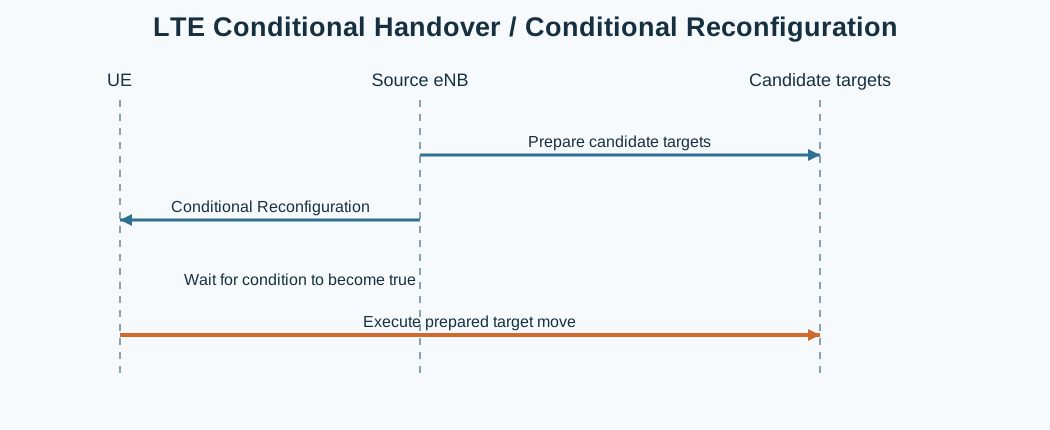
UE             Source eNB           Candidate targets
|                |--prepare targets----->|
|<--Conditional Reconfiguration----------|
|==== wait for condition =================|
|---- execute chosen target ------------->|
Major Phases
| Phase | What happens |
|---|---|
| 1. Candidate preparation | The source side prepares potential targets in advance. |
| 2. Conditional configuration | The UE receives stored target information instead of an immediate move. |
| 3. Trigger wait | The UE stays on the source side until the condition becomes true. |
| 4. Execution | The UE executes the prepared target branch when the condition is met. |
Step-by-Step Breakdown
Step 1: Prepare candidate targets
Sender -> receiver: source eNB -> candidate targets
Message(s): Conditional target preparation
Purpose: Make one or more targets ready before the move is actually needed.
State or context change: The targets are prepared while the UE is still on the source side.
Note: This is the main design difference from immediate handover.
Step 2: Send conditional configuration
Sender -> receiver: source eNB -> UE
Message(s): Conditional Reconfiguration
Purpose: Give the UE the prepared target information and the condition that must be met before moving.
State or context change: The UE stores the prepared mobility branch.
Note: The UE does not move immediately after this message.
Step 3: Wait for execution trigger
Sender -> receiver: UE
Message(s): Condition evaluation during connected service
Purpose: Delay the actual move until the configured trigger is satisfied.
State or context change: The UE continues to use the source side while monitoring the trigger.
Note: This gap can make the trace look unusual if you expect immediate execution.
Step 4: Execute the prepared move
Sender -> receiver: UE -> chosen target
Message(s): Prepared handover execution
Purpose: Start the target move when the condition becomes true.
State or context change: The chosen target branch begins using the already prepared data.
Note: After this point, the page hands off to the normal execution branch.
Important Messages
| Message | Protocol | Direction | Purpose in this procedure | What to inspect briefly |
|---|---|---|---|---|
| Measurement Report | RRC | UE -> source eNB | Provides the measurement context behind the conditional decision. | Inspect which target conditions led to candidate preparation. |
| RRC Connection Reconfiguration | RRC | source eNB -> UE | Carries the conditional or prepared mobility configuration. | Check whether the message prepares a later move rather than an immediate one. |
Important Parameters to Inspect
| Parameter | What it is | Where it appears | Why it matters | Common issues |
|---|---|---|---|---|
| Candidate targets | Prepared target cells stored before execution. | Conditional config and prep state | Show which targets are available when the trigger occurs. | Wrong candidate set or stale target prep. |
| Condition rule | The exact rule that must become true before moving. | Conditional configuration | Explains why the UE waited or executed later. | Condition never met or misread in analysis. |
| Execution timing | The delay between configuration and actual move. | Full trace | Shows whether the conditional branch behaved as intended. | Assuming immediate execution when none was expected. |
| Chosen target | The final target used when the condition was met. | Later execution branch | Links the prepared set to the actual move. | Wrong target chosen from the prepared set. |
| Expiry or cancellation | Whether the prepared branch was later invalidated. | Later source-side control state | Explains why a prepared move was never used. | Prepared state silently expired. |
Successful Completion
Success means the UE stores the prepared target data, waits on the source side, and later executes the correct target branch when the condition becomes true.
Common Failures and Troubleshooting
| Symptom | Likely cause | Where to inspect | Relevant message(s) | Relevant interface(s) | Likely next step |
|---|---|---|---|---|---|
| Prepared branch never executes | The condition was never met or the prepared target became invalid before execution. | Conditional configuration and later source-side state. | Conditional Reconfiguration and later mobility history | LTE Uu and preparation path | Check whether the branch expired or was superseded by another mobility decision. |
What to Check in Logs and Traces
- Check whether the early reconfiguration was conditional rather than an immediate move.
- Separate target preparation time from actual execution time.
- Confirm which prepared target was finally chosen when the trigger became true.
Related Pages
Related sub-procedures
- LTE Measurement-Controlled Handover
- LTE Intra-LTE Handover Procedure
- LTE Handover Failure and Recovery
Related message reference pages
Related troubleshooting pages
Notes
Conditional handover separates preparation from execution. That timing gap is the main reason these traces look different from ordinary immediate handover.
FAQ
What is LTE conditional handover?
It is a mobility approach where the target is prepared first and the UE executes the move later only when the configured condition is met.