LTE Connection Release to Idle Call Flow
LTE Connection Release to Idle is the transition that ends active connected signaling and returns the UE to idle-mode behavior with cell monitoring, paging monitoring, and stored EPS context. It is the path between an active connected session and later idle-side procedures such as paging, cell reselection, and service request.
This branch is centered on RRC Connection Release and the UE behavior that follows.
Introduction
The connection release to idle path closes the active RRC connection while keeping the UE available for later return to service. In many cases the UE remains attached and only changes from connected signaling to idle reachability.
The main nodes are the UE and eNB. The later impact appears in paging, service request, and cell reselection behavior.
What Is LTE Connection Release to Idle in Simple Terms?
- What starts the procedure: The active connected path no longer needs to stay open.
- What the UE and network want to achieve: Return the UE from connected signaling to normal idle monitoring.
- What success looks like: The UE receives RRC Connection Release and later behaves like an idle UE with valid reachability.
- What failure means: The release timing is wrong, idle return is incomplete, or the UE immediately falls into reconnect or recovery behavior.
Why this procedure matters
This transition explains why the UE stops using a connected path and why the next expected branch becomes paging, service request, or idle mobility instead of continued connected activity.
Quick Fact Sheet
| Procedure name | LTE Connection Release to Idle |
|---|---|
| Domain | Connected-to-idle transition |
| Main trigger | Inactivity, service completion, or release decision |
| Start state | UE is in RRC_CONNECTED |
| End state | UE returns toward RRC_IDLE with idle reachability |
| Main nodes | UE, eNB |
| Main protocols | RRC |
| Main success outcome | Connected signaling closes and idle-mode behavior resumes |
| Main failure outcome | Immediate reconnect, recovery loop, or unstable idle return |
| Most important messages | RRC Connection Release |
| Main specs | TS 36.331, TS 36.304, TS 23.401 |
Preconditions
- The UE already has an active connected radio context.
- The network no longer needs to keep the connected signaling path active.
- Stored EPS and idle-side reachability context remain valid enough for later paging or service return.
Nodes and Interfaces
Nodes involved
| Node | Role in this procedure |
|---|---|
| UE | Leaves connected mode and resumes idle monitoring behavior. |
| eNB | Sends the release and ends the active RRC context. |
Interfaces used
| Interface | Path | Role |
|---|---|---|
| LTE Uu | UE <-> eNB | Carries the release and the change back to idle behavior. |
| RRC state handling | UE internal / eNB internal | Controls the shift from connected signaling to idle monitoring. |
End-to-End Call Flow
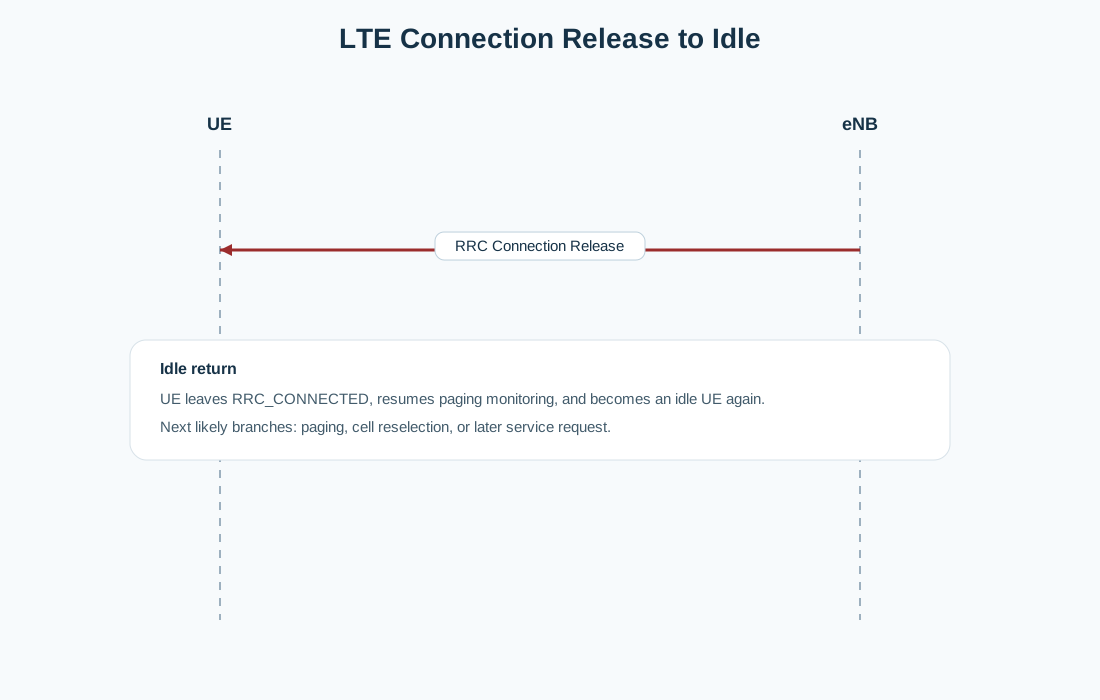
UE                          eNB
|                           |
|<-- RRC Connection Release-|
|                           |
|   return to idle behavior |
|   start paging monitoring |
|   start cell reselection  |
Major Phases
| Phase | What happens |
|---|---|
| 1. Release decision | The network decides the connected path can close. |
| 2. Release delivery | The UE receives the release on the active radio path. |
| 3. Idle return | The UE resumes idle monitoring and reachability behavior. |
| 4. Later idle behavior | The UE waits for paging, performs reselection, or later starts a new access branch. |
Step-by-Step Breakdown
Step 1: RRC Connection Release and idle return
Sender -> receiver: eNB -> UE
Message(s): RRC Connection Release
Purpose: Close the active connected path and return the UE to idle-mode behavior.
State or context change: The UE leaves RRC_CONNECTED and resumes idle monitoring, paging monitoring, and later idle mobility behavior.
Note: EPS registration may still remain valid after the connected path is released.
Important Messages in This Flow
| Message | Protocol | Direction | Purpose in this procedure | What to inspect briefly |
|---|---|---|---|---|
| RRC Connection Release | RRC | eNB -> UE | Ends the active connected path and triggers the return to idle. | Release timing, cell context, and whether the next expected branch is really idle behavior. |
Important Parameters to Inspect
| Parameter | What it is | Where it appears | Why it matters | Common issues |
|---|---|---|---|---|
| Release timing | The point at which the active connection is closed. | RRC Connection Release | Shows whether the connected branch ended at the right time. | Unexpected early release. |
| RRC state change | The move from connected signaling to idle behavior. | Immediately after release | Confirms that the UE really returned to idle rather than another recovery path. | Immediate reconnect loop. |
| Later idle behavior | The next expected branch after release. | Paging, reselection, or later fresh access | Explains whether the idle return was stable. | Missing page response or unstable cell stay. |
Successful Completion
Success means the UE returns cleanly to idle-mode behavior and the next expected branch is consistent with paging, cell reselection, or later service return.
Common Failures and Troubleshooting
| Symptom | Likely cause | Where to inspect | Relevant message(s) | Relevant interface(s) | Likely next step |
|---|---|---|---|---|---|
| UE reconnects immediately after release | A new uplink or paging trigger appeared, or release timing was wrong. | Events immediately before and after release. | RRC Connection Release | LTE Uu | Check whether the next branch is paging response, service request, or recovery. |
| Idle return looks incomplete | The trace missed the next branch or the UE did not remain stable after release. | Post-release paging and reselection behavior. | RRC Connection Release | LTE Uu | Follow the next visible idle-side event instead of stopping at the release itself. |
What to Check in Logs and Traces
- Confirm that the UE was previously in connected mode.
- Check whether the release timing matches inactivity or service completion.
- Use the next idle-side branch to confirm stable return to idle behavior.
Related Pages
Related sub-procedures
Related message reference pages
Related troubleshooting pages
Notes
Connection release to idle does not mean detach. In many cases the UE remains registered and only changes back to idle reachability.
FAQ
What is LTE Connection Release to Idle?
It is the connected-to-idle transition that follows the end of active LTE signaling.
What usually comes next?
Paging, cell reselection, or a later service request may follow depending on the scenario.