LTE CSFB to 3G Call Flow
LTE CSFB to 3G is the fallback branch where LTE sends the UE toward UMTS for legacy voice handling.
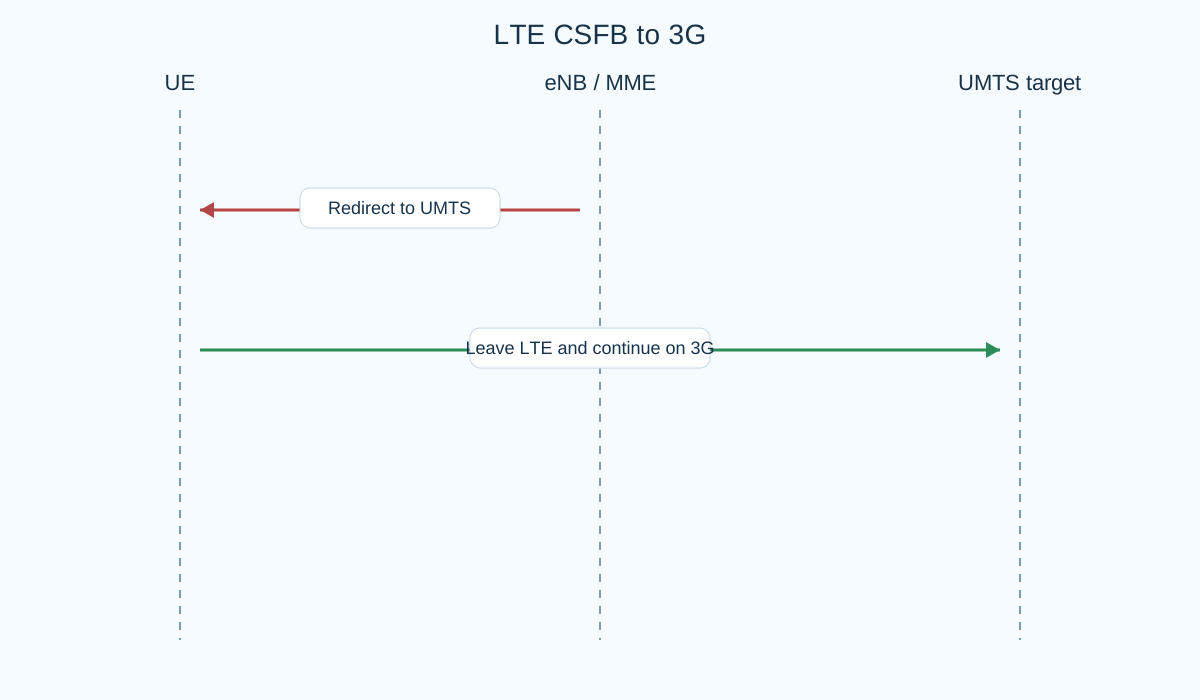
This page focuses on the LTE-to-UMTS target selection and the exact point where the UE leaves LTE for 3G continuation.
Introduction
Once the generic CSFB branch decides that legacy service is needed, the target may be UMTS. The LTE side prepares the fallback and then sends the UE toward a 3G target, usually through redirection or an interworking mobility branch.
The main nodes are the UE, eNB, MME, and the UMTS target side.
What Is CSFB to 3G in Simple Terms?
- What starts the procedure: The generic CSFB branch selects UMTS as the target voice system.
- What the UE and network want to achieve: Move the UE from LTE to a 3G target so the voice attempt can continue there.
- What success looks like: The UE is redirected or moved to UMTS and the voice attempt continues.
- What failure means: The UE leaves LTE too late, reaches the wrong UMTS target, or fails before voice continuation begins.
Why this procedure matters
This branch is useful when the generic fallback worked at the LTE side, but the real issue is which 3G target was chosen and how quickly the UE got there.
Quick Fact Sheet
| Procedure name | LTE CSFB to 3G |
|---|---|
| Domain | LTE to UMTS fallback |
| Main trigger | CSFB selects UMTS as the target voice system |
| Start state | The LTE fallback branch is active |
| End state | UE moves from LTE to UMTS for voice continuation |
| Main nodes | UE, eNB, MME, UMTS target side |
| Main protocols | RRC, NAS, SGs |
| Main success outcome | The UE reaches the right 3G target and the voice attempt continues |
| Main failure outcome | The move to UMTS is late, wrong, or incomplete |
| Most important messages | Extended Service Request, target command, UMTS continuation |
| Main specs | TS 23.272 |
Preconditions
- The generic CSFB branch is active.
- A usable UMTS target exists for fallback.
- The UE can measure or otherwise access the selected UMTS layer.
Nodes and Interfaces
Nodes involved
| Node | Role in this procedure |
|---|---|
| UE | Leaves LTE and retunes or moves toward the selected UMTS target. |
| eNB | Provides the LTE-side command that sends the UE toward UMTS. |
| MME | Maintains the CSFB coordination behind the interworking move. |
| UMTS target side | Takes over the voice attempt after LTE is left. |
Interfaces used
| Interface | Path | Role |
|---|---|---|
| LTE Uu | UE <-> eNB | Carries the LTE-side fallback command toward UMTS. |
| SGs | MME <-> MSC / VLR | Keeps the legacy voice coordination active behind the move. |
| 3G target access | UE <-> UMTS target side | Carries the voice continuation after LTE is left. |
End-to-End Call Flow
UE            eNB / MME            UMTS target
|--CSFB trigger---->|                  |
|<--redirect to 3G--|                  |
|------leave LTE and move to UMTS----->|
Major Phases
| Phase | What happens |
|---|---|
| 1. Fallback decision | The generic CSFB branch decides UMTS is the target voice system. |
| 2. Target command | The LTE side commands the UE toward 3G. |
| 3. Target acquisition | The UE leaves LTE and reaches the UMTS target layer. |
| 4. Voice continuation | The voice attempt proceeds on the UMTS side. |
Step-by-Step Breakdown
Step 1: Select the 3G target branch
Sender -> receiver: MME / eNB
Message(s): Fallback target selection
Purpose: Choose UMTS as the legacy system for continuation.
State or context change: The fallback branch now has a concrete target technology.
Note: This is where the analysis moves from generic fallback to RAT-specific continuation.
Step 2: Send the 3G move command
Sender -> receiver: eNB -> UE
Message(s): Redirect to UMTS or related interworking command
Purpose: Tell the UE to leave LTE and reach the 3G target side.
State or context change: The UE exits LTE and starts the target search or acquisition.
Note: The target information here is the key to explaining wrong-cell or wrong-layer behavior.
Step 3: Reach the UMTS target
Sender -> receiver: UE -> UMTS target side
Message(s): 3G access continuation
Purpose: Attach the UE to the selected UMTS path for voice continuation.
State or context change: The voice attempt is now outside LTE.
Note: The LTE trace ends its main role once the UE leaves LTE successfully.
Important Messages
| Message | Protocol | Direction | Purpose in this procedure | What to inspect briefly |
|---|---|---|---|---|
| Extended Service Request | NAS | UE -> MME | Useful early trigger behind the fallback branch before UMTS is selected. | Check whether the fallback request was correctly identified as voice-related. |
| Redirect to 3G | RRC | eNB -> UE | Moves the UE from LTE toward UMTS. | Check the target frequency or target-system details used for the 3G move. |
| UMTS continuation | Target RAT | UE -> UMTS target side | Shows that the UE really reached the 3G side after leaving LTE. | Check whether the selected 3G target was reachable and correct. |
Important Parameters to Inspect
| Parameter | What it is | Where it appears | Why it matters | Common issues |
|---|---|---|---|---|
| UMTS target details | The target carrier or target-system information used for fallback. | Redirect command | Explain where the UE was told to go after leaving LTE. | The UE is sent to the wrong UMTS layer or carrier. |
| Fallback timing | The gap between LTE trigger and the move to 3G. | Fallback branch | Useful when the voice attempt feels delayed or late. | The 3G move starts too slowly. |
| Legacy coordination state | The SGs-backed legacy call coordination behind the 3G branch. | Before and during redirect | Shows whether the voice attempt is still valid when the UE reaches 3G. | The UE reaches 3G but the voice context is already stale. |
| Target acquisition result | Whether the UE actually reached the intended 3G side. | UMTS continuation | Separates wrong target selection from later 3G service problems. | The LTE trace looks correct, but the UE never reaches the right 3G target. |
| Originating vs terminating context | Which side started the voice branch before fallback. | Early fallback path | Explains whether paging or direct MO service trigger was expected earlier. | The branch is read using the wrong service direction. |
Successful Completion
Success means the LTE fallback branch sends the UE to the correct UMTS target and the voice attempt continues there.
Common Failures and Troubleshooting
| Symptom | Likely cause | Where to inspect | Relevant message(s) | Relevant interface(s) | Likely next step |
|---|---|---|---|---|---|
| UE receives the 3G move command but does not continue cleanly | The target UMTS side was wrong, weak, or unreachable. | Redirect details and the target acquisition result. | Redirect to 3G | LTE Uu, 3G target access | Check the exact UMTS target information before blaming the 3G core side. |
| Fallback is too slow before 3G acquisition | The LTE fallback trigger or redirect timing is late. | Fallback trigger, SGs coordination, and the redirect timing. | Extended Service Request, redirect command | NAS, SGs, LTE Uu | Compare the move timing to the user-visible call setup delay. |
What to Check in Logs and Traces
- Use the generic CSFB branch first, then pivot to the exact UMTS target details.
- Check whether the UE really received a usable 3G target command.
- Treat LTE and target-UMTS problems separately after the UE leaves LTE.
Related Pages
Related sub-procedures
Related message reference pages
Related troubleshooting pages
Notes
This page explains the UMTS-specific target branch of fallback, not the full generic CSFB logic. Start with the generic page when the target RAT is still unclear.
FAQ
What is LTE CSFB to 3G?
It is the LTE fallback branch where the voice attempt leaves LTE and continues on UMTS.
Does this page replace generic CSFB analysis?
No. It starts after the generic fallback branch has already selected UMTS as the target side.