LTE Detach Procedure Call Flow
LTE Detach is the procedure that releases EPS registration and ends the active mobility or service context for the UE. It can be UE-initiated or network-initiated depending on why the context is being removed.
Introduction
The LTE Detach Procedure cleanly removes the UE from EPS service when the UE or network decides the registration should end. It also drives the release of the related bearer and control-plane context.
What Is LTE Detach in Simple Terms?
- What starts the procedure: The UE or network decides EPS registration must end.
- What the UE and network want to achieve: Remove registration and release related EPC context cleanly.
- What success looks like: The detach request is accepted and the related context is released.
- What failure means: Context may remain partially active or the detach does not complete cleanly.
Why this procedure matters
Detach is the clean exit path for EPS registration. It explains why later paging, service request, or mobility procedures should no longer continue from the old context.
Quick Fact Sheet
| Main trigger | UE power-off, SIM removal, network release decision, or explicit EPS detach need |
|---|---|
| Start state | UE is registered in EPS |
| End state | EPS registration is removed and related bearer context is released |
| Most important messages | Detach Request, Detach Accept |
Preconditions
- The UE is currently registered in EPS.
- The detach direction and type are valid for the scenario.
- The network can release the related bearer and control-plane context.
Nodes and Interfaces
Nodes involved
| Node | Role in this procedure |
|---|---|
| UE | Starts UE-initiated detach or responds to network-initiated detach. |
| eNB | Relays the NAS detach exchange. |
| MME | Controls EPS registration release. |
| SGW | Releases related bearer context. |
Interfaces used
| Interface | Endpoints | Role |
|---|---|---|
| LTE Uu | UE <-> eNB | Carries the NAS detach signaling. |
| S1-MME | eNB <-> MME | Carries control-plane detach handling. |
| S11 | MME <-> SGW | Carries bearer and session release coordination. |
End-to-End Call Flow
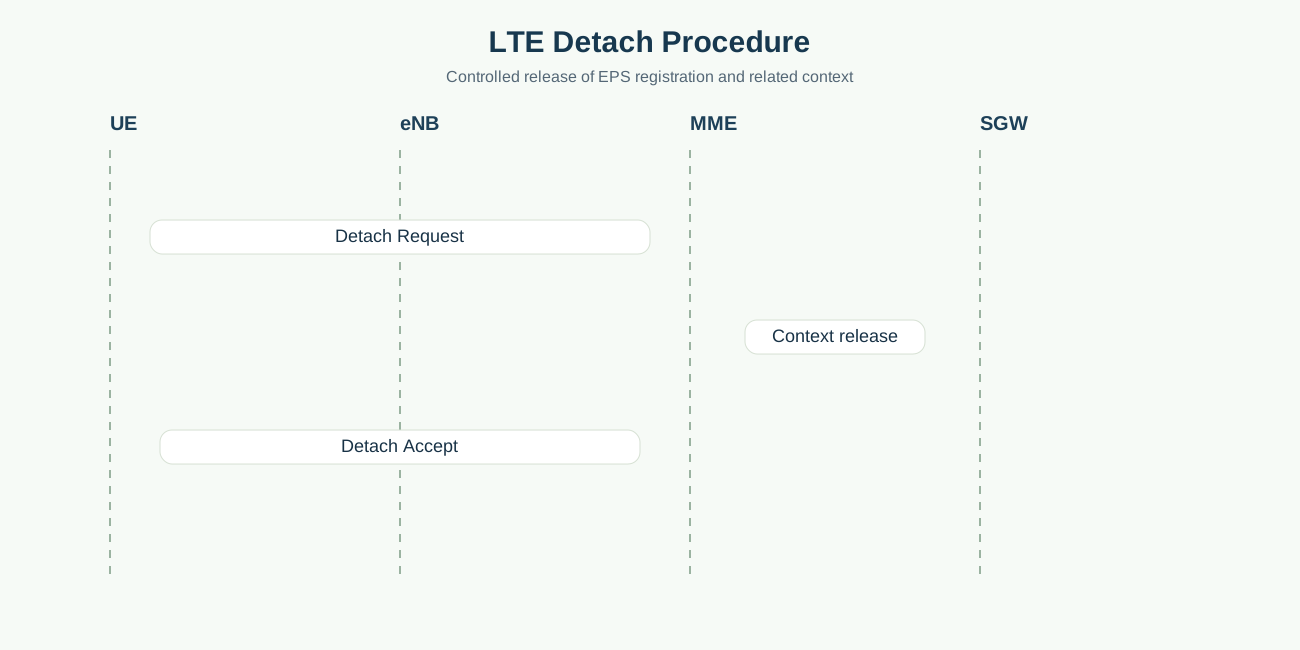
UE               eNB               MME               SGW
|                 |                 |                 |
|--Detach Request----------------->|                 |
|                 |--uplink NAS--------------------->|
|                 |                 |--Release bearer/context------->|
|                 |                 |<--Release result---------------|
|                 |<-Detach Accept-----------------------------------|
|<--NAS delivery-------------------|                 |
Major Phases
1. Detach trigger
The UE or network decides that EPS registration should end.
2. Detach signaling
Detach Request is delivered in the correct direction for the scenario.
3. Context release
The MME and SGW remove the related service context.
4. Completion
Detach Accept confirms the closing step when required.
Step-by-Step Breakdown
Detach start
Sender -> receiver: UE -> MME or MME -> UE
Message(s): Detach Request
Purpose: Start EPS registration release.
State or context change: The old registered context is marked for removal.
Note: Start with detach type and direction before reading anything else.
Context release
Sender -> receiver: MME -> SGW
Message(s): Bearer and context release signaling
Purpose: Remove the related service context.
State or context change: EPS mobility and bearer state are torn down.
Note: Detach is not complete until the context release side also closes.
Important Messages
Important Parameters to Inspect
| Item | What it is | Where it appears | Why it matters | Common issues |
|---|---|---|---|---|
| Detach type | Indicates the detach scope and reason. | Detach Request | Shows what kind of context should be removed. | Wrong detach interpretation. |
| Direction | Whether the flow is UE-initiated or network-initiated. | Detach Request / Accept | Changes the expected message ordering. | Reading the flow in the wrong direction. |
Successful Completion
A successful detach removes the old EPS registration and tears down the related bearer and mobility context.
Common Failures and Troubleshooting
Detach signaling appears but context is not really released
Likely cause: Bearer or session release did not complete.
Where to inspect: SGW-side release handling and later residual service behavior.
Relevant message(s): Detach Request, Detach Accept
Relevant interface(s): NAS, S11
Likely next step: Confirm whether the old context still survives on the EPC side.
What to Check in Logs and Traces
- Start with the detach direction and detach type.
- Confirm whether Detach Accept is expected in the scenario.
- Check that bearer and context release followed the NAS detach signaling.
Related Pages
Related sub-procedures
Related message reference pages
Related troubleshooting pages
Notes
Detach is the controlled exit from EPS registration. The main checks are the detach type, direction, and whether the related bearer and context release actually followed.
FAQ
Can Detach be network-initiated?
Yes. The network can start detach, and the direction changes the later message order.
What should I inspect first?
Detach type and direction.