LTE E-RAB Release Procedure Call Flow
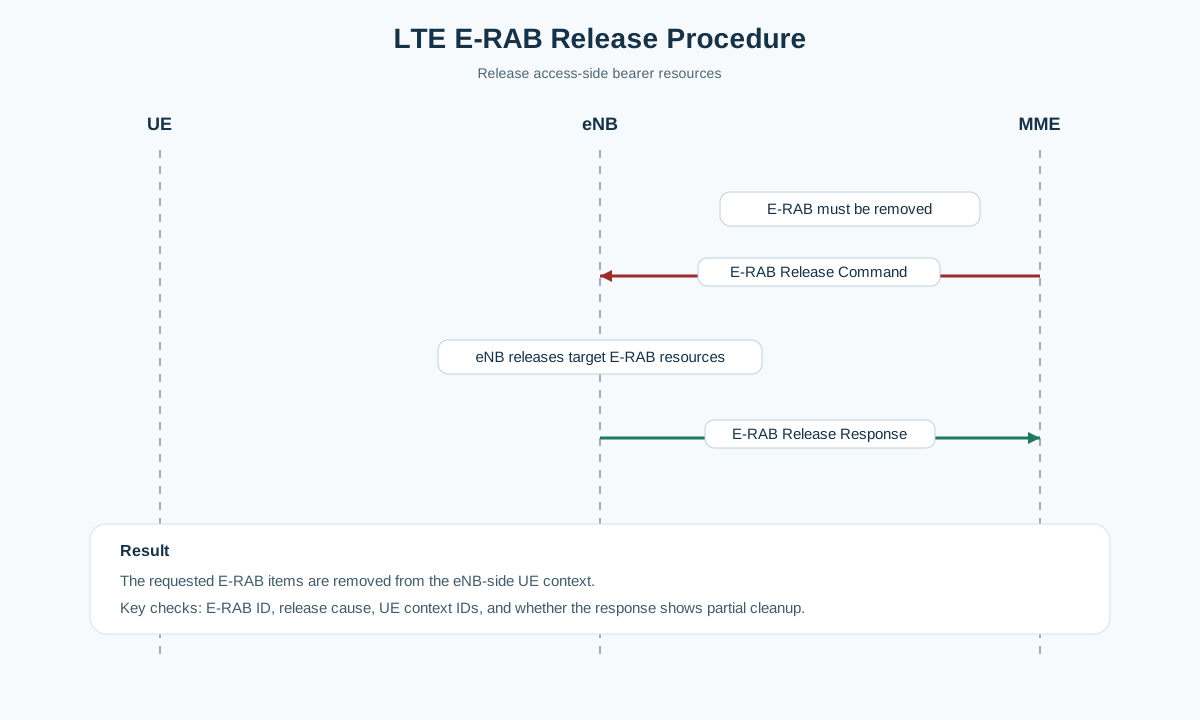
LTE E-RAB Release Procedure removes one or more active E-RABs from the access side. It is used when the MME wants the eNB to release bearer-specific radio resources because service ended, a bearer was deactivated, or a later control path is cleaning up the UE context.
The main S1AP pair is E-RAB Release Command and E-RAB Release Response.
Introduction
The E-RAB release path is the radio-access side of bearer cleanup. It does not necessarily mean the whole UE context is gone, but it does mean that specific E-RAB resources are being removed from the eNB-side view.
The main nodes are the MME, eNB, and UE.
What Is LTE E-RAB Release Procedure in Simple Terms?
- What starts the procedure: The network decides active E-RAB resources should be removed.
- What the UE and network want to achieve: Cleanly release selected radio bearer resources.
- What success looks like: The eNB receives E-RAB Release Command and returns E-RAB Release Response.
- What failure means: Access-side bearer cleanup stays partial or stale radio resources remain.
Why this procedure matters
This procedure shows why an otherwise healthy bearer or service branch disappears from the radio side and whether that release was complete.
Quick Fact Sheet
| Procedure name | LTE E-RAB Release Procedure |
|---|---|
| Domain | Access-side bearer cleanup |
| Main trigger | Release of one or more active E-RABs |
| Start state | eNB has active E-RAB resources for the UE |
| End state | Target E-RAB resources are removed |
| Main nodes | MME, eNB, UE |
| Main protocols | S1AP |
| Main success outcome | eNB releases the requested E-RAB items cleanly |
| Main failure outcome | Radio-side cleanup is incomplete |
| Most important messages | E-RAB Release Command, E-RAB Release Response |
| Main specs | TS 36.413, TS 23.401 |
Preconditions
- One or more E-RABs are still active at the eNB.
- The MME has a reason to release those E-RABs.
- The UE context on S1-MME is still available for targeted cleanup.
Nodes and Interfaces
Nodes involved
| Node | Role in this procedure |
|---|---|
| MME | Starts the E-RAB release toward the eNB. |
| eNB | Releases the requested access-side bearer resources. |
| UE | Stops using the released radio bearer resources after cleanup. |
Interfaces used
| Interface | Path | Role |
|---|---|---|
| S1-MME | MME <-> eNB | Carries E-RAB Release Command and Response. |
| LTE Uu | UE <-> eNB | Reflects the later absence of the released radio resources. |
End-to-End Call Flow
UE               eNB               MME
|                 |<-- E-RAB Release Cmd -|
|                 |-- release bearer ctx -|
|                 |-- E-RAB Release Resp ->|
|   released E-RAB no longer usable        |
Major Phases
| Phase | What happens |
|---|---|
| 1. Release decision | The MME decides which E-RAB resources should be removed. |
| 2. Access-side cleanup | The eNB releases the requested E-RAB items. |
| 3. Result reporting | The eNB reports completion or partial failure back to the MME. |
Step-by-Step Breakdown
Step 1: E-RAB Release Command
Sender -> receiver: MME -> eNB
Message(s): E-RAB Release Command
Purpose: Ask the eNB to release specific E-RAB resources.
State or context change: The eNB begins bearer-specific cleanup.
Note: Inspect which E-RAB IDs are included and why they are being removed.
Step 2: E-RAB Release Response
Sender -> receiver: eNB -> MME
Message(s): E-RAB Release Response
Purpose: Confirm which E-RABs were successfully released.
State or context change: The MME now knows whether the access-side cleanup finished correctly.
Note: Partial release handling matters in multi-bearer sessions.
Important Messages in This Flow
| Message | Protocol | Direction | Purpose in this procedure | What to inspect briefly |
|---|---|---|---|---|
| E-RAB Release Command | S1AP | MME -> eNB | Starts radio bearer release at the access side. | E-RAB IDs, release reason, and UE context identifiers. |
| E-RAB Release Response | S1AP | eNB -> MME | Reports the result of the requested release. | Released list, failed items, and partial cleanup details. |
Important Parameters to Inspect
| Parameter | What it is | Where it appears | Why it matters | Common issues |
|---|---|---|---|---|
| E-RAB ID | The access bearer being released. | Release Command and Response | Shows exactly which bearer resources are being removed. | Wrong item released or failed item mapping. |
| Cause | The reason attached to the release branch. | Release Command | Helps separate normal cleanup from failure-led removal. | Release reason interpreted incorrectly. |
| S1AP UE IDs | The UE context identifiers on S1-MME. | Command and Response | Keep the release tied to the correct UE context. | Stale UE mapping. |
Successful Completion
Success is confirmed when the eNB returns E-RAB Release Response and the target E-RAB resources disappear from the access-side UE context.
Common Failures and Troubleshooting
| Symptom | Likely cause | Where to inspect | Relevant message(s) | Relevant interface(s) | Likely next step |
|---|---|---|---|---|---|
| Some E-RABs release, but others remain | The eNB completed only part of the cleanup. | Per-item result details in the response. | E-RAB Release Command, E-RAB Release Response | S1-MME | Check the failed item list and the earlier bearer history. |
| Bearer looks released in EPC, but not at the access side | Access-side cleanup did not complete or did not target the correct UE context. | UE IDs and E-RAB IDs in the command. | Release Command and Response | S1-MME, LTE Uu | Align the S1AP release with the bearer deactivation branch. |
What to Check in Logs and Traces
- Match E-RAB IDs in the command and response before checking later traffic behavior.
- Use the cause and earlier bearer history to decide whether the release was normal or failure-led.
- Correlate access-side cleanup with any NAS bearer release that happened at the same time.
Related Pages
Related sub-procedures
Related message reference pages
- LTE Initial Context Setup Procedure — common earlier bearer setup path
Related troubleshooting pages
Notes
E-RAB release is access-side cleanup. It may happen because of normal service teardown or because another bearer-control branch has already started removing the session.
FAQ
What is LTE E-RAB Release Procedure?
It is the S1AP procedure used to remove active E-RAB resources from the eNB side.
What is the main success message?
E-RAB Release Response is the clearest confirmation that the requested access-side cleanup finished.