LTE ETWS Notification Procedure Call Flow
LTE ETWS Notification Procedure is the LTE warning-delivery path used when the network needs to expose Earthquake and Tsunami Warning System information to UEs through the broadcast and warning-related LTE context.
This procedure depends on the broadcast chain, warning-related SIB handling, and in some cases the paging-side path that alerts idle UEs to warning-related changes.
Introduction
The LTE ETWS Notification Procedure is a public-warning path rather than a normal UE-specific service procedure. It is centered on how the warning reaches the UE through LTE broadcast behavior.
Use this page when the main question is whether the warning-related LTE context was present, refreshed, and visible to the UE at the time it should have been.
What Is LTE ETWS Notification Procedure in Simple Terms?
- What starts the procedure: The network activates ETWS-related warning broadcasting for the cell or area.
- What the UE and network want to achieve: Expose the warning-related broadcast context to the UE quickly and reliably.
- What success looks like: The UE receives the warning-related LTE context and behaves as expected for the warning scenario.
- What failure means: The warning-related broadcast path is incomplete, stale, or missed by the UE.
Why this procedure matters
Warning delivery analysis is mostly about whether the right broadcast and reachability context was present at the right time. If the UE never saw the warning-related LTE context, later paging or idle behavior may look normal while the actual warning path still failed.
Quick Fact Sheet
| Procedure name | LTE ETWS Notification Procedure |
|---|---|
| Domain | LTE public warning broadcast |
| Main trigger | ETWS warning activation by the network |
| Start state | UE is camped or monitoring LTE broadcast behavior in the warning area |
| End state | UE has the warning-related LTE context needed for ETWS handling |
| Main nodes | UE, eNB |
| Main protocols | RRC broadcast information, paging-side reachability where relevant |
| Main success outcome | The warning-related broadcast context is visible to the UE |
| Main failure outcome | The warning path is missed, stale, or only partly visible |
| Most important messages | SIB1, warning-related SIB family, Paging where relevant |
| Main specs | TS 36.331, TS 36.300 |
Preconditions
- The UE has valid LTE broadcast context for the serving cell.
- The cell or area is configured to expose ETWS-related warning context.
- The UE is in a state where warning-related LTE context should be observable.
Nodes and Interfaces
Nodes involved
| Node | Role in this procedure |
|---|---|
| UE | Reads warning-related LTE broadcast context and reacts to it. |
| eNB | Schedules the warning-related LTE broadcast content and any related reachability behavior. |
| Broadcast warning context | Provides the warning-related LTE information made visible to UEs in the affected area. |
Interfaces used
| Interface | Path | Role |
|---|---|---|
| LTE Uu | UE <-> eNB | Carries the warning-related LTE context. |
| BCCH / DL-SCH | eNB -> UE | Carry the warning-related system-information content. |
| Paging-side path | eNB -> UE | May alert idle UEs to system-information change or warning-related continuation. |
End-to-End Call Flow
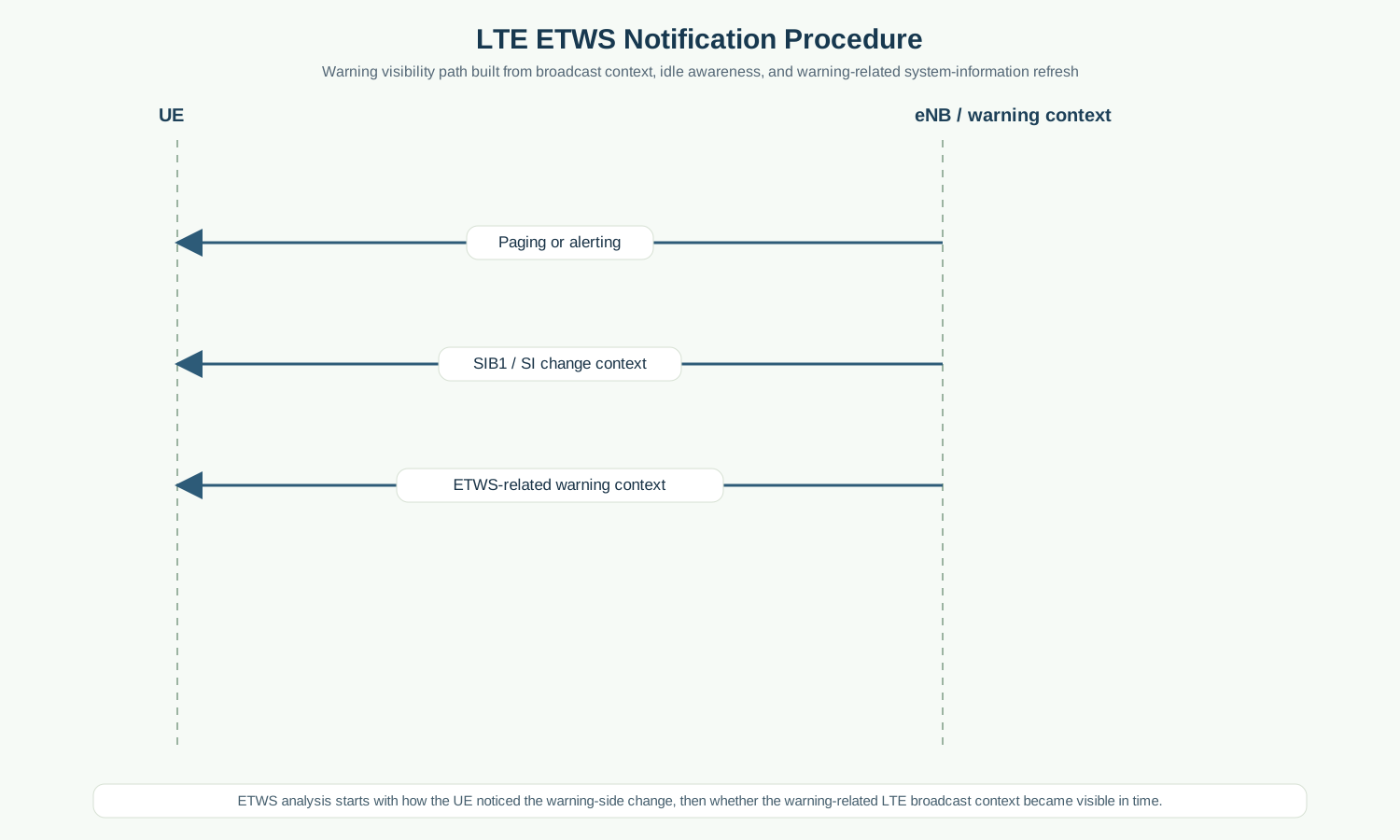
UE                         eNB / warning context
|--idle monitoring----------->|
|<--Paging (if used)----------|
|<--SIB1 / SI change----------|
|<--ETWS-related broadcast----|
Major Phases
| Phase | What happens |
|---|---|
| 1. Warning activation | The network activates the ETWS-related warning path. |
| 2. Reachability or change indication | Idle UEs may be alerted through paging-side or SI-change behavior. |
| 3. Warning-related broadcast read | The UE reads the warning-related LTE context. |
| 4. UE-side warning visibility | The UE now has the warning-related information exposed through LTE broadcast handling. |
Step-by-Step Breakdown
Start from the current broadcast context
Sender -> receiver: UE
Message(s): SIB1 and existing system-information view
Purpose: Anchor the warning analysis in the current LTE broadcast state.
State or context change: The UE has the basic cell view needed before warning-specific handling can be checked.
Note: Do not start ETWS analysis without proving the normal broadcast path first.
Check whether the UE was alerted to a change
Sender -> receiver: eNB -> UE
Message(s): Paging or SI-change-driven continuation
Purpose: Explain how an idle UE became aware that warning-related context needed attention.
State or context change: The UE is positioned to refresh or observe the warning-related LTE context.
Note: Not every trace shows the same alerting pattern, so keep the broadcast and paging context together.
Read the warning-related LTE context
Sender -> receiver: eNB -> UE
Message(s): Warning-related SIB family within LTE system information
Purpose: Expose the ETWS-related warning information to the UE.
State or context change: The UE now has the warning-related LTE broadcast view.
Note: The public-warning SIB family is best read through the LTE system-information reference on this site.
Correlate the warning visibility with UE behavior
Sender -> receiver: UE
Message(s): Warning handling continuation
Purpose: Check whether the warning-related broadcast information was actually usable at the UE.
State or context change: The warning path is now visible as either successful or incomplete.
Note: The key question is whether the UE saw the warning context at the right time, not only whether the cell was broadcasting in theory.
Important Messages
| Message | Protocol | Direction | Purpose in this procedure | What to inspect briefly |
|---|---|---|---|---|
| System Information Block Type 1 | RRC | eNB -> UE | Provides the scheduling and change-detection context behind later warning handling. | Check whether the UE had the right baseline broadcast context before the warning path. |
| Paging | RRC | eNB -> UE | May support idle-side warning-related continuation or SI-change awareness. | Check whether an idle UE had a clear path back to the warning-related broadcast refresh. |
| LTE System Information Reference | RRC | eNB -> UE | Maps the public-warning SIB family used for ETWS-related handling. | Check the warning-related SIB family through the LTE system-information reference. |
Important Parameters to Inspect
| Parameter | What it is | Where it appears | Why it matters | Common issues |
|---|---|---|---|---|
| Warning-area context | The area or cell scope where the warning was meant to be visible. | Broadcast and idle context | Needed to confirm the UE was in the intended warning area. | The UE was not on the intended warning-side cell or area. |
| SI-change visibility | Whether the UE had a clear reason to refresh the warning-related broadcast set. | SIB1 and paging-side context | Explains how the UE knew to re-read the warning-related context. | The warning content changed, but the UE never refreshed its view. |
| Warning-related SIB presence | Whether the public-warning SIB family was actually present and readable. | LTE system-information view | Shows whether the warning content was available to the UE at all. | The warning was expected, but the related broadcast block was absent or stale. |
| Idle reachability state | Whether the UE was in a state where warning-related continuation was plausible. | RRC_IDLE and paging context | Useful when the warning path depends on idle-side awareness. | The paging-side state is ignored during warning analysis. |
| Broadcast timing | When the warning-related context became visible compared with when the UE was monitoring. | Across SI refresh and warning activation | Useful when the warning path is time-sensitive. | The UE monitored earlier or later than the actual warning broadcast window. |
Successful Completion
Success means the UE had a valid path to the warning-related LTE broadcast context and the ETWS-related information became visible in time.
Common Failures and Troubleshooting
| Symptom | Likely cause | Where to inspect | Relevant message(s) | Relevant interface(s) | Likely next step |
|---|---|---|---|---|---|
| The cell was in the warning area, but the UE never showed warning-related behavior | The warning-related broadcast context may have been stale, absent, or never refreshed at the UE. | SIB1, paging context, and the warning-related SIB family. | SIB1, Paging, warning-related SIBs | LTE Uu | Check how the UE would have become aware of the warning-related broadcast change. |
| Paging is present, but the warning path still looks incomplete | The alerting path existed, but the broadcast warning content may still not have been readable. | Paging plus the later system-information refresh path. | Paging and warning-related system information | LTE Uu | Do not assume paging alone proves the warning content reached the UE. |
What to Check in Logs and Traces
- Prove the normal broadcast baseline before checking warning-specific behavior.
- Read paging and SI-change context together when the UE was idle.
- Use the LTE system-information reference for the warning-related SIB family.
Related Pages
Related sub-procedures
Related message reference pages
Related troubleshooting pages
Notes
This page treats ETWS as a broadcast warning path. On this site, the public-warning blocks are best read through the LTE system-information reference rather than standalone message pages.
FAQ
What is the LTE ETWS Notification Procedure?
It is the LTE broadcast warning path used to expose ETWS-related information to UEs in the affected area.
Which LTE references matter most for ETWS analysis?
Start with the LTE system-information path, then check the paging-side context if idle UEs had to become aware of a broadcast change.