LTE Generic Error Handling Procedure Call Flow
LTE Generic Error Handling Procedure is the LTE failure-handling branch used when a procedure cannot continue normally and the network or UE has to reject, report, or classify the problem.
This page focuses on the failure path itself rather than the earlier success flow that should have happened before it.
Introduction
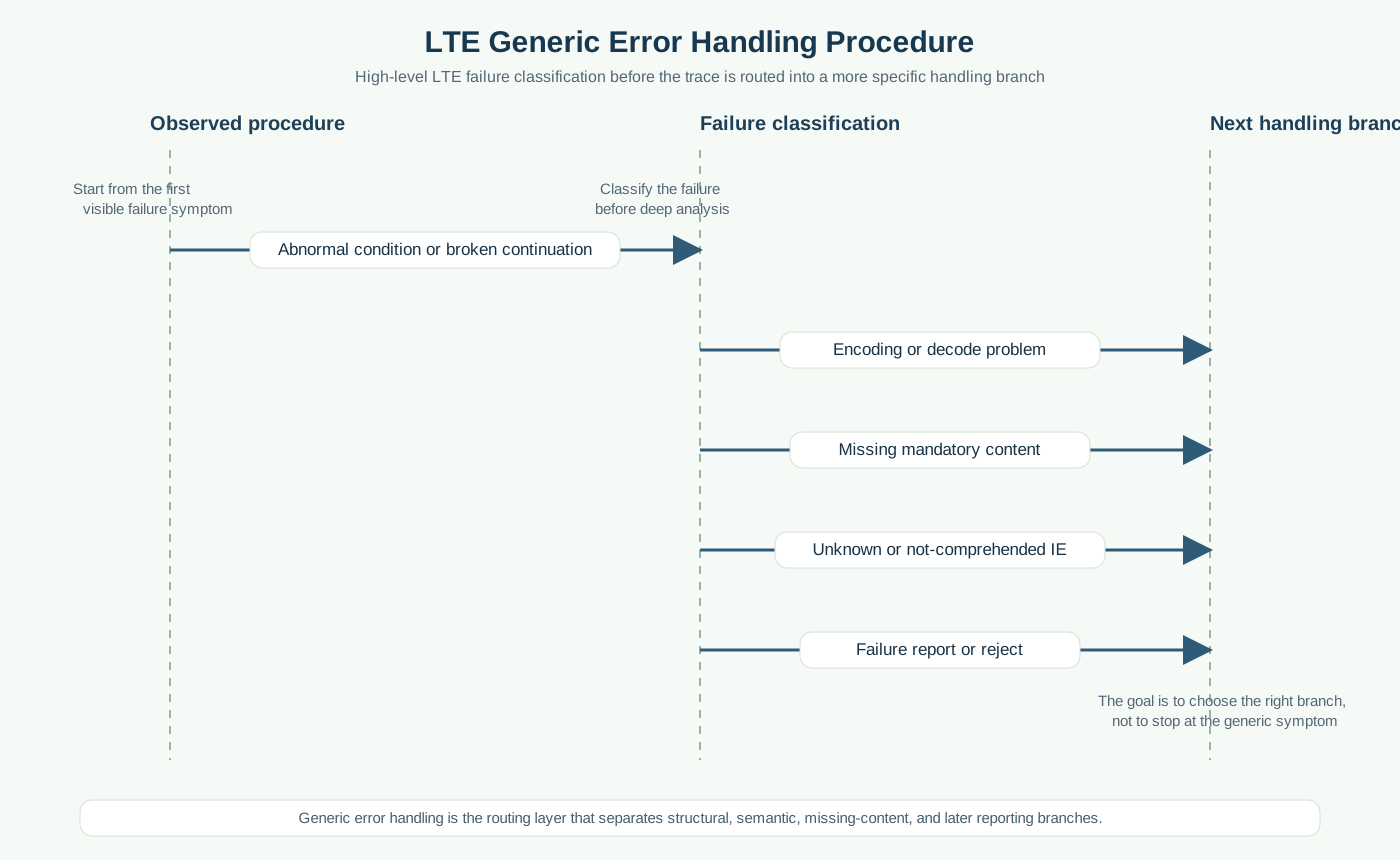
Generic error handling is the fallback failure path used when a procedure breaks, but the exact LTE failure family is still not clear. It sits above the more specific branches and helps sort the trace before deeper analysis starts.
Use this page when the trace clearly shows a broken procedure, but it is still unclear whether the problem belongs to unknown content, missing content, encoding trouble, or a later reject or timeout branch.
What Is LTE Generic Error Handling Procedure in Simple Terms?
- What starts the procedure: A procedure receives invalid, unsupported, or otherwise unusable content and cannot continue normally.
- What the UE and network want to achieve: Classify the procedure break and send the analysis into the correct specific failure branch.
- What success looks like: The failure is classified correctly and the next analysis step becomes clear.
- What failure means: The wrong failure branch is assumed and the real problem is hidden under generic symptoms.
Why this procedure matters
Many LTE failures look similar at the symptom level. Correctly classifying the failure type early prevents time being lost on the wrong branch.
Quick Fact Sheet
| Procedure name | LTE Generic Error Handling Procedure |
|---|---|
| Domain | Generic LTE protocol failure handling |
| Main trigger | A procedure receives invalid, unsupported, or otherwise unusable content and cannot continue normally. |
| Start state | A wider LTE procedure is already in progress and something has gone wrong or become invalid |
| End state | The invalid branch is rejected, ignored, or routed to a more specific failure category |
| Main nodes | UE, eNB, MME / network side |
| Main protocols | RRC, NAS, procedure context |
| Main success outcome | The failure branch is clearly identified and the next corrective action is possible |
| Main failure outcome | The real break point stays unclear or the wrong failure branch is assumed |
| Most important messages | Rejects, ignore rules, later release or retry behavior |
| Main specs | TS 36.331, TS 24.301 |
Preconditions
- A wider LTE procedure is already underway or has just failed.
- The network and UE still have enough context to reject, report, or classify the failure.
- The trace includes the messages immediately before and after the failure branch.
Nodes and Interfaces
Nodes involved
| Node | Role in this procedure |
|---|---|
| UE | Detects the condition, rejects the invalid branch, or reports failure context after the earlier problem. |
| eNB | Carries the LTE radio side and receives failure or reject behavior from the UE. |
| MME / network side | Interprets the reject, timeout, or failure report and decides the next correction or release step. |
Interfaces used
| Interface | Path | Role |
|---|---|---|
| LTE Uu | UE <-> eNB | Carries the reject or failure-report signaling seen on the radio side. |
| S1-MME | eNB <-> MME | Carries the wider procedure context behind the failure or reject branch. |
End-to-End Call Flow
UE / network        Procedure context
|--invalid condition detected---->|
|--apply generic error rule------>|
|--reject / ignore / release----->|
Major Phases
| Phase | What happens |
|---|---|
| 1. Detect the abnormal condition | A procedure step is found to be invalid or unusable. |
| 2. Decide the handling category | The network or UE decides whether the problem is generic or belongs to a more specific branch. |
| 3. Apply the handling rule | The procedure is rejected, ignored, released, or redirected to a later analysis path. |
Step-by-Step Breakdown
Step 1: Notice the abnormal procedure state
Sender -> receiver: UE or network side
Message(s): Procedure-specific message or condition
Purpose: Recognize that the current branch cannot continue normally.
State or context change: The wider procedure is now on a failure path instead of a success path.
Note: This is the point where later troubleshooting should stop assuming a normal progression.
Step 2: Map the failure to a handling type
Sender -> receiver: UE or network side
Message(s): Generic error classification
Purpose: Decide whether the issue is missing content, unknown content, encoding trouble, or another class of failure.
State or context change: The failure now has a usable category for later analysis.
Note: This is the most important reasoning step in the whole generic error path.
Step 3: Apply the chosen handling rule
Sender -> receiver: Procedure side -> peer or internal handling
Message(s): Reject, ignore, release, or retry decision
Purpose: Finish the failure-handling branch according to the detected category.
State or context change: The procedure is no longer trying to continue normally.
Note: The visible error response is often less important than the category decision behind it.
Important Messages
| Message | Protocol | Direction | Purpose in this procedure | What to inspect briefly |
|---|---|---|---|---|
| Attach Reject | NAS | Network -> UE | Useful example of a hard failure outcome after generic or specific analysis. | Check whether the reject is the real root cause or only the visible result of an earlier error category. |
| Security Mode Reject | NAS | UE -> Network | Useful example of a UE-side reject after a procedure becomes unacceptable. | Check whether the reject came from content validity, security mismatch, or an earlier error condition. |
Important Parameters to Inspect
| Parameter | What it is | Where it appears | Why it matters | Common issues |
|---|---|---|---|---|
| Failure category | The class of failure being applied to the broken procedure. | Failure analysis stage | Explains which specific branch should be opened next. | The trace is read with the wrong failure category. |
| First invalid condition | The earliest point where the branch stopped being acceptable. | Message before reject or timeout | Shows the real break point instead of the later visible reject only. | The visible reject is blamed while the true break point is earlier. |
| Handling rule | Whether the condition should be ignored, rejected, released, or retried. | Failure branch | Explains why the procedure ended the way it did. | The output looks surprising because the handling rule was not identified. |
| Procedure context | The wider attach, security, mobility, or bearer branch where the failure occurred. | Full trace context | Prevents the generic failure from being read in isolation. | The failure is analyzed without the wider procedure context. |
| Retry or release behavior | What happened after the failure classification. | Later messages | Shows whether the system tried to recover or ended the procedure completely. | The trace is cut too early and misses the actual failure outcome. |
Successful Completion
Success in this page means the failure has been classified correctly enough that the next troubleshooting step is obvious.
Common Failures and Troubleshooting
| Symptom | Likely cause | Where to inspect | Relevant message(s) | Relevant interface(s) | Likely next step |
|---|---|---|---|---|---|
| Trace shows a reject but the real cause is unclear | The visible reject is only the final effect of an earlier invalid condition. | The message immediately before the reject and the wider procedure context. | Reject message and earlier procedure message | NAS or RRC plus context | Go backward one or two messages and classify the earlier abnormal condition first. |
| Same symptom appears in multiple procedures | A generic symptom is being reused across different LTE branches. | Procedure family, trigger, and the first invalid condition. | Procedure-specific | Procedure-specific | Separate the symptom from the procedure family before choosing the next page. |
What to Check in Logs and Traces
- Find the first invalid condition before reading the later reject.
- Classify the failure category before drilling into cause values.
- Keep the wider procedure context visible while reading the failure branch.
Related Pages
Related sub-procedures
- LTE ASN.1 / Encoding Error Handling
- LTE Mandatory Field Missing Handling
- LTE Unknown / Not-Comprehended IE Handling
Related message reference pages
Related troubleshooting pages
Notes
This page is a classification layer. It helps choose the correct specific failure branch rather than replacing the deeper, more specific failure pages.
FAQ
What is LTE generic error handling?
It is the high-level failure-classification path used when a procedure cannot continue and the exact failure type still needs to be identified.
Should this page be read before the specific failure pages?
Yes, when the trace shows a break but the exact failure category is not yet obvious.