LTE Inter-Frequency RSTD Measurement Indication Call Flow
LTE inter-frequency RSTD measurement indication is the measurement procedure used when LTE positioning workflows need inter-frequency reference timing information.
This page covers the measurement indication path itself rather than generic mobility reporting.
Introduction
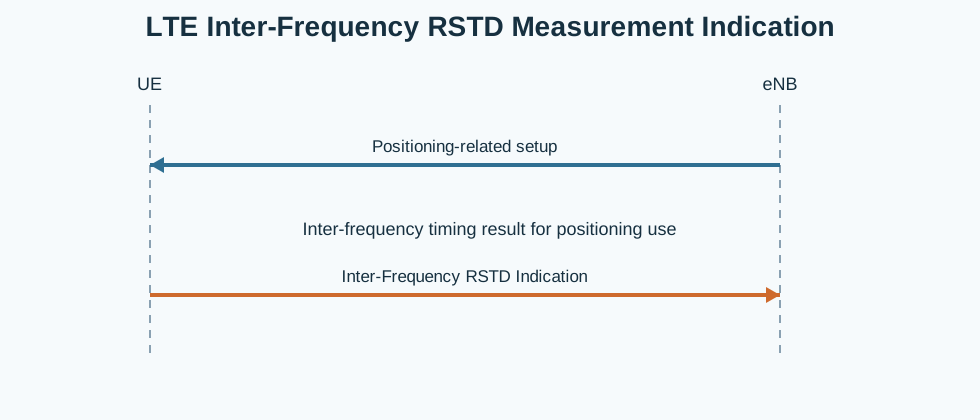
The network configures positioning-related measurement behavior, the UE evaluates the requested inter-frequency timing context, and the result is delivered for later positioning use.
Use this page when the trace is positioning-oriented rather than handover-oriented.
What Is Inter-Frequency RSTD Measurement Indication in Simple Terms?
- What starts the procedure: The LTE side needs positioning-related inter-frequency timing measurements.
- What the UE and network want to achieve: Collect the inter-frequency RSTD-related indication needed for later positioning handling.
- What success looks like: The UE provides the requested indication with the expected frequency context.
- What failure means: The indication is missing, tied to the wrong frequency, or not usable for the intended positioning workflow.
Why this procedure matters
This procedure is useful when the measurement branch supports positioning analysis rather than classic handover decisions.
Quick Fact Sheet
| Procedure name | LTE Inter-Frequency RSTD Measurement Indication |
|---|---|
| Domain | Positioning-oriented LTE measurement handling |
| Main trigger | Positioning workflow needs inter-frequency RSTD context |
| Start state | UE is connected with positioning-related measurement setup active |
| End state | Inter-frequency RSTD indication is available to the network |
| Main nodes | UE, eNB |
| Main protocols | RRC |
| Main success outcome | Requested positioning indication is returned |
| Main failure outcome | Positioning-related indication is incomplete or missing |
| Most important messages | Measurement configuration and inter-frequency indication |
| Main specs | TS 36.331 |
Preconditions
- Positioning-related measurement configuration is active.
- The required inter-frequency context is available in the scenario.
- The UE is still able to perform the requested observation in connected LTE service.
Nodes and Interfaces
Nodes involved
| Node | Role in this procedure |
|---|---|
| UE | Applies measurement rules, performs the configured observations, and sends the relevant result back to the network. |
| eNB | Configures measurement behavior, interprets results, and uses them for mobility, optimization, or analytics decisions. |
Interfaces used
| Interface | Path | Role |
|---|---|---|
| LTE Uu | UE <-> eNB | Carries measurement configuration, reporting, and any later control action based on the result. |
End-to-End Call Flow
UE                    eNB
|<--positioning config----|
|--RSTD indication------->|
Major Phases
| Phase | What happens |
|---|---|
| 1. Positioning setup | The network enables the relevant positioning-oriented measurement behavior. |
| 2. Observation | The UE evaluates the requested inter-frequency timing context. |
| 3. Indication | The UE delivers the positioning-related result. |
| 4. Positioning use | The result is used by later positioning logic. |
Step-by-Step Breakdown
Step 1: Configure positioning-related measurement behavior
Sender -> receiver: eNB -> UE
Message(s): Positioning measurement configuration
Purpose: Tell the UE which inter-frequency timing observation is required.
State or context change: The UE starts the requested positioning-related measurement handling.
Note: This path is more positioning-oriented than mobility-oriented.
Step 2: Perform the timing observation
Sender -> receiver: UE
Message(s): Inter-frequency RSTD evaluation
Purpose: Collect the timing-related observation requested by the network.
State or context change: The UE has the raw positioning measurement context.
Note: The key question is whether the right frequency layer was observed.
Step 3: Return the indication
Sender -> receiver: UE -> eNB
Message(s): Inter-frequency RSTD Measurement Indication
Purpose: Send the positioning-related result back to the LTE side.
State or context change: The network now has the indication it requested.
Note: This page stays at the measurement indication level.
Step 4: Use the result later
Sender -> receiver: Network
Message(s): Later positioning handling
Purpose: Feed the indication into the positioning workflow.
State or context change: The result becomes input for later non-call-flow logic.
Note: The later positioning result is outside this page.
Important Messages
| Message | Protocol | Direction | Purpose in this procedure | What to inspect briefly |
|---|---|---|---|---|
| Inter-Frequency RSTD Measurement Indication | RRC | UE -> eNB | Returns the requested inter-frequency positioning-related indication. | Check the frequency context and whether the right positioning branch is being traced. |
| Measurement configuration | RRC | eNB -> UE | Enables the positioning-oriented observation. | Check that the requested indication matches the intended frequency context. |
Important Parameters to Inspect
| Parameter | What it is | Where it appears | Why it matters | Common issues |
|---|---|---|---|---|
| Target frequency | The LTE layer involved in the positioning observation. | Configuration and indication | Confirms the indication belongs to the intended inter-frequency context. | Wrong layer or wrong indication context. |
| Positioning scope | The positioning-oriented purpose of the requested observation. | Configuration | Explains why this measurement path exists. | It is mistaken for normal mobility reporting. |
| Timing result | The actual RSTD-related outcome returned by the UE. | Indication | Shows whether the requested observation was obtained. | Timing result is present but interpreted against the wrong target layer. |
| Indication timing | When the result was returned relative to the setup. | Trace timing | Useful for delayed or missing-positioning analysis. | The indication is judged too late without checking the setup time. |
| Later positioning use | The workflow that consumes the result. | Follow-up trace context | Shows whether the indication was the right measurement branch for the scenario. | Positioning and mobility branches are mixed together. |
Successful Completion
Success means the requested inter-frequency RSTD indication is returned with the correct frequency and positioning context.
Common Failures and Troubleshooting
| Symptom | Likely cause | Where to inspect | Relevant message(s) | Relevant interface(s) | Likely next step |
|---|---|---|---|---|---|
| Indication missing | The requested inter-frequency positioning observation was not completed or not captured. | Configuration and the expected indication window. | Inter-Frequency RSTD Measurement Indication | LTE Uu | Check whether the scenario really supported the requested positioning observation. |
What to Check in Logs and Traces
- Confirm that the trace is positioning-related rather than mobility-related.
- Check the target frequency used for the RSTD indication.
- Correlate the indication timing with the earlier measurement setup.
Related Pages
Related sub-procedures
Related message reference pages
Related troubleshooting pages
Notes
Inter-Frequency RSTD Measurement Indication is positioning-oriented. It should not be interpreted as a normal handover-trigger event page.
FAQ
What is LTE Inter-Frequency RSTD Measurement Indication?
It is the LTE positioning-related measurement indication path used for inter-frequency timing observations.