LTE LWA Procedure Call Flow
LTE LWA Procedure is the LTE-WLAN Aggregation control path where the LTE side keeps control while user traffic can also use the WLAN branch.
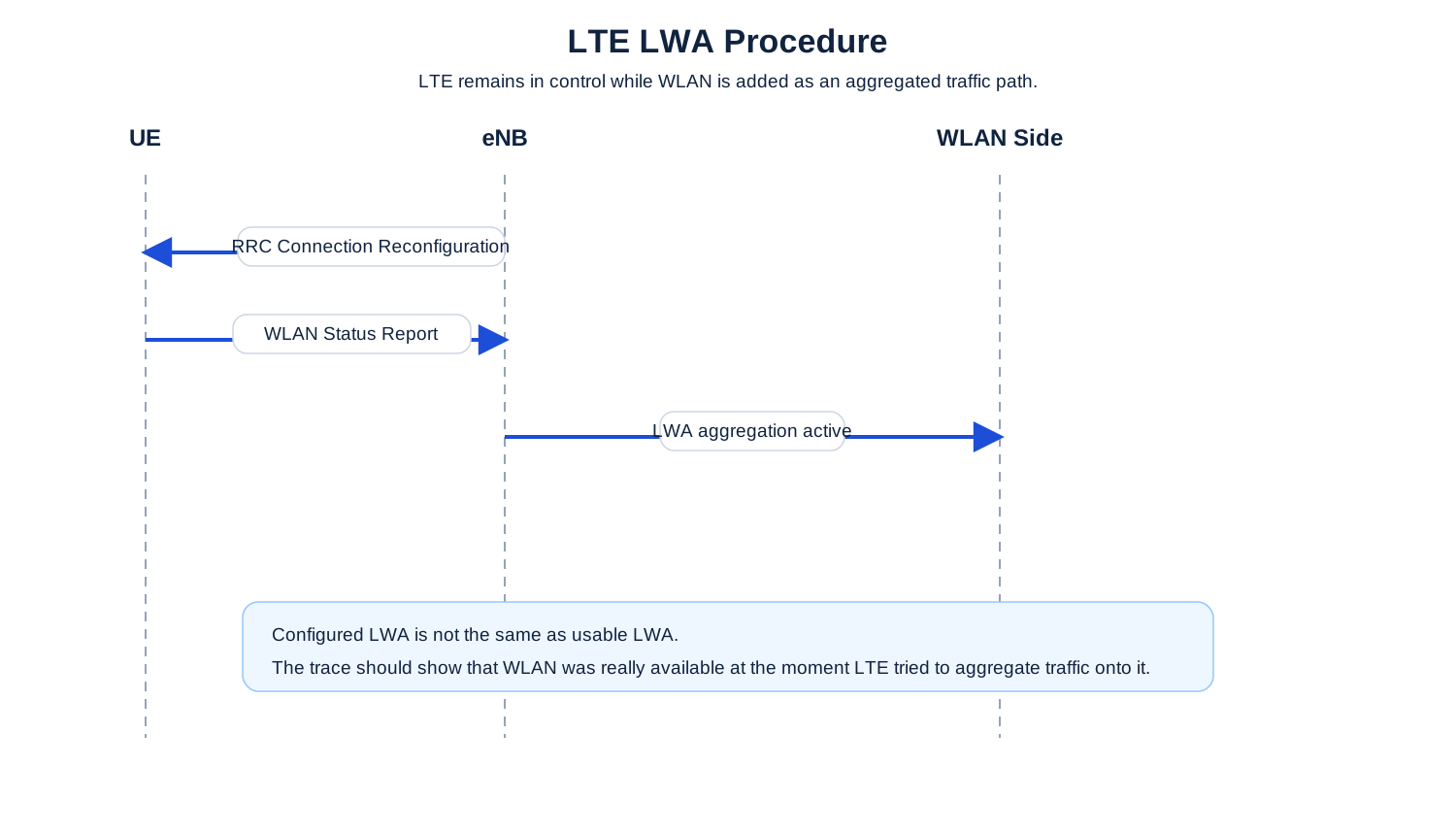
The practical anchors are RRC Connection Reconfiguration, WLAN Connection Status Report r13, and the service outcome that shows whether the aggregation branch was actually available and used.
Introduction
This page focuses on the LWA-style case where LTE remains the control anchor and WLAN is used as an aggregated traffic path. The key question is whether the configuration, WLAN state, and traffic result all line up.
Use it when the trace clearly points to LTE-WLAN aggregation rather than to a more generic interworking or steering-only situation.
What Is LTE LWA Procedure in Simple Terms?
- What starts the procedure: The network wants to add WLAN as an aggregated traffic path under LTE control.
- What the UE and network want to achieve: Keep LTE control while allowing service traffic to benefit from the WLAN branch.
- What success looks like: LWA is configured, the WLAN branch is available, and traffic use reflects aggregation.
- What failure means: LWA is configured on paper but the WLAN branch is missing, unstable, or not used as expected.
Why this procedure matters
LWA traces often look correct at the control layer even when the practical gain is missing. The page keeps the analysis tied to three things together: configuration, live WLAN state, and observed service use.
Quick Fact Sheet
| Procedure name | LTE LWA Procedure |
|---|---|
| Domain | LTE-WLAN Aggregation |
| Main trigger | Need to add WLAN as an LTE-controlled aggregated traffic path |
| Start state | LTE service is active and WLAN-assisted aggregation is possible |
| End state | LWA branch is active and usable or falls back to LTE-only continuation |
| Main nodes | UE, eNB, WLAN side |
| Main protocols | RRC, WLAN status context |
| Main success outcome | Aggregation branch is usable and aligned with LTE control |
| Main failure outcome | Aggregation branch is configured but not operationally useful |
| Most important messages | RRC Connection Reconfiguration, WLAN Connection Status Report r13 |
| Main specs | TS 36.300, TS 36.331 |
Preconditions
- The UE already has LTE service.
- The LTE side intends to use WLAN aggregation for traffic handling.
- A WLAN path is available or being evaluated for use.
Nodes and Interfaces
Nodes involved
| Node | Role in this procedure |
|---|---|
| UE | Maintains LTE service while also exposing WLAN status or moving traffic toward an LTE-WLAN branch. |
| eNB | Decides when WLAN interworking, status reporting, or traffic steering should be applied. |
| WLAN side | Provides the WLAN connectivity path used for offload, aggregation, or IP-layer interworking. |
| Transport / anchor | Preserves the LTE-side control and bearer view behind the WLAN-assisted path. |
Interfaces used
| Interface | Path | Role |
|---|---|---|
| LTE Uu | UE <-> eNB | Carries the LTE control path used to configure and supervise the WLAN-related branch. |
| WLAN link | UE <-> WLAN side | Carries the WLAN connection that may be used for offload, aggregation, or continuity. |
| Interworking control | eNB <-> WLAN side | Carries the network-side coordination behind WLAN-aware continuation. |
End-to-End Call Flow
UE                   eNB                   WLAN side
|<--RRC Reconfig------|                        |
|--WLAN Status Report>|                        |
|==== LTE + WLAN aggregation active ==========>|
Major Phases
| Phase | What happens |
|---|---|
| 1. Prepare LTE-controlled aggregation | The LTE side decides that LWA-style aggregation should be used. |
| 2. Deliver the LWA-capable configuration | The UE receives the WLAN-aware connected-mode update. |
| 3. Confirm WLAN availability | The LTE side uses current WLAN status to validate aggregation readiness. |
| 4. Continue with aggregated traffic | Service continues with LTE control and a WLAN-assisted traffic branch. |
Step-by-Step Breakdown
Configure LWA-capable behavior
Sender -> receiver: eNB -> UE
Message(s): RRC Connection Reconfiguration
Purpose: Add the LTE-side connected-mode behavior needed for WLAN aggregation.
State or context change: The UE is now operating with an LWA-capable control model.
Note: This configuration point is the main LTE-side start marker for LWA analysis.
Report current WLAN readiness
Sender -> receiver: UE -> eNB
Message(s): WLAN Connection Status Report r13
Purpose: Show whether the WLAN branch is really available to support the aggregation idea.
State or context change: The LTE side now has live WLAN visibility before trusting the aggregation branch.
Note: This is where configured LWA and actually usable LWA first meet in one trace.
Activate aggregated continuation
Sender -> receiver: UE <-> LTE / WLAN side
Message(s): Aggregated traffic continuation
Purpose: Use both LTE and WLAN under LTE control according to the LWA design.
State or context change: The service now reflects LTE-controlled aggregation rather than LTE-only transport.
Note: If the service still looks LTE-only, the aggregation branch may not be truly operational.
Watch for fallback if needed
Sender -> receiver: UE / eNB
Message(s): Return to LTE-only continuation when WLAN becomes unavailable
Purpose: Preserve service when the WLAN branch can no longer support aggregation.
State or context change: The trace moves back toward LTE-only continuation if the WLAN side drops out.
Note: This is the point where aggregation problems turn into continuity problems.
Important Messages
| Message | Protocol | Direction | Purpose in this procedure | What to inspect briefly |
|---|---|---|---|---|
| RRC Connection Reconfiguration | RRC | eNB -> UE | Introduces the LTE-side behavior needed for LWA. | Check whether the LWA-capable context starts here and whether later branch use matches it. |
| WLAN Connection Status Report r13 | RRC | UE -> eNB | Reports whether the WLAN side is available for LWA use. | Check whether the reported WLAN state supports the expected aggregation result. |
| RRC Connection Reconfiguration Complete | RRC | UE -> eNB | Confirms the UE accepted the LWA-related configuration. | Check whether the expected aggregation behavior begins only after this point. |
Important Parameters to Inspect
| Parameter | What it is | Where it appears | Why it matters | Common issues |
|---|---|---|---|---|
| LWA enablement point | Where the LTE side first enabled WLAN aggregation behavior. | RRC reconfiguration | Defines the earliest point where LWA use should be expected. | Aggregation is assumed before the UE was configured for it. |
| Reported WLAN readiness | The UE’s current view of WLAN usability for the branch. | WLAN Connection Status Report r13 | Shows whether the WLAN side could really support aggregation. | Configured LWA is mistaken for usable LWA. |
| Observed aggregation result | Whether the service actually used both LTE and WLAN. | Post-configuration service period | Separates signaling enablement from operational aggregation. | The trace claims LWA was active without proving the actual traffic behavior. |
| Fallback timing | When aggregation stopped and LTE-only service resumed. | Later continuity window | Explains whether LWA failed immediately or only after later WLAN change. | The wrong event is blamed for the return to LTE-only behavior. |
| Policy versus live state | Whether aggregation followed policy alone or the latest WLAN report. | Decision window around activation | Useful when the aggregation choice looks surprising. | A correct policy is assumed even though the live WLAN state disagreed. |
Successful Completion
Success means LTE keeps control, WLAN is truly available, and service behavior reflects a real aggregated branch instead of only a configured one.
Common Failures and Troubleshooting
| Symptom | Likely cause | Where to inspect | Relevant message(s) | Relevant interface(s) | Likely next step |
|---|---|---|---|---|---|
| LWA is configured but traffic still behaves like LTE-only service | The WLAN branch may not be operational or may not be trusted for real use. | WLAN status, configuration point, and the first service period after activation. | RRC Connection Reconfiguration, WLAN Connection Status Report r13 | LTE Uu, WLAN link | Prove operational WLAN readiness before assuming LWA really took effect. |
| LWA works briefly and then falls back | The WLAN branch may have become unavailable or unstable after activation. | Latest WLAN reports and the fallback point. | WLAN Connection Status Report r13 | LTE Uu, WLAN link | Check whether the fallback follows a real WLAN-state change. |
What to Check in Logs and Traces
- Anchor LWA analysis on the reconfiguration that enabled it.
- Use the WLAN status report to prove whether aggregation was actually supportable.
- Differentiate configured aggregation from observed aggregation.
Related Pages
Related sub-procedures
Related message reference pages
Related troubleshooting pages
Notes
This page focuses on LWA as an LTE-controlled aggregation case. If the trace is really about broader WLAN policy choice, start from the interworking or steering pages instead.
FAQ
What is the LTE LWA Procedure?
It is the LTE-WLAN Aggregation control path where LTE stays in control while WLAN can also carry service traffic.
What is the main troubleshooting check for LWA?
The main check is whether the WLAN branch was actually usable when the LTE side tried to aggregate traffic onto it.