LTE MBMS PTM Bearer Procedure Call Flow
LTE MBMS PTM Bearer Procedure is the LTE path that prepares the UE-side broadcast context for point-to-multipoint MBMS service delivery.
It sits between MBMS service-discovery context and later MBMS delivery behavior, so the main question is whether the MBMS broadcast anchors and later MBMS system information were visible in the right order.
Introduction
This procedure is centered on the broadcast-side MBMS path rather than UE-specific connected signaling. The UE first needs the MBMS broadcast anchors before later MBMS service continuation can make sense.
Use this page when the main question is whether the LTE MBMS broadcast preparation and MBMS-specific system-information path were complete enough for PTM service delivery.
What Is LTE MBMS PTM Bearer Procedure in Simple Terms?
- What starts the procedure: The cell exposes MBMS service context that leads toward point-to-multipoint delivery.
- What the UE and network want to achieve: A usable MBMS broadcast context for later PTM service continuation.
- What success looks like: The UE reads the MBMS broadcast anchors and the later MBMS-specific system information needed for service continuation.
- What failure means: The UE never gets enough MBMS broadcast context for later PTM delivery to make sense.
Why this procedure matters
MBMS PTM delivery depends on the MBMS-specific broadcast chain being correct first. If the UE never gets the MBMS area and later MBMS system-information context, later delivery problems can be misread as service-layer faults.
Quick Fact Sheet
| Procedure name | LTE MBMS PTM Bearer Procedure |
|---|---|
| Domain | LTE MBMS point-to-multipoint broadcast preparation |
| Main trigger | MBMS service context becomes relevant in the LTE cell |
| Start state | UE is camped and needs MBMS-specific broadcast context |
| End state | UE has the MBMS broadcast context needed for later PTM continuation |
| Main nodes | UE, eNB |
| Main protocols | RRC broadcast MBMS context |
| Main success outcome | MBMS broadcast anchors and later MBMS system information are usable |
| Main failure outcome | PTM continuation is blocked on incomplete MBMS broadcast context |
| Most important messages | SIB13, SIB1-MBMS r14, System Information MBMS r14 |
| Main specs | TS 36.331 |
Preconditions
- The LTE cell exposes MBMS-relevant service context.
- The UE already has the normal LTE broadcast baseline.
- The UE needs the MBMS-specific broadcast chain before later PTM continuation.
Nodes and Interfaces
Nodes involved
| Node | Role in this procedure |
|---|---|
| UE | Reads the MBMS-specific broadcast chain before later PTM continuation. |
| eNB | Broadcasts the MBMS area and later MBMS-specific system information. |
| MBMS broadcast context | Provides the service-area and later MBMS-specific view needed for PTM continuation. |
Interfaces used
| Interface | Path | Role |
|---|---|---|
| BCCH / DL-SCH | eNB -> UE | Carry the MBMS-specific broadcast anchors and later MBMS system information. |
| LTE Uu | UE <-> eNB | Carries the full MBMS PTM preparation path. |
End-to-End Call Flow
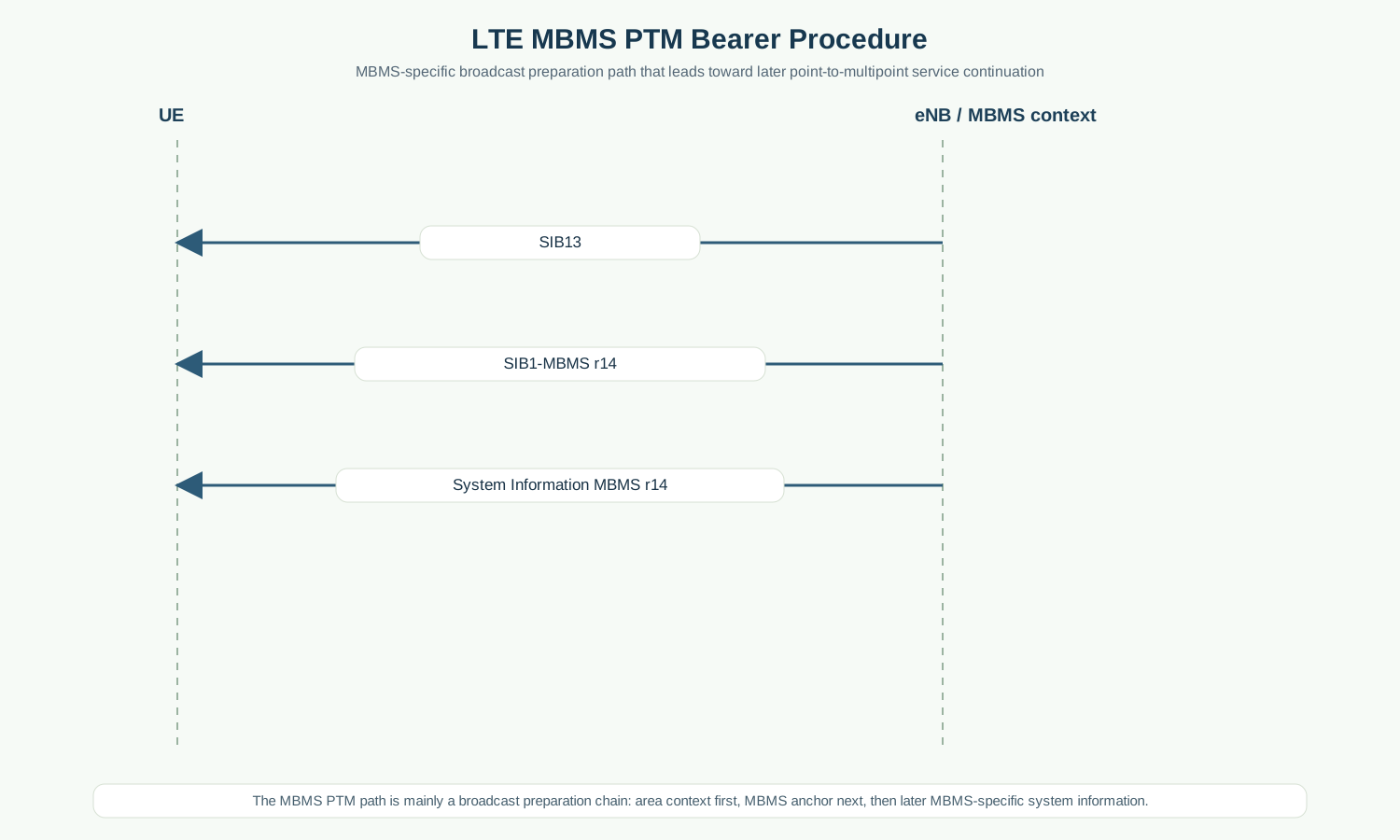
UE                         eNB / MBMS context
|<--SIB13---------------------|
|<--SIB1-MBMS r14-------------|
|<--System Information MBMS--|
|--later PTM continuation---->|
Major Phases
| Phase | What happens |
|---|---|
| 1. MBMS area discovery | The UE gets the MBMS area context. |
| 2. MBMS-specific anchor read | The UE reads the earlier MBMS-specific broadcast anchor. |
| 3. Later MBMS system-information read | The UE reads the later MBMS-specific broadcast content. |
| 4. PTM continuation | The UE now has the broadcast context needed for later MBMS PTM continuation. |
Step-by-Step Breakdown
Read MBMS area context
Sender -> receiver: eNB -> UE
Message(s): System Information Block Type 13
Purpose: Expose the MBMS area and service-discovery background.
State or context change: The UE now knows the MBMS area context for the cell.
Note: SIB13 is the main MBMS broadcast entry point before later MBMS-specific content.
Read the MBMS-specific anchor
Sender -> receiver: eNB -> UE
Message(s): System Information Block Type 1 MBMS r14
Purpose: Provide the earlier MBMS-specific broadcast anchor before later MBMS continuation.
State or context change: The UE can now continue into later MBMS-specific broadcast reading.
Note: This is the MBMS-side equivalent of an early anchor before the later MBMS information set.
Read later MBMS system information
Sender -> receiver: eNB -> UE
Message(s): System Information MBMS r14
Purpose: Deliver the later MBMS-specific system information needed for continuation.
State or context change: The UE now has the MBMS-specific broadcast context needed for later PTM handling.
Note: The PTM path should not be treated as complete until this later MBMS view is confirmed.
Correlate with later PTM behavior
Sender -> receiver: UE
Message(s): Later MBMS PTM continuation
Purpose: Use the broadcast preparation path to explain later PTM service behavior.
State or context change: The PTM preparation branch is now either complete or visibly incomplete.
Note: When later PTM behavior is wrong, start by proving this broadcast chain first.
Important Messages
| Message | Protocol | Direction | Purpose in this procedure | What to inspect briefly |
|---|---|---|---|---|
| System Information Block Type 13 | RRC | eNB -> UE | Provides the MBMS area context for the cell. | Check whether the UE had the expected MBMS area view before later MBMS-specific reading. |
| System Information Block Type 1 MBMS r14 | RRC | eNB -> UE | Provides the earlier MBMS-specific anchor. | Check whether the UE had the MBMS-side anchor before later MBMS system information. |
| System Information MBMS r14 | RRC | eNB -> UE | Provides the later MBMS-specific system information. | Check whether the UE reached the later MBMS view needed for PTM continuation. |
Important Parameters to Inspect
| Parameter | What it is | Where it appears | Why it matters | Common issues |
|---|---|---|---|---|
| MBSFN area context | The MBMS area context exposed before later MBMS-specific reading. | SIB13 | Shows whether the UE is following the expected MBMS service area. | The UE is reading a different or incomplete MBMS area context. |
| MBMS anchor availability | Whether the earlier MBMS-specific anchor was present and readable. | SIB1-MBMS r14 | Explains whether the UE could move into the later MBMS-specific system-information set. | The later MBMS path is analyzed without proving the earlier MBMS anchor. |
| Later MBMS SI availability | Whether the later MBMS-specific broadcast block was present and readable. | System Information MBMS r14 | Needed before treating the PTM path as complete. | Later MBMS continuation is blamed while the later SI was never available. |
| Read order | The order in which the UE obtained the MBMS-specific broadcast chain. | Across SIB13 to later MBMS SI | Useful when the UE seems to skip part of the MBMS preparation path. | The MBMS broadcast chain is read out of order in the analysis. |
| Later PTM dependency | Which later PTM behavior depended on the MBMS-specific broadcast chain. | After MBMS SI completion | Keeps the analysis tied to the actual downstream symptom. | The PTM symptom is analyzed with no link back to the broadcast preparation path. |
Successful Completion
Success means the UE reads the MBMS-specific broadcast chain cleanly enough for later PTM continuation to make sense.
Common Failures and Troubleshooting
| Symptom | Likely cause | Where to inspect | Relevant message(s) | Relevant interface(s) | Likely next step |
|---|---|---|---|---|---|
| PTM-related behavior looks incomplete, but the MBMS broadcast path was not checked | The MBMS-specific broadcast chain may be incomplete before any later delivery issue appears. | SIB13, SIB1-MBMS r14, and System Information MBMS r14. | MBMS broadcast messages | LTE Uu | Prove the MBMS-specific broadcast chain before blaming later PTM behavior. |
| The cell advertises MBMS, but the UE never reaches later MBMS continuation | The earlier MBMS anchor or later MBMS SI may be missing or stale. | The full MBMS-specific read order. | SIB13, SIB1-MBMS r14, System Information MBMS r14 | LTE Uu | Check where the MBMS-specific chain actually stops. |
What to Check in Logs and Traces
- Start with SIB13 before the MBMS-specific anchor and later MBMS SI.
- Keep the MBMS-specific read order visible in the trace.
- Tie later PTM symptoms back to the MBMS broadcast preparation path.
Related Pages
Related sub-procedures
Related message reference pages
Related troubleshooting pages
Notes
This page is about the MBMS-specific broadcast chain that leads into PTM continuation, not about later user-plane content analysis by itself.
FAQ
What is the LTE MBMS PTM Bearer Procedure?
It is the LTE broadcast-side preparation path that gives the UE the MBMS-specific context needed for later point-to-multipoint continuation.
What should I inspect first in MBMS PTM analysis?
Start with SIB13, then the MBMS-specific anchor, then the later MBMS system-information block.