LTE MIB and SIB Acquisition Procedure Call Flow
LTE MIB and SIB Acquisition Procedure is the early broadcast reading sequence the UE follows before normal LTE access and idle behavior can rely on the cell.
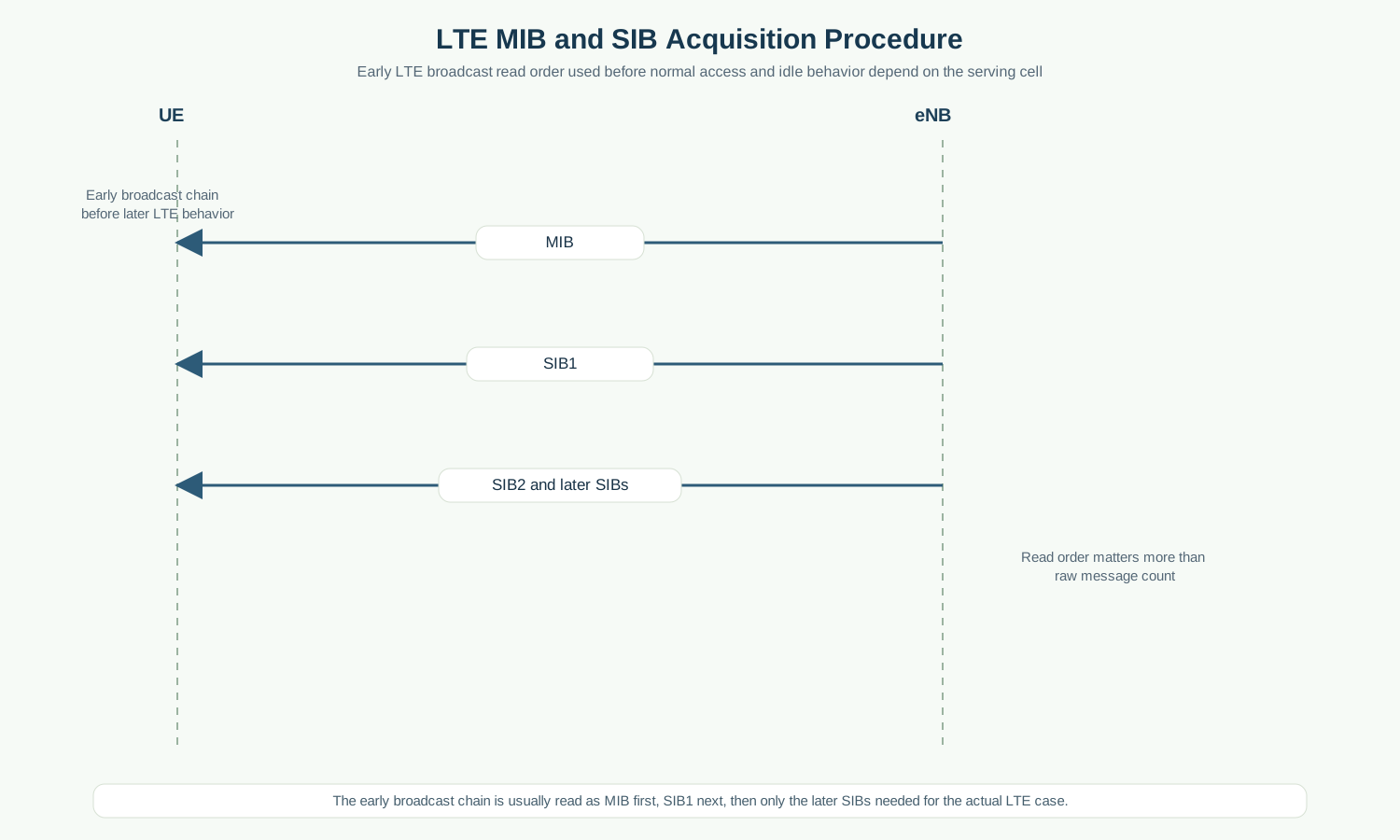
It focuses on the practical read order from the earliest broadcast anchor to the later scheduled SIBs that complete the basic LTE cell view.
Introduction
This page narrows the broader LTE system-information path to the early broadcast sequence most traces depend on: MIB first, SIB1 next, and then the later required SIBs.
Use it when the main question is whether the UE read the basic LTE broadcast chain in the right order before later access or idle behavior started.
What Is LTE MIB and SIB Acquisition Procedure in Simple Terms?
- What starts the procedure: The UE has selected or reselected an LTE cell and needs the basic broadcast chain for that cell.
- What the UE and network want to achieve: A complete early broadcast view built from MIB, SIB1, and the later required SIBs.
- What success looks like: The UE reads the early broadcast chain cleanly and can move into access or idle continuation.
- What failure means: The UE never gets the basic LTE broadcast chain into a usable state, so later behavior is built on incomplete cell context.
Why this procedure matters
This early read chain is the foundation below access, paging, reselection, and warning handling. If the UE does not get MIB or SIB1 cleanly, many later LTE symptoms will be misleading.
Quick Fact Sheet
| Procedure name | LTE MIB and SIB Acquisition Procedure |
|---|---|
| Domain | Early LTE broadcast acquisition |
| Main trigger | Cell selection, reselection, or broadcast refresh |
| Start state | UE can detect the LTE cell but has not completed the early broadcast chain |
| End state | UE has the early broadcast context needed for the next LTE branch |
| Main nodes | UE, eNB |
| Main protocols | RRC broadcast system information |
| Main success outcome | MIB and the required SIBs are usable for later LTE behavior |
| Main failure outcome | The UE stays blocked on incomplete early broadcast context |
| Most important messages | Master Information Block, SIB1, SIB2 |
| Main specs | TS 36.331, TS 36.304 |
Preconditions
- The UE can detect and synchronize to the LTE cell.
- The eNB is broadcasting the normal early LTE system-information chain.
- The UE needs the early broadcast view before moving into access or idle continuation.
Nodes and Interfaces
Nodes involved
| Node | Role in this procedure |
|---|---|
| UE | Reads the earliest LTE broadcast chain in order. |
| eNB | Provides the broadcast anchors and schedules the later SIBs. |
| Broadcast scheduling | Controls when the later SIBs become available after the early anchors. |
Interfaces used
| Interface | Path | Role |
|---|---|---|
| BCH / PBCH | eNB -> UE | Carry MIB as the earliest broadcast anchor. |
| BCCH / DL-SCH | eNB -> UE | Carry SIB1 and later SIBs. |
| LTE Uu | UE <-> eNB | Carries the full early broadcast read path. |
End-to-End Call Flow
UE                        eNB
|--cell sync--------------->|
|<--MIB---------------------|
|<--SIB1--------------------|
|<--System Information------|
|<--SIB2 / later SIBs-------|
Major Phases
| Phase | What happens |
|---|---|
| 1. Read MIB | The UE gets the earliest LTE broadcast anchor. |
| 2. Read SIB1 | The UE gets the main access and scheduling context. |
| 3. Read later required SIBs | The UE reads SIB2 and any other SIB needed for the case. |
| 4. Continue with LTE behavior | The UE uses the early broadcast chain in the next expected procedure. |
Step-by-Step Breakdown
Acquire MIB
Sender -> receiver: eNB -> UE
Message(s): Master Information Block
Purpose: Provide the earliest LTE cell anchor.
State or context change: The UE has the first essential cell-wide broadcast context.
Note: Without MIB, the rest of the SIB chain is not a meaningful troubleshooting target.
Acquire SIB1
Sender -> receiver: eNB -> UE
Message(s): System Information Block Type 1
Purpose: Provide access identity, scheduling, and change-detection context.
State or context change: The UE can now interpret the later system-information schedule.
Note: SIB1 is the bridge between the earliest anchor and the wider broadcast set.
Acquire SIB2 and later required SIBs
Sender -> receiver: eNB -> UE
Message(s): System Information Block Type 2 and later required SIBs
Purpose: Complete the common and scenario-specific broadcast context.
State or context change: The UE has the early broadcast model needed for normal LTE continuation.
Note: SIB2 is commonly the first later SIB that matters for access behavior.
Use the broadcast chain
Sender -> receiver: UE
Message(s): Access, idle monitoring, or feature-specific continuation
Purpose: Move from the early broadcast chain into the next LTE behavior.
State or context change: The UE now relies on the acquired broadcast assumptions.
Note: When later behavior looks wrong, return to this chain and prove it first.
Important Messages
| Message | Protocol | Direction | Purpose in this procedure | What to inspect briefly |
|---|---|---|---|---|
| Master Information Block | RRC | eNB -> UE | Provides the earliest LTE broadcast anchor. | Check whether the UE can recover the first essential cell context. |
| System Information Block Type 1 | RRC | eNB -> UE | Provides the main access and scheduling context. | Check access identity, scheduling, and SI change-detection context. |
| System Information Block Type 2 | RRC | eNB -> UE | Provides the common radio model used before dedicated signaling. | Check the common radio assumptions behind later access behavior. |
| LTE System Information Reference | RRC | eNB -> UE | Provides the wider SIB map beyond the earliest broadcast chain. | Check which later SIB matters for the case after MIB and SIB1 are correct. |
Important Parameters to Inspect
| Parameter | What it is | Where it appears | Why it matters | Common issues |
|---|---|---|---|---|
| Early read order | The order in which the UE obtained MIB, SIB1, and later SIBs. | Across the broadcast chain | Explains whether the UE followed the normal LTE early read sequence. | Later SIB analysis starts before the early anchors are proven. |
| SIB1 scheduling context | The scheduling and change-detection information that points to later SIBs. | SIB1 | Needed to explain how the UE knew where and when to read later SIBs. | The later SIB is missing because the SIB1 schedule was not followed correctly. |
| Common radio model | The shared access and radio assumptions taken from the early SIB set. | SIB2 | Explains later access and idle behavior from the broadcast side. | Later access issues are blamed before checking the common radio assumptions. |
| Refresh behavior | Whether the early chain was refreshed after a broadcast change. | SIB1 plus later SIB timing | Useful when behavior changed after SI refresh. | Old and new early broadcast context are mixed. |
| Feature-specific dependency | Whether the case actually needed only the early chain or also a later feature SIB. | After the early chain | Keeps the analysis focused on the right broadcast layer. | A feature-specific issue is blamed on the early chain alone. |
Successful Completion
Success means the UE reads MIB, SIB1, and the required later SIBs in a usable order before later LTE behavior begins.
Common Failures and Troubleshooting
| Symptom | Likely cause | Where to inspect | Relevant message(s) | Relevant interface(s) | Likely next step |
|---|---|---|---|---|---|
| MIB is visible but the UE never reaches a usable SIB chain | The early broadcast chain stops at SIB1 or later scheduling. | MIB, SIB1, and the timing of the later scheduled SIBs. | MIB, SIB1, System Information | LTE Uu | Check where the early chain breaks instead of treating the problem as a later procedure fault. |
| Access looks wrong even though the cell is visible | The early broadcast chain may be incomplete or stale. | MIB, SIB1, and SIB2 together. | MIB, SIB1, SIB2 | LTE Uu | Prove the early broadcast model before moving to random access or RRC analysis. |
What to Check in Logs and Traces
- Read MIB first, then SIB1, then the later SIBs that matter.
- Use SIB1 to explain later SIB scheduling before assuming the later block is missing.
- Treat SIB2 as a core access-side dependency in early LTE analysis.
Related Pages
Related sub-procedures
- LTE System Information Acquisition Procedure
- LTE RRC Connection Setup Procedure
- LTE Cell Reselection Procedure
Related message reference pages
Related troubleshooting pages
Notes
This page focuses on the early broadcast chain. Use the broader system-information page when later feature-specific SIBs are the real question.
FAQ
What is the LTE MIB and SIB Acquisition Procedure?
It is the early broadcast reading sequence from MIB through the later required SIBs before normal LTE behavior can rely on the cell.
Which block matters most after MIB?
SIB1 is usually the next most important block because it controls access identity and the schedule for later SIBs.