LTE NB-IoT Measurement Procedure Call Flow
LTE NB-IoT Measurement Procedure is the narrowband measurement path used after the UE has a valid NB-IoT cell view and the network needs measurement-driven visibility into radio conditions.
The practical anchors are the NB-IoT broadcast context from SIB1-BR r13 and System Information BR r13, followed by measurement-related connected or idle continuation.
Introduction
This page keeps the measurement question in the NB-IoT branch instead of in the wider LTE measurement family. The narrowband context still matters because it shapes what the UE can measure and how that result should be read.
Use it when the issue looks like measurement or mobility behavior, but the trace belongs to an NB-IoT deployment and should not be interpreted as ordinary broadband LTE measurement signaling.
What Is LTE NB-IoT Measurement Procedure in Simple Terms?
- What starts the procedure: The UE already has the NB-IoT serving-cell context and measurement-related behavior becomes relevant.
- What the UE and network want to achieve: A usable NB-IoT measurement view that supports later radio or mobility decisions.
- What success looks like: The measurement path produces results consistent with the narrowband configuration and cell conditions.
- What failure means: Measurements are missing, mistimed, or inconsistent with the NB-IoT branch being analyzed.
Why this procedure matters
NB-IoT measurement issues can quietly distort mobility or coverage interpretation. If the narrowband measurement path is misunderstood, later decisions may look wrong even when the measured environment was the real driver.
Quick Fact Sheet
| Procedure name | LTE NB-IoT Measurement Procedure |
|---|---|
| Domain | NB-IoT measurement and radio observation |
| Main trigger | Need for measurement-driven visibility in an NB-IoT context |
| Start state | UE already has the NB-IoT serving-cell context needed for measurement behavior |
| End state | A usable measurement result is available for the next radio or mobility decision |
| Main nodes | UE, eNB |
| Main protocols | RRC measurement and broadcast context |
| Main success outcome | Measurement result fits the NB-IoT branch and supports later decisions |
| Main failure outcome | Measurement interpretation does not match the narrowband context |
| Most important messages | NB-IoT system-information anchors, later measurement-related continuation |
| Main specs | TS 36.331, TS 36.304 |
Preconditions
- The UE already has the BR-specific system-information view of the cell.
- The scenario requires measurement-driven radio or mobility observation.
- The measurement behavior belongs to an NB-IoT branch rather than to ordinary broadband LTE alone.
Nodes and Interfaces
Nodes involved
| Node | Role in this procedure |
|---|---|
| UE | Measures the narrowband radio conditions and produces the relevant observation for later use. |
| eNB | Provides the NB-IoT context that frames the measurement behavior and uses the result later. |
| Measurement context | Represents the narrowband configuration and serving-cell assumptions behind the measurement result. |
Interfaces used
| Interface | Path | Role |
|---|---|---|
| LTE Uu | UE <-> eNB | Carries the NB-IoT measurement-related signaling and context. |
| RRC measurement path | UE <-> eNB | Carries the configuration and report branch where measurement behavior becomes visible. |
End-to-End Call Flow
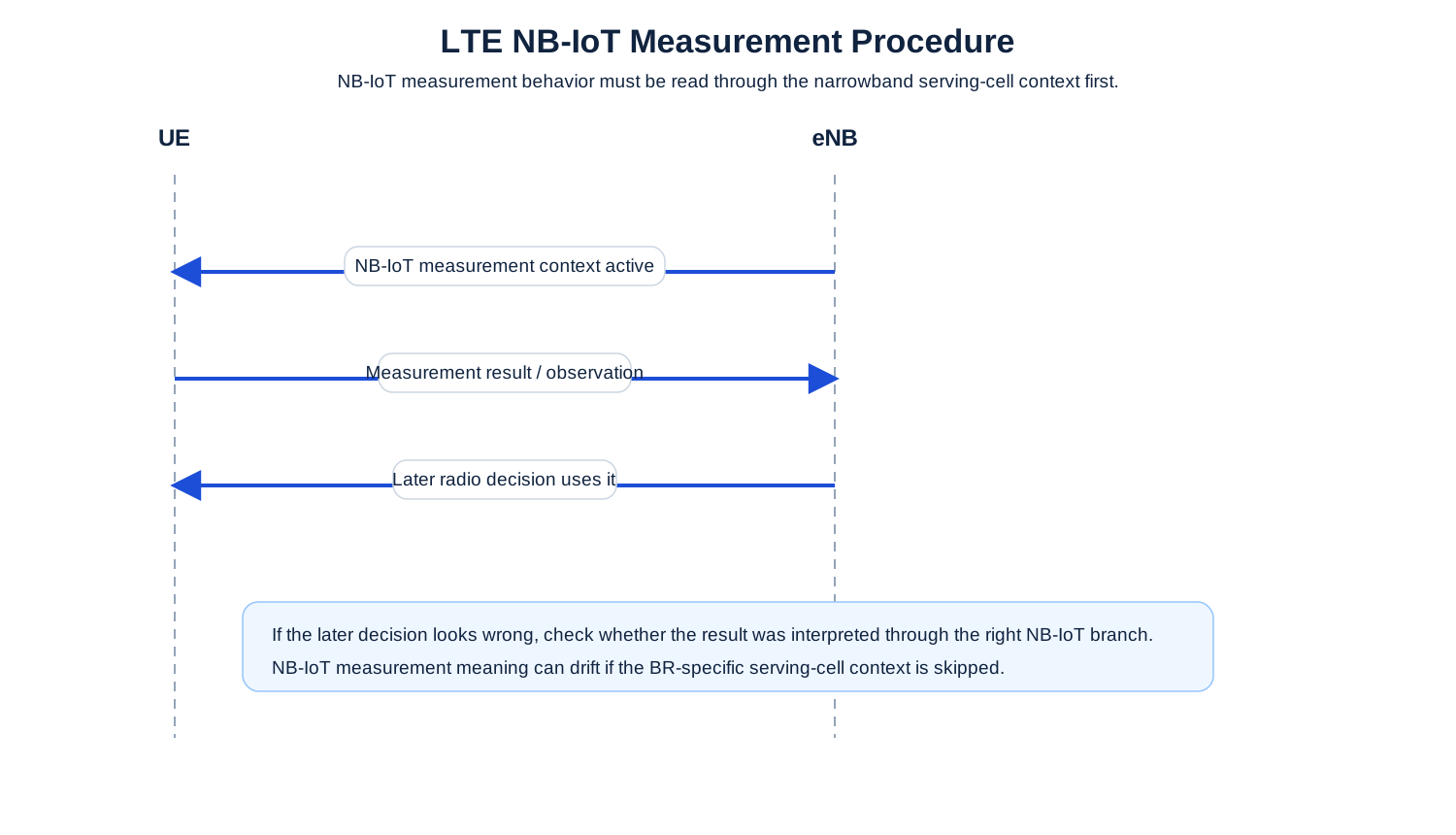
UE                      eNB
|<--NB-IoT meas context--|
|--measurement result--->|
|==== later radio decision ===>|
Major Phases
| Phase | What happens |
|---|---|
| 1. Start from a valid NB-IoT cell view | The UE already has the BR-specific broadcast context. |
| 2. Use the NB-IoT measurement context | The UE applies the narrowband measurement assumptions in the current branch. |
| 3. Produce the relevant measurement result | The trace shows the observation that later behavior will depend on. |
| 4. Feed the next decision | The measurement result is used in the next radio, idle, or mobility branch. |
Step-by-Step Breakdown
Anchor the measurement branch
Sender -> receiver: UE / eNB
Message(s): SIB1-BR r13, System Information BR r13
Purpose: Start measurement analysis from the correct narrowband serving-cell assumptions.
State or context change: The measurement path is now tied to the correct NB-IoT branch instead of to generic LTE assumptions.
Note: This is the key guardrail against reading NB-IoT measurements like normal LTE measurements.
Apply measurement behavior
Sender -> receiver: UE
Message(s): NB-IoT measurement processing
Purpose: Measure the radio environment under the active NB-IoT context.
State or context change: The UE now has a narrowband measurement result that can influence later behavior.
Note: If the measurement itself looks surprising, go back to the broadcast and serving-cell assumptions first.
Expose the result
Sender -> receiver: UE -> eNB or internal branch
Message(s): Measurement result or measurement-driven branch
Purpose: Make the result available for the next decision.
State or context change: The trace now has the measurement output needed to explain the next action.
Note: Not every branch is centered on one named message; sometimes the measurement meaning is visible in the next action instead.
Correlate with the next radio choice
Sender -> receiver: UE / eNB
Message(s): Later mobility, access, or continuity action
Purpose: Check whether the next action matches the measured NB-IoT condition.
State or context change: The procedure is now complete enough to explain the later radio behavior.
Note: This is where measurement correctness and later decision correctness should be separated.
Important Messages
| Message | Protocol | Direction | Purpose in this procedure | What to inspect briefly |
|---|---|---|---|---|
| SIB1-BR r13 | RRC | eNB -> UE | Defines the narrowband context behind the measurement branch. | Check whether the serving-cell NB-IoT assumptions were correct before reading the result. |
| System Information BR r13 | RRC | eNB -> UE | Carries the broader BR-specific context needed for later NB-IoT behavior. | Check whether the measurement branch started from a complete narrowband broadcast view. |
| Measurement Report | RRC | UE -> eNB | Useful reference when the NB-IoT branch still maps to a later report-driven decision. | Check whether the report should be interpreted through the NB-IoT branch rather than through ordinary LTE assumptions. |
Important Parameters to Inspect
| Parameter | What it is | Where it appears | Why it matters | Common issues |
|---|---|---|---|---|
| Serving-cell NB-IoT context | The narrowband system-information assumptions behind the measurement. | Before measurement interpretation | Ensures the measurement result is read in the right branch. | The result is treated as generic LTE behavior instead of NB-IoT behavior. |
| Measurement-to-decision handoff | The exact point where the result influences later radio behavior. | After the measurement result appears | Separates an odd measurement from an odd decision that followed it. | The later action is blamed on the wrong earlier observation. |
| Broadcast completeness | Whether the UE had enough BR-specific context before measurements were read. | SIB1-BR and System Information BR | Useful when measurement meaning changes with incomplete broadcast context. | A measurement oddity is blamed while the cell view was incomplete. |
| Result timing | When the relevant observation became available relative to the next branch. | Measurement and next action window | Useful for proving whether the decision used current or stale observation. | The wrong result instance is used to explain the later behavior. |
| Narrowband branch identity | Whether the trace still belongs to NB-IoT at the point being analyzed. | Across the whole procedure | Prevents side-by-side traces from mixing NB-IoT and ordinary LTE measurement behavior. | The analysis drifts into the wrong measurement family. |
Successful Completion
Success means the NB-IoT measurement result is interpreted through the correct narrowband context and lines up with the later radio decision.
Common Failures and Troubleshooting
| Symptom | Likely cause | Where to inspect | Relevant message(s) | Relevant interface(s) | Likely next step |
|---|---|---|---|---|---|
| The later radio decision looks wrong for the measured condition | The measurement may be read in the wrong LTE branch or against the wrong cell context. | The BR-specific broadcast context and the exact measurement-to-decision handoff. | SIB1-BR r13, System Information BR r13, Measurement Report | LTE Uu | Re-anchor the measurement branch in the NB-IoT context before diagnosing the decision. |
| A measurement result is visible but seems meaningless | The result may belong to a different branch or may be missing the narrowband context needed for interpretation. | The trace window immediately before the result and the branch identity around it. | Measurement Report | LTE Uu | Check whether the trace is still in the NB-IoT procedure family at that point. |
What to Check in Logs and Traces
- Anchor the measurement branch in the BR-specific system-information context first.
- Treat the measurement-to-decision handoff as a separate check.
- Do not interpret NB-IoT measurements as ordinary LTE measurements without proving the branch identity.
Related Pages
Related sub-procedures
- LTE NB-IoT Access Procedure
- LTE NB-IoT System Information Acquisition
- LTE Measurement Reporting Procedure
Related message reference pages
Related troubleshooting pages
Notes
This page is about reading measurements inside an NB-IoT branch. Use the broader LTE measurement pages when the trace clearly belongs to the ordinary LTE measurement family.
FAQ
What is the LTE NB-IoT Measurement Procedure?
It is the narrowband measurement path where the UE uses the BR-specific serving-cell context to produce results for later radio decisions.
Why do BR-specific system-information pages matter here?
Because the measurement result only makes sense if the serving-cell NB-IoT context is correct first.