LTE NB-IoT System Information Acquisition Call Flow
LTE NB-IoT System Information Acquisition is the narrowband broadcast-reading path used before the UE can trust an NB-IoT cell for access, idle behavior, or later service continuation.
The main anchors are SIB1-BR r13 and System Information BR r13, which together define the NB-IoT-specific broadcast view of the cell.
Introduction
This page narrows the broader LTE system-information question to the NB-IoT-specific chain. The trace should be read through the BR-specific blocks first, not through the ordinary LTE broadcast assumptions alone.
Use it when the UE seems to detect the cell but later NB-IoT behavior suggests the narrowband broadcast model was incomplete or stale.
What Is LTE NB-IoT System Information Acquisition in Simple Terms?
- What starts the procedure: The UE needs the NB-IoT-specific system-information chain for the serving cell.
- What the UE and network want to achieve: A usable narrowband broadcast view that supports later NB-IoT behavior.
- What success looks like: The required BR-specific system-information blocks are read and later behavior can continue.
- What failure means: The UE never gets a complete or correct NB-IoT system-information view.
Why this procedure matters
Many NB-IoT trace problems begin before access, service, or measurements. If the NB-IoT broadcast chain is incomplete, later signaling can look wrong even when the real issue is still at the broadcast layer.
Quick Fact Sheet
| Procedure name | LTE NB-IoT System Information Acquisition |
|---|---|
| Domain | NB-IoT broadcast acquisition |
| Main trigger | Need for the BR-specific system-information set on the serving cell |
| Start state | UE can detect the cell but does not yet have the full NB-IoT broadcast context |
| End state | UE has the NB-IoT broadcast context needed for later behavior |
| Main nodes | UE, eNB |
| Main protocols | RRC broadcast system information |
| Main success outcome | NB-IoT broadcast view is usable for the next procedure |
| Main failure outcome | The UE remains blocked on incomplete or stale NB-IoT broadcast context |
| Most important messages | SIB1-BR r13, System Information BR r13 |
| Main specs | TS 36.331, TS 36.304 |
Preconditions
- The UE can detect and camp on the NB-IoT-capable cell candidate.
- The eNB is broadcasting the BR-specific system-information set.
- The scenario depends on NB-IoT-specific broadcast context rather than on ordinary LTE broadcast alone.
Nodes and Interfaces
Nodes involved
| Node | Role in this procedure |
|---|---|
| UE | Reads the BR-specific broadcast chain and builds the NB-IoT cell view. |
| eNB | Broadcasts the NB-IoT system-information blocks needed for later continuation. |
| Broadcast scheduler | Determines when the BR-specific blocks become visible and refreshed. |
Interfaces used
| Interface | Path | Role |
|---|---|---|
| BCCH / DL-SCH | eNB -> UE | Carry SIB1-BR and later BR-specific system information. |
| LTE Uu | UE <-> eNB | Carries the whole narrowband broadcast-reading path. |
End-to-End Call Flow
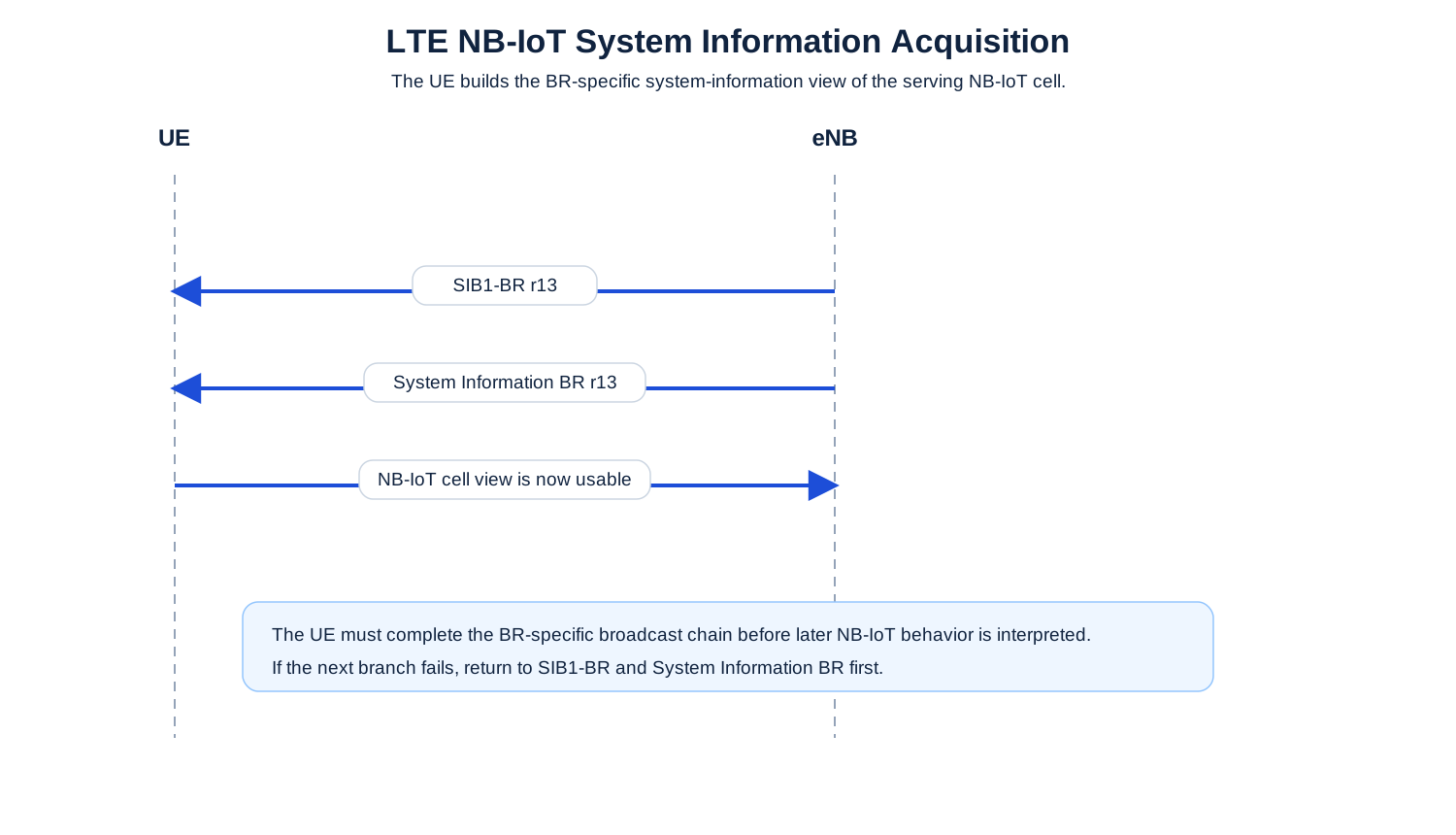
UE                      eNB
|<--SIB1-BR r13----------|
|<--System Information BR|
|==== NB-IoT cell view ready ===>|
Major Phases
| Phase | What happens |
|---|---|
| 1. Read the early NB-IoT broadcast anchor | The UE reads SIB1-BR for the narrowband entry context. |
| 2. Read the later BR-specific system information | The UE collects the later NB-IoT-specific broadcast blocks. |
| 3. Validate broadcast completeness | The UE has enough NB-IoT system information for the next behavior. |
| 4. Continue to the next narrowband branch | The trace moves into access, idle, or measurement continuation. |
Step-by-Step Breakdown
Read SIB1-BR
Sender -> receiver: eNB -> UE
Message(s): SIB1-BR r13
Purpose: Provide the early BR-specific anchor for narrowband behavior.
State or context change: The UE has the first NB-IoT system-information layer.
Note: This is the main entry point for the whole NB-IoT broadcast chain.
Read later BR-specific information
Sender -> receiver: eNB -> UE
Message(s): System Information BR r13
Purpose: Provide the rest of the NB-IoT broadcast set needed for continuation.
State or context change: The UE now has the fuller narrowband broadcast model.
Note: The later BR blocks are often where incomplete NB-IoT assumptions become visible.
Check freshness and completeness
Sender -> receiver: UE
Message(s): Broadcast refresh and continuity check
Purpose: Confirm the NB-IoT system-information view is current enough for the next branch.
State or context change: The UE is now ready for access, measurements, or idle continuation if the broadcast set is usable.
Note: This step separates a visible cell from a usable NB-IoT cell view.
Continue into the next NB-IoT branch
Sender -> receiver: UE
Message(s): Access, idle, or measurement continuation
Purpose: Use the acquired BR-specific broadcast context in the next procedure.
State or context change: The broadcast path is complete enough for later NB-IoT behavior.
Note: If the next branch misbehaves, return to the BR system-information set first.
Important Messages
| Message | Protocol | Direction | Purpose in this procedure | What to inspect briefly |
|---|---|---|---|---|
| SIB1-BR r13 | RRC | eNB -> UE | Provides the early NB-IoT broadcast anchor. | Check whether the UE read the narrowband access and scheduling context correctly. |
| System Information BR r13 | RRC | eNB -> UE | Provides the later BR-specific system-information blocks. | Check which BR-specific blocks were actually available to the UE. |
| System Information Reference | RRC | eNB -> UE | Useful for comparing NB-IoT broadcast with the wider LTE broadcast family. | Check whether the problem belongs to the BR-specific path or to a wider LTE broadcast issue. |
Important Parameters to Inspect
| Parameter | What it is | Where it appears | Why it matters | Common issues |
|---|---|---|---|---|
| BR-specific availability | Whether the BR system-information set is present and readable. | SIB1-BR and System Information BR | Shows whether the NB-IoT broadcast branch really exists for the UE. | The cell looks visible, but the NB-IoT broadcast path is not fully usable. |
| Refresh timing | Whether the BR system-information view is current. | Across the broadcast window | Useful when behavior changed after a refresh. | The UE works from old BR-specific assumptions. |
| Required block coverage | Which later BR blocks are actually needed for the scenario. | Later BR-specific system information | Keeps the analysis focused on the relevant NB-IoT broadcast content. | A missing block is blamed even though it was not required for the observed branch. |
| Transition to later behavior | The point where broadcast reading should hand off to the next procedure. | Post-broadcast window | Separates broadcast incompleteness from later procedure failure. | The trace blames access or measurement logic before the broadcast chain is proven. |
| Serving-cell identity | The NB-IoT cell context the UE actually built. | Whole broadcast window | Useful when the UE read a valid but unintended cell context. | Later behavior looks inconsistent because the cell identity assumption was wrong. |
Successful Completion
Success means the UE reads the required BR-specific system-information chain and can use it in the next NB-IoT behavior.
Common Failures and Troubleshooting
| Symptom | Likely cause | Where to inspect | Relevant message(s) | Relevant interface(s) | Likely next step |
|---|---|---|---|---|---|
| The UE sees the carrier but later NB-IoT behavior looks impossible | The BR-specific system-information set may be incomplete or stale. | SIB1-BR r13, System Information BR r13, and refresh timing. | SIB1-BR r13, System Information BR r13 | LTE Uu | Prove the narrowband broadcast chain before moving to later procedure analysis. |
| The broadcast chain looks present, but the next branch still never starts | The handoff from broadcast completion into the next NB-IoT branch may never have happened cleanly. | The last BR message and the first expected next message together. | System Information BR r13 | LTE Uu | Check exactly where the trace stopped moving forward. |
What to Check in Logs and Traces
- Read SIB1-BR before later BR-specific system information.
- Treat broadcast freshness as part of the analysis, not just broadcast presence.
- Keep the first post-broadcast step visible when validating the handoff into the next branch.
Related Pages
Related sub-procedures
- LTE NB-IoT Access Procedure
- LTE NB-IoT Measurement Procedure
- LTE System Information Acquisition Procedure
Related message reference pages
Related troubleshooting pages
Notes
This page is for the BR-specific broadcast chain. Use the NB-IoT access page when the main question is the move from broadcast readiness into actual narrowband signaling.
FAQ
What is LTE NB-IoT System Information Acquisition?
It is the narrowband broadcast-reading path where the UE builds the BR-specific system-information view of the serving cell.
Which two messages are the main anchors?
SIB1-BR r13 and System Information BR r13 are the main NB-IoT broadcast anchors.