LTE NTN-Oriented Special Cases Call Flow
LTE NTN-Oriented Special Cases is the reference page for LTE trace branches that need to be read through unusual timing, coverage, coexistence, or persistence assumptions rather than through ordinary terrestrial LTE expectations.
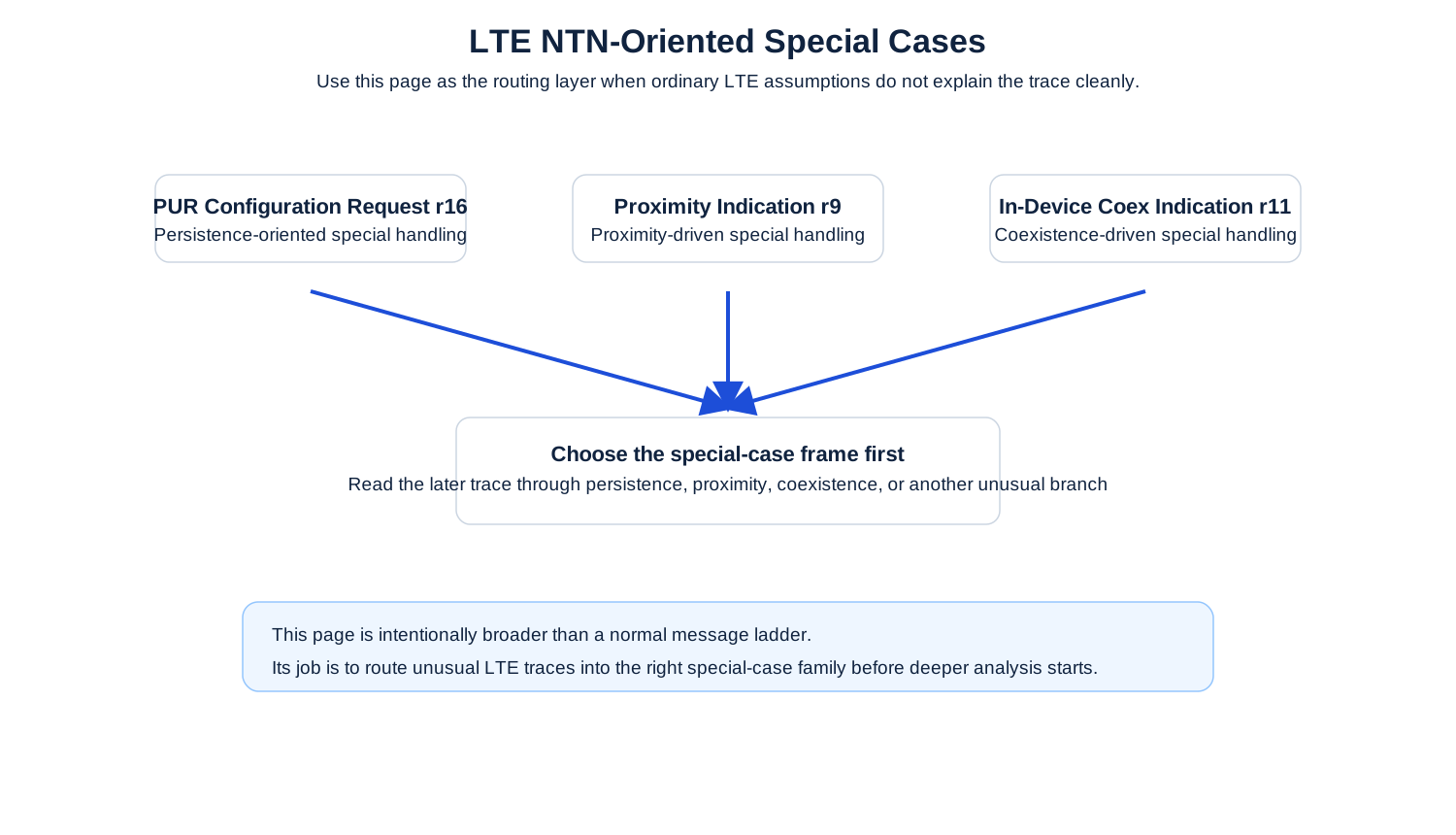
The practical anchors are special-case messages such as PUR Configuration Request r16, Proximity Indication r9, and In-Device Coex Indication r11, depending on which NTN-oriented symptom the trace is exposing.
Introduction
This page is intentionally broader than a single message-driven procedure. It is the special-case layer used when the trace does not fit ordinary LTE assumptions cleanly and the analysis needs a branch that can absorb NTN-oriented handling patterns.
Use it when the main question is not one exact normal LTE procedure, but whether unusual persistence, coexistence, or coverage-driven control is the better frame for the trace.
What Is LTE NTN-Oriented Special Cases in Simple Terms?
- What starts the procedure: The trace enters a special LTE branch where ordinary terrestrial assumptions no longer explain the observed control behavior well.
- What the UE and network want to achieve: A stable special-case control state that preserves service under unusual timing, coverage, or coexistence conditions.
- What success looks like: The special-case branch explains the later behavior and the control messages fit that frame.
- What failure means: The trace is forced into an ordinary LTE interpretation even though it behaves like a special-case branch.
Why this procedure matters
The value of this page is not one single message ladder. It is the ability to recognize when the trace should be read through unusual LTE assumptions instead of through the normal connected, mobility, or idle template.
Quick Fact Sheet
| Procedure name | LTE NTN-Oriented Special Cases |
|---|---|
| Domain | Special-case LTE control interpretation |
| Main trigger | Need to explain LTE behavior that does not fit ordinary terrestrial assumptions well |
| Start state | A trace shows unusual persistence, coexistence, proximity, or control timing behavior |
| End state | The special-case frame explains the later control behavior more cleanly |
| Main nodes | UE, eNB, special-case control context |
| Main protocols | RRC, special-case control signaling |
| Main success outcome | The trace is correctly routed into the right special-case branch |
| Main failure outcome | The trace is misread as an ordinary LTE procedure and the real pattern is missed |
| Most important messages | PUR Configuration Request r16, Proximity Indication r9, In-Device Coex Indication r11 |
| Main specs | TS 36.331 |
Preconditions
- The trace shows behavior that is hard to explain through ordinary LTE procedure patterns alone.
- The special-case message family is visible or strongly suggested in the trace.
- The analysis needs a broader special-case frame instead of one narrow ordinary LTE procedure page.
Nodes and Interfaces
Nodes involved
| Node | Role in this procedure |
|---|---|
| UE | Reports or applies the special-case control behavior visible in the trace. |
| eNB | Configures or reacts to the unusual LTE control branch. |
| Special-case context | Represents the unusual timing, persistence, coexistence, or coverage assumptions needed to read the trace correctly. |
Interfaces used
| Interface | Path | Role |
|---|---|---|
| LTE Uu | UE <-> eNB | Carries the special-case LTE control branch. |
| RRC | UE <-> eNB | Carries the message families that make the special-case interpretation visible. |
End-to-End Call Flow
UE                       eNB
|<--special-case config---|
|--special-case report--->|
|==== later unusual continuation ===>|
Major Phases
| Phase | What happens |
|---|---|
| 1. Recognize the ordinary model is not enough | The trace does not fit a normal LTE template cleanly. |
| 2. Identify the special-case anchor | A special message family points to the better interpretation branch. |
| 3. Read the later behavior through that frame | The later control behavior is checked against the special-case assumptions. |
| 4. Route to the narrower page if needed | If one special-case family becomes dominant, the analysis can narrow further. |
Step-by-Step Breakdown
Spot the special-case branch
Sender -> receiver: UE / eNB
Message(s): PUR Configuration Request r16, Proximity Indication r9, or In-Device Coex Indication r11
Purpose: Identify that the trace belongs to an unusual LTE control family.
State or context change: The analysis now moves away from a normal LTE-only interpretation.
Note: This is the most important reasoning step on the page.
Read the special-case meaning
Sender -> receiver: UE <-> eNB
Message(s): Special-case configuration or report
Purpose: Understand which unusual LTE assumption is shaping the later branch.
State or context change: The trace now has a usable special-case interpretation frame.
Note: Do not jump directly to failure or mobility pages before deciding whether the trace is actually special-case behavior.
Match the later control result
Sender -> receiver: UE / eNB
Message(s): Later unusual continuation
Purpose: Check whether the later control behavior fits the chosen special-case frame.
State or context change: The page now explains why the later behavior looked unusual in the first place.
Note: This is where branch selection and behavioral explanation come together.
Narrow into the exact special-case family if needed
Sender -> receiver: Analyst step
Message(s): Choose the dominant special-case reference
Purpose: Move into the most relevant narrower message or concept page once the right family is known.
State or context change: The trace is now routed to the correct deeper special-case reference if required.
Note: This page is the decision layer, not the final narrow page in every case.
Important Messages
| Message | Protocol | Direction | Purpose in this procedure | What to inspect briefly |
|---|---|---|---|---|
| PUR Configuration Request r16 | RRC | eNB -> UE | Useful anchor when persistence-oriented special behavior becomes relevant. | Check whether the unusual branch is really driven by persistence or scheduled reporting behavior. |
| Proximity Indication r9 | RRC | UE -> eNB | Useful anchor when proximity-driven special behavior shapes the branch. | Check whether the later control behavior follows a proximity-related special case rather than a normal mobility pattern. |
| In-Device Coex Indication r11 | RRC | UE -> eNB | Useful anchor when coexistence constraints shape the special branch. | Check whether the trace reflects coexistence pressure instead of ordinary radio deterioration. |
Important Parameters to Inspect
| Parameter | What it is | Where it appears | Why it matters | Common issues |
|---|---|---|---|---|
| Special-case family | Which unusual LTE branch best fits the trace: persistence, proximity, coexistence, or another special handling family. | Before deeper analysis | This is the main routing decision the page exists to support. | The trace is forced into the wrong ordinary LTE family. |
| Dominant anchor message | The message family that best exposes the unusual branch. | Special-case message window | Useful for deciding which narrower page should be used next. | Several unusual hints appear, but the strongest one is not selected. |
| Later behavior fit | Whether the later control behavior actually matches the chosen special-case frame. | Post-anchor continuation | Separates a good routing decision from a wrong one. | The chosen special-case family does not really explain the later trace. |
| Ordinary-model mismatch | What exactly makes the trace inconsistent with a normal LTE interpretation. | Whole procedure window | Helps justify leaving the normal LTE page family behind. | The trace looks odd, but no explicit reason is captured. |
| Need for deeper narrowing | Whether the special-case branch should now move into one exact narrower page or message reference. | After branch identification | Keeps the page useful as a routing layer rather than as the final deep reference every time. | Analysis stops too early at the broad special-case label. |
Successful Completion
Success means the trace is recognized as an unusual special-case LTE branch and later behavior becomes easier to explain through that frame.
Common Failures and Troubleshooting
| Symptom | Likely cause | Where to inspect | Relevant message(s) | Relevant interface(s) | Likely next step |
|---|---|---|---|---|---|
| The trace keeps resisting ordinary LTE interpretation | It may belong to a special-case family such as persistence, proximity, or coexistence handling. | The first unusual message anchor and the later branch behavior together. | PUR Configuration Request r16, Proximity Indication r9, In-Device Coex Indication r11 | LTE Uu | Route the trace into the correct special-case family before deeper analysis. |
| A special-case message is present, but later analysis still goes down a normal LTE path | The branch-routing decision may not have been applied consistently. | The special-case anchor and the page family used afterward. | Special-case message family | RRC | Keep the special-case frame active through the later behavior, not just at the first message. |
What to Check in Logs and Traces
- Start by proving that an ordinary LTE interpretation is not enough.
- Use the strongest special-case message family as the routing anchor.
- Check whether the later behavior truly fits the chosen special-case frame.
Related Pages
Related sub-procedures
Related message reference pages
Related troubleshooting pages
Notes
This page is the routing layer for unusual LTE branches. When one special-case family clearly dominates, move into the exact message or concept page tied to that family.
FAQ
What is LTE NTN-Oriented Special Cases?
It is the reference layer for LTE traces that need unusual timing, persistence, proximity, or coexistence assumptions instead of a normal terrestrial LTE interpretation.
Why is this page broader than the other call-flow pages?
Because it is meant to help route odd LTE traces into the right special-case family before deeper narrowing starts.