LTE Paging Procedure Call Flow
LTE Paging is the idle-reachability procedure used when the network needs to contact a UE that is not currently in active connected signaling. It is the boundary between idle monitoring and the next access or service-restoration step.
Introduction
The LTE Paging Procedure lets the network reach an idle UE for downlink data, signaling, voice, or system-information change. The page itself is only the alert. The real success check is the next UE action after the page is received.
What Is LTE Paging in Simple Terms?
- What starts the procedure: The network needs an idle UE to return to active processing.
- What the UE and network want to achieve: Alert the UE and move it into the correct next step.
- What success looks like: The UE detects the page and starts fresh access or the right next procedure.
- What failure means: The UE misses the page, the identity does not match, or the following access step fails.
Why this procedure matters
Paging is one of the main idle-side checkpoints in LTE because many apparent paging failures are really problems in broadcast configuration, identity matching, or the access step that follows.
Quick Fact Sheet
| Main trigger | Pending downlink data, signaling, voice, or system-information change |
|---|---|
| Start state | UE is idle and monitoring paging occasions |
| End state | UE either returns to active signaling or remains idle if the page is missed or does not match |
| Most important messages | Paging, RRC Connection Request, Service Request |
Preconditions
- The UE is in idle monitoring state and has valid paging configuration.
- The network knows the UE paging area and identity.
- The serving cell can broadcast the page in the right paging occasion.
Nodes and Interfaces
Nodes involved
| Node | Role in this procedure |
|---|---|
| MME | Decides that the idle UE must be contacted. |
| eNB | Broadcasts the paging message over the radio side. |
| UE | Monitors paging occasions and reacts if the page matches its identity. |
Interfaces used
| Interface | Endpoints | Role |
|---|---|---|
| S1-MME | MME <-> eNB | Carries the paging trigger toward the eNB. |
| LTE Uu | eNB -> UE | Carries the broadcast paging message. |
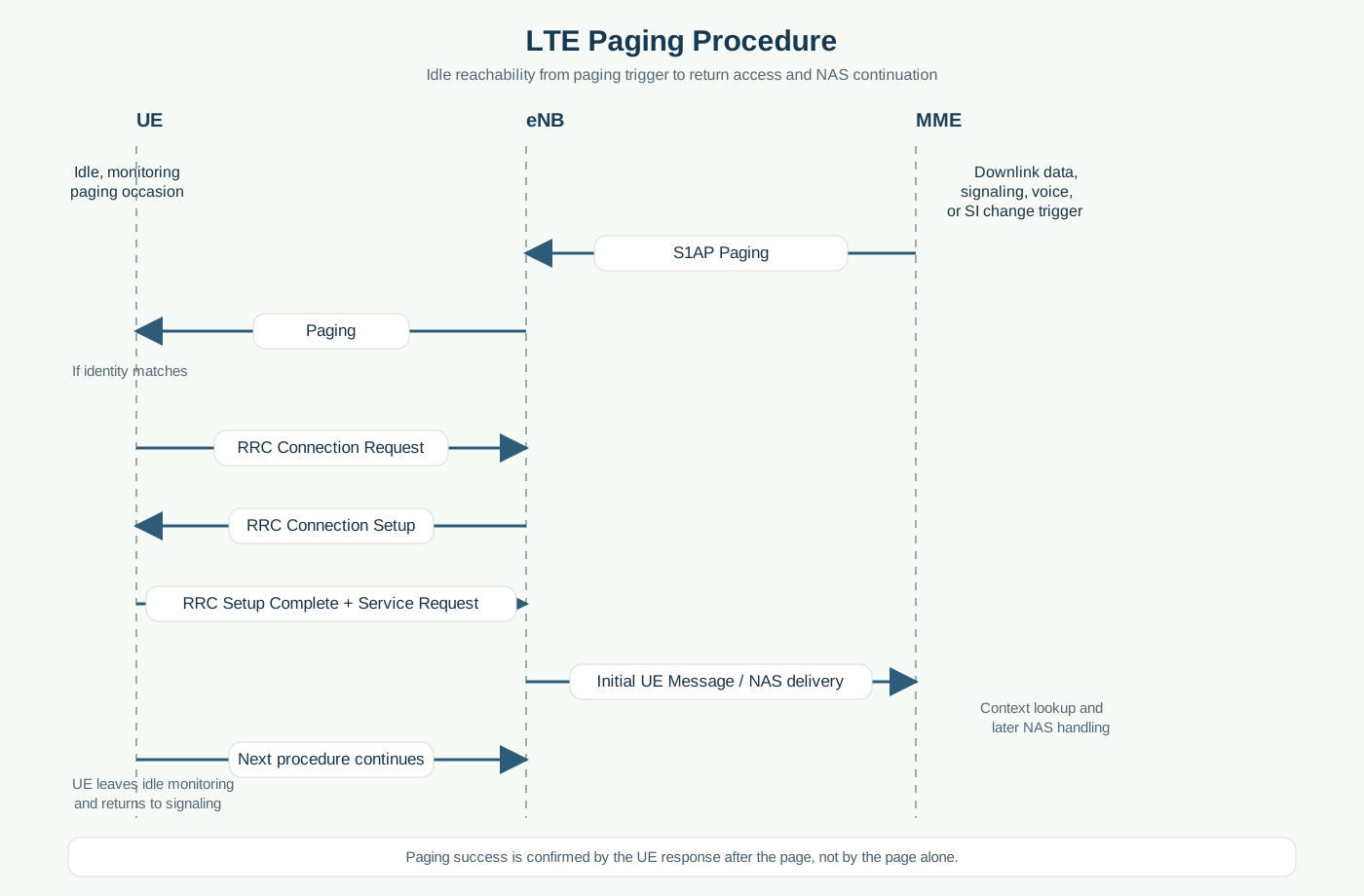
End-to-End Call Flow
UE               eNB               MME
|                 |                 |
|  idle, monitoring paging occasion |
|                 |<--S1AP Paging---|
|<--Paging--------|                 |
|--RRC Conn Req-->|                 |
|<-RRC Conn Setup-|                 |
|--RRC Setup Complete + Service Request---------->|
|                 |--Initial UE Message---------->|
|                 |<--Downlink NAS / context------|
|<--next access or service continuation-----------|
Major Phases
1. Paging decision
The network decides the idle UE must be reached.
2. Broadcast page
The eNB transmits the page in the configured paging occasion.
3. UE reaction
If the page matches, the UE starts fresh access and later NAS continuation.
Step-by-Step Breakdown
Paging trigger
Sender -> receiver: Network internal trigger, then MME -> eNB
Message(s): Paging context toward the radio side
Purpose: Decide that the idle UE must return.
State or context change: The UE is targeted for idle-to-connected return.
Note: This stage does not yet prove the UE saw the page.
Paging broadcast
Sender -> receiver: eNB -> UE
Message(s): Paging
Purpose: Alert the idle UE.
State or context change: UE compares the page with its stored identity and timing.
Note: Identity matching and paging occasion timing are the first checks.
Access and continuation
Sender -> receiver: UE -> eNB -> MME
Message(s): RRC Connection Request and later NAS continuation such as Service Request
Purpose: Return the UE to active signaling.
State or context change: Idle monitoring ends and connected signaling begins.
Note: A correct page with a failed later access is not a paging-decode failure.
Important Messages
Important Parameters to Inspect
| Item | What it is | Where it appears | Why it matters | Common issues |
|---|---|---|---|---|
| Paging identity | The UE identity placed in the page. | Paging | Determines whether the UE should react. | Wrong S-TMSI or wrong area. |
| Paging occasion | The expected time window for monitoring. | Paging configuration and UE behavior | Explains why the UE did or did not see the page. | DRX mismatch, wrong timing assumption. |
| systemInfoModification | Broadcast-related change indicator in the page. | Paging | Can change the next UE action from service return to broadcast reacquisition. | Wrong next-step interpretation. |
Successful Completion
A successful paging path means the UE detects the page and starts the correct next action, usually fresh access and NAS continuation.
Common Failures and Troubleshooting
Paging is transmitted but the UE does not respond
Likely cause: Identity mismatch, timing mismatch, or the following access step fails.
Where to inspect: Paging record, paging occasion, next RRC access attempt.
Relevant message(s): Paging, RRC Connection Request
Relevant interface(s): LTE Uu
Likely next step: Decide whether the page was missed or the return-to-service leg failed after the page.
What to Check in Logs and Traces
- Check the paging identity first.
- Validate the paging occasion and DRX assumptions.
- Always follow the next RRC or NAS message after the page.
Related Pages
Related sub-procedures
- LTE Service Request Procedure
- LTE Extended Service Request Procedure
- LTE RRC Connection Setup Procedure
Related message reference pages
Related troubleshooting pages
Notes
Paging only proves that the network tried to reach the UE. To decide whether paging really worked, always follow the next access or NAS continuation after the page.
FAQ
Does Paging itself restore service?
No. Paging only alerts the UE. Service is restored by the access and NAS continuation that follow.
What should I inspect first in a paging issue?
Start with paging identity and paging occasion timing.