LTE Periodic Tracking Area Update Call Flow
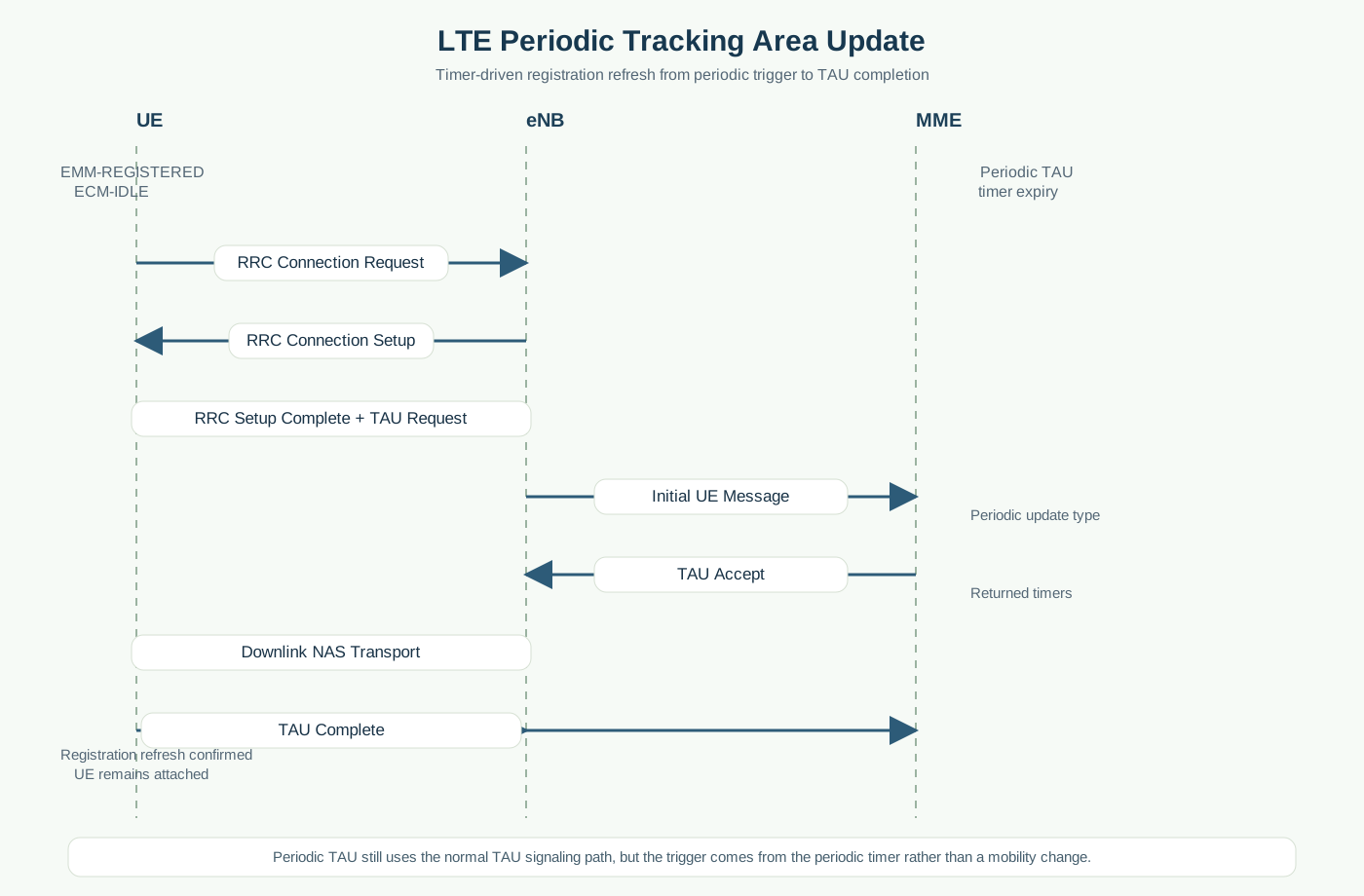
LTE Periodic Tracking Area Update is the timer-driven TAU path used when the UE refreshes its registration even without a location change. It confirms that the UE is still reachable and keeps the mobility context valid.
Introduction
The Periodic TAU Procedure is a specialized TAU case where the trigger is a periodic mobility timer instead of an area change. The signaling is still based on TAU, but the reading focus is the timer-driven refresh of registration state.
What Is LTE Periodic TAU in Simple Terms?
- What starts the procedure: The periodic TAU timer expires while the UE is still registered.
- What the UE and network want to achieve: Refresh registration and prove the UE is still reachable.
- What success looks like: The UE sends periodic TAU Request and receives TAU Accept.
- What failure means: The UE cannot refresh the registration and may later fall into retry or recovery behavior.
Why this procedure matters
Periodic TAU explains many cases where a UE appears idle and stationary but still sends a timer-driven NAS mobility update.
Quick Fact Sheet
| Main trigger | Periodic TAU timer expiry such as T3412-related behavior |
|---|---|
| Start state | UE is registered and idle |
| End state | Registration refresh completed and timers updated |
| Most important messages | TAU Request, TAU Accept, TAU Complete |
Preconditions
- The UE is already registered in EPS.
- The periodic TAU timer has expired.
- The UE can access the cell and deliver the NAS request.
Nodes and Interfaces
Nodes involved
| Node | Role in this procedure |
|---|---|
| UE | Starts the timer-driven refresh. |
| eNB | Provides the fresh signaling path. |
| MME | Accepts or rejects the periodic registration refresh. |
Interfaces used
| Interface | Endpoints | Role |
|---|---|---|
| LTE Uu | UE <-> eNB | Fresh access and NAS delivery. |
| S1-MME | eNB <-> MME | TAU signaling toward the core. |
End-to-End Call Flow
UE               eNB               MME
|                 |                 |
| periodic TAU timer expires        |
|--RRC Conn Req-->|                 |
|<-RRC Conn Setup-|                 |
|--RRC Setup Complete + TAU Request------------->|
|                 |--Initial UE Message--------->|
|                 |<--TAU Accept-----------------|
|<--Downlink NAS Transport-----------------------|
|--TAU Complete-->|----------------------------->|
Major Phases
1. Timer expiry
The UE reaches the periodic TAU timer and starts the registration refresh path.
2. Request delivery
The UE sends periodic TAU Request over a fresh access leg.
3. Accept and completion
The network returns the new mobility timer context and the UE confirms completion.
Step-by-Step Breakdown
Timer-driven trigger
Sender -> receiver: UE internal timer
Message(s): No NAS message yet
Purpose: Start the periodic registration refresh.
State or context change: UE prepares a TAU update without any area change.
Note: This is the main difference from normal TAU.
Periodic TAU Request
Sender -> receiver: UE -> MME
Message(s): Tracking Area Update Request
Purpose: Refresh registration state.
State or context change: MME validates that the UE is still reachable and registered.
Note: Confirm the update type is periodic.
Important Messages
Important Parameters to Inspect
| Item | What it is | Where it appears | Why it matters | Common issues |
|---|---|---|---|---|
| Periodic update type | TAU type showing that the request is timer-driven. | TAU Request | Separates this flow from mobility-triggered TAU. | Wrong scenario assumption. |
| Returned timers | Updated timing values after acceptance. | TAU Accept | Explain when the next periodic update is expected. | Unexpected timer configuration. |
Successful Completion
A successful periodic TAU refreshes the registration state and updates the relevant timers while the UE stays attached.
Common Failures and Troubleshooting
Periodic TAU never appears
Likely cause: Timer configuration or trace window does not cover the update point.
Where to inspect: Returned timers from earlier attach or TAU Accept.
Relevant message(s): Attach Accept, TAU Accept
Relevant interface(s): NAS
Likely next step: Validate the timer assumptions before looking for a missing procedure.
Periodic TAU is rejected
Likely cause: Stored context is no longer acceptable.
Where to inspect: Reject cause and old identity.
Relevant message(s): TAU Request, TAU Reject
Relevant interface(s): NAS, S1-MME
Likely next step: Decide whether the UE should reattach or retry later.
What to Check in Logs and Traces
- Confirm the request is periodic TAU, not normal TAU.
- Check the timer source from earlier accept messages.
- Inspect the returned timer values after success.
Related Pages
Related sub-procedures
Related message reference pages
Related troubleshooting pages
Notes
Periodic TAU is still TAU, but the trigger is timer-driven rather than mobility-driven. The main checks are the update type and the returned timer values.
FAQ
What starts periodic TAU?
The expiry of the periodic registration timer.
How is it different from normal TAU?
The signaling family is similar, but the trigger is timer-driven rather than area-change driven.