LTE PS Handover / SRVCC Preparation Flows Call Flow
LTE PS handover and SRVCC preparation flows are the preparation branches that happen before packet-switched interworking execution or voice continuity away from LTE.
This page focuses on the preparation state that exists before the UE is finally told to leave LTE.
Introduction
Before a PS interworking move or SRVCC continuity branch can succeed, the target side often needs preparation. This page collects that preparation layer so the source-side decision, target-side readiness, and later execution timing can be read together.
The main nodes are the source LTE side, MME, and the target-side preparation context.
What Is PS Handover / SRVCC Preparation Flows in Simple Terms?
- What starts the procedure: A later PS interworking move or SRVCC branch needs target-side preparation first.
- What the UE and network want to achieve: Build the target-side readiness needed before execution away from LTE.
- What success looks like: Target-side preparation completes and the later execution branch has usable context.
- What failure means: The later move out of LTE begins with weak, missing, or stale target preparation.
Why this procedure matters
Preparation is where many continuity failures are born. By the time the UE is visibly leaving LTE, the target side may already be underprepared and the visible failure is only the last symptom.
Quick Fact Sheet
| Procedure name | LTE PS Handover / SRVCC Preparation Flows |
|---|---|
| Domain | Interworking and voice-continuity preparation |
| Main trigger | A later PS or SRVCC execution branch needs target preparation first |
| Start state | The UE is still on LTE and execution has not started |
| End state | The target side is prepared for later PS or SRVCC execution |
| Main nodes | source LTE side, MME, target-side preparation context |
| Main protocols | Preparation signaling, S1 support |
| Main success outcome | The target branch is ready before the UE leaves LTE |
| Main failure outcome | The later continuity branch starts without reliable preparation |
| Most important messages | Preparation request, preparation transfer, preparation result |
| Main specs | Preparation and continuity context |
Preconditions
- A later PS handover or SRVCC execution branch is already expected.
- The target side can be prepared before execution starts.
- The source LTE side still has time to build the target branch before the move.
Nodes and Interfaces
Nodes involved
| Node | Role in this procedure |
|---|---|
| source LTE side | Starts the preparation needed for the later interworking or continuity move. |
| MME | Supports the preparation and preserves coordination between source and target branches. |
| Target-side preparation context | Represents the non-LTE or legacy side being made ready for execution. |
Interfaces used
| Interface | Path | Role |
|---|---|---|
| S1-MME | source LTE side <-> MME | Carries the LTE-side support for target preparation. |
| Preparation signaling path | source side / MME <-> target side | Carries request, transfer, and result information before execution. |
End-to-End Call Flow
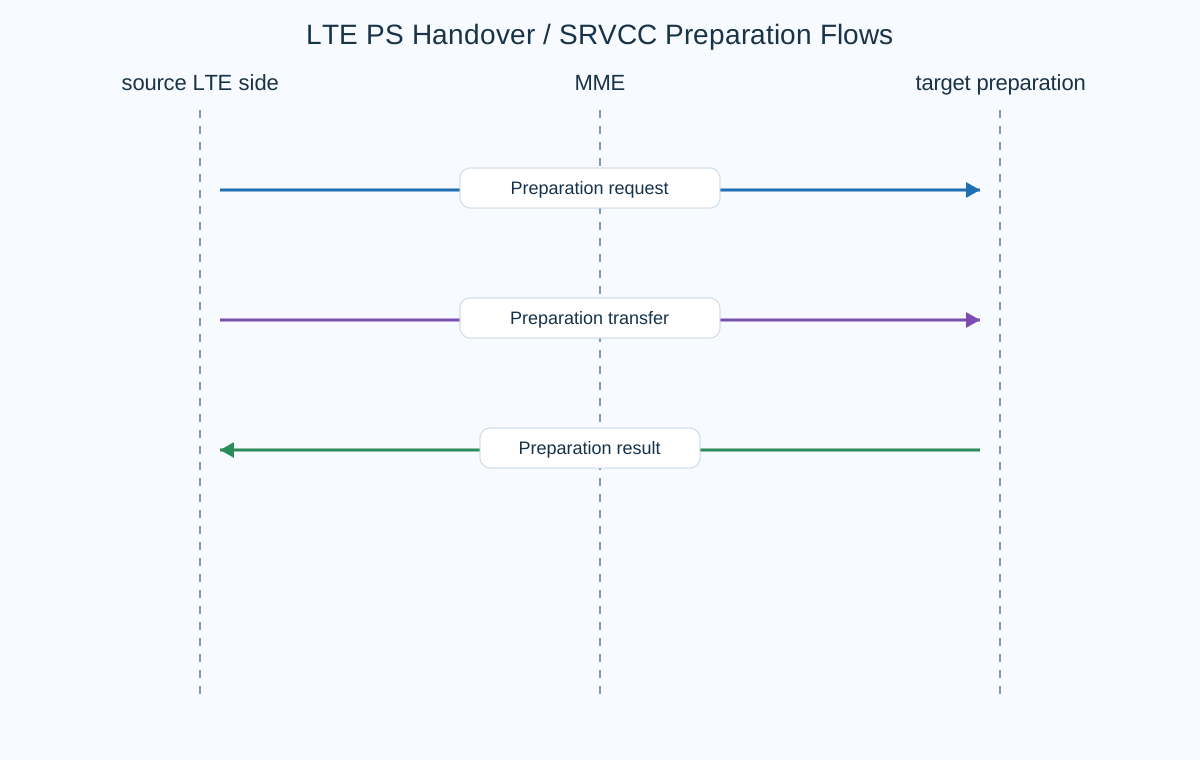
source LTE side          MME             target preparation
|--prep request------->|--prep request---->|
|--prep transfer------>|--prep transfer--->|
|<--prep result--------|<--prep result-----|
Major Phases
| Phase | What happens |
|---|---|
| 1. Decide the need for preparation | The source side knows a later PS or SRVCC branch is coming. |
| 2. Request target preparation | The target side is asked to build the needed context. |
| 3. Transfer supporting content | The target side receives the source-side preparation content it needs. |
| 4. Confirm readiness | The target branch returns the result and becomes ready for execution. |
Step-by-Step Breakdown
Step 1: Open the preparation branch
Sender -> receiver: source LTE side -> target side
Message(s): Preparation request
Purpose: Ask the target side to build readiness before the later move starts.
State or context change: Target preparation begins while the UE is still on LTE.
Note: This is the staging point behind later PS handover or SRVCC execution.
Step 2: Transfer source-side preparation context
Sender -> receiver: source LTE side -> target side
Message(s): Preparation transfer
Purpose: Send the supporting source-side content the target branch needs.
State or context change: The target side now has the source information needed for later use.
Note: This explains why the target side later behaves as it does.
Step 3: Receive the preparation result
Sender -> receiver: target side -> source LTE side
Message(s): Preparation result
Purpose: Confirm whether the target side is ready for execution.
State or context change: The later PS or SRVCC branch now has a known preparation quality.
Note: A weak preparation result often explains a later continuity failure that looks sudden.
Important Messages
| Message | Protocol | Direction | Purpose in this procedure | What to inspect briefly |
|---|---|---|---|---|
| Preparation request | Preparation signaling | source side -> target side | Starts target-side readiness before execution. | Check the target branch identity and the reason the target is being prepared. |
| Preparation transfer | Preparation signaling | source side -> target side | Delivers the source-side support content needed by the target branch. | Check whether the supporting context really reached the target side. |
| Preparation result | Preparation signaling | target side -> source side | Confirms readiness before PS handover or SRVCC execution begins. | Check whether the result is actually strong enough for later execution. |
Important Parameters to Inspect
| Parameter | What it is | Where it appears | Why it matters | Common issues |
|---|---|---|---|---|
| Preparation target | The exact branch being prepared for later execution. | Preparation request | Shows whether the source side prepared the correct target branch. | The wrong branch is prepared. |
| Transferred support context | The source-side information sent to the target branch. | Preparation transfer | Explains why the target side later behaves in a specific way. | The target side is missing the source context it needed. |
| Preparation result quality | How ready the target branch really is. | Preparation result | Separates visible preparation signaling from usable preparation. | A visible result is mistaken for a strong result. |
| Gap before execution | The time between preparation and the later move. | Preparation and later execution timing | Useful when prepared context may have become stale before use. | Preparation succeeds, but the later move happens too late to use it well. |
| Execution type | Whether the later branch is PS handover or SRVCC continuity. | Overall preparation context | Explains what kind of target readiness the preparation was supposed to create. | The preparation is judged using the wrong execution model. |
Successful Completion
Success means the target-side preparation is ready and usable before the later PS handover or SRVCC execution begins.
Common Failures and Troubleshooting
| Symptom | Likely cause | Where to inspect | Relevant message(s) | Relevant interface(s) | Likely next step |
|---|---|---|---|---|---|
| Preparation signaling exists but later continuity still fails | The preparation was weak, incomplete, or stale by the time execution started. | Preparation request, transfer, result, and execution timing together. | Preparation request, transfer, result | S1-MME, preparation signaling path | Compare preparation quality with the later continuity timing rather than judging by signaling presence alone. |
| Later execution looks underprepared | The source side never built or transferred the needed context cleanly. | The full preparation stage before the UE was told to leave LTE. | Preparation request, transfer | Preparation signaling path | Confirm whether the target branch really received all the expected preparation steps. |
What to Check in Logs and Traces
- Read preparation before execution when SRVCC or PS interworking fails suddenly.
- Use request, transfer, and result as one preparation set rather than separate isolated messages.
- Compare the strength of the preparation result with the timing of the later move.
Related Pages
Related sub-procedures
Related message reference pages
Related troubleshooting pages
Notes
This page is for the preparation layer only. The user-visible execution branch comes later, after the target side is supposed to be ready.
FAQ
What are PS handover and SRVCC preparation flows?
They are the source-side staging steps that make the target branch ready before the UE leaves LTE.
Why separate preparation from execution?
Because many visible failures happen during execution, but the real cause is hidden in the earlier preparation stage.