LTE Remote UE Relay Procedure Call Flow
LTE Remote UE Relay Procedure is the relay-related status branch where the remote UE state is exposed through NAS reporting rather than through ordinary LTE-only or generic sidelink-only signaling.
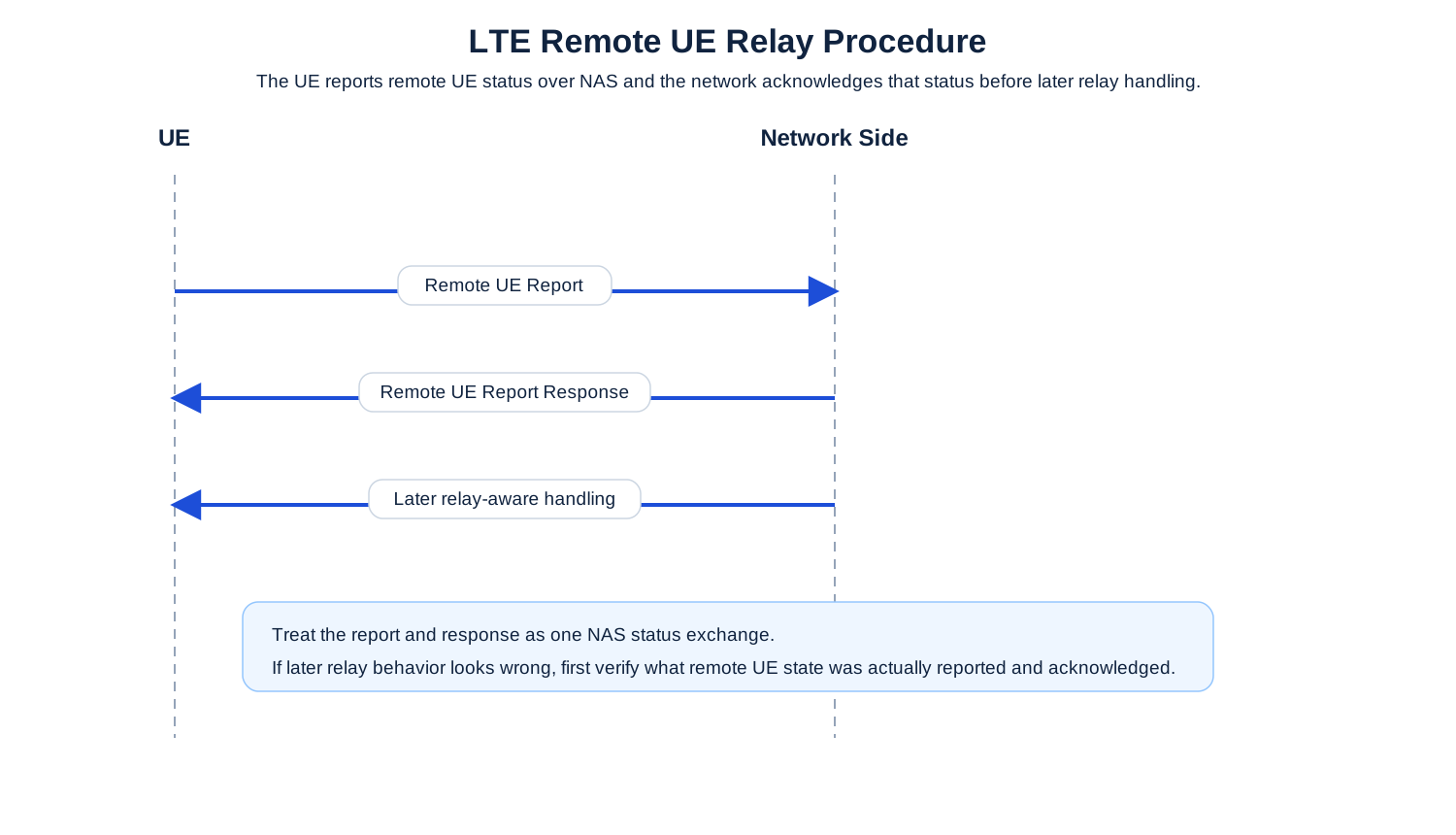
The practical anchors are Remote UE Report and Remote UE Report Response, which together define the remote UE status exchange.
Introduction
This page is most useful when the relay question is centered on remote UE status rather than on the relay-capable UE sidelink branch. The remote UE report and its response are the main facts that explain what the network knew and acknowledged.
Use it when the trace contains the Remote UE Report family and the main question is whether the remote UE relay branch was reported and handled correctly.
What Is LTE Remote UE Relay Procedure in Simple Terms?
- What starts the procedure: The network needs the current remote UE relay status from the UE side.
- What the UE and network want to achieve: A clear remote UE status view that can be acknowledged and used in later relay handling.
- What success looks like: Remote UE Report is sent, the response arrives, and later behavior matches the reported state.
- What failure means: The report is missing, not acknowledged, or later handling does not follow the reported status.
Why this procedure matters
Remote UE relay traces are often unclear because the relay story is split across different branches. This page keeps the focus on the NAS status exchange that shows what remote UE state the network actually received.
Quick Fact Sheet
| Procedure name | LTE Remote UE Relay Procedure |
|---|---|
| Domain | Remote UE relay status handling |
| Main trigger | Need to expose or refresh remote UE relay status |
| Start state | A relay-related branch exists and remote UE status matters |
| End state | The network has the remote UE status and has acknowledged it |
| Main nodes | UE, network side |
| Main protocols | NAS |
| Main success outcome | Remote UE status is visible and later handling matches it |
| Main failure outcome | Remote UE relay handling uses missing or stale status |
| Most important messages | Remote UE Report, Remote UE Report Response |
| Main specs | TS 24.301 |
Preconditions
- A remote UE relay branch is relevant in the trace.
- The UE can send the remote UE status to the network side.
- The trace includes the report and later response window.
Nodes and Interfaces
Nodes involved
| Node | Role in this procedure |
|---|---|
| UE | Sends the remote UE status and reads the network acknowledgement. |
| Network side | Receives the remote UE status and returns the response. |
| Remote UE branch context | Represents the relay-related status branch built around the NAS report exchange. |
Interfaces used
| Interface | Path | Role |
|---|---|---|
| NAS | UE <-> Network side | Carries the remote UE status report and response branch. |
| LTE control path | UE <-> network side | Carries the wider LTE context around the NAS relay status exchange. |
End-to-End Call Flow
UE                     Network side
|--Remote UE Report---->|
|<-Remote UE Report Resp-|
|==== later relay handling ===>|
Major Phases
| Phase | What happens |
|---|---|
| 1. Need remote UE visibility | The network reaches a point where remote UE status matters. |
| 2. Report the remote UE state | The UE sends the current relay-related status over NAS. |
| 3. Acknowledge the report | The network returns the response to the UE. |
| 4. Continue with the relay branch | Later relay handling should now reflect the reported remote UE state. |
Step-by-Step Breakdown
Send the status report
Sender -> receiver: UE -> Network side
Message(s): Remote UE Report
Purpose: Expose the current remote UE relay status.
State or context change: The network now has the key relay-related status needed for later action.
Note: This is the main proof of what the UE actually told the network.
Receive the acknowledgement
Sender -> receiver: Network side -> UE
Message(s): Remote UE Report Response
Purpose: Confirm receipt and handling of the remote UE status report.
State or context change: The report exchange is now complete from the NAS point of view.
Note: If the response is missing, later network assumptions should be treated carefully.
Read the report into later branch handling
Sender -> receiver: Network side
Message(s): Later relay-aware decision
Purpose: Use the reported remote UE status in the next relay branch.
State or context change: Later handling is now working from an explicit remote UE status view.
Note: This explains whether the network had the right relay-state view before the next action.
Validate later behavior
Sender -> receiver: UE <-> Network side
Message(s): Relay continuation after the report exchange
Purpose: Check whether later branch behavior fits the report and response pair.
State or context change: The remote UE relay branch is now complete enough to evaluate.
Note: This is where report accuracy and decision accuracy should be separated.
Important Messages
| Message | Protocol | Direction | Purpose in this procedure | What to inspect briefly |
|---|---|---|---|---|
| Remote UE Report | NAS | UE -> Network side | Carries the current remote UE relay status. | Check the reported status itself and the branch context immediately around it. |
| Remote UE Report Response | NAS | Network side -> UE | Acknowledges the remote UE status exchange. | Check whether the report was actually acknowledged before later behavior is judged. |
| Sidelink UE Information r12 | RRC | UE -> eNB | Useful companion reference when the relay trace also includes a relay-capable sidelink branch. | Check whether the trace is mixing remote UE NAS status with relay-capable UE sidelink reporting. |
Important Parameters to Inspect
| Parameter | What it is | Where it appears | Why it matters | Common issues |
|---|---|---|---|---|
| Reported remote UE status | The actual relay-related status sent by the UE. | Remote UE Report | It is the core fact later handling should use. | Later behavior is judged without checking the reported state itself. |
| Response presence | Whether the network acknowledged the report. | Remote UE Report Response | Useful for proving the report exchange really completed. | The later branch is treated as report-aware even though the exchange never completed cleanly. |
| NAS-versus-RRC branch identity | Whether the trace question is in the NAS remote UE branch or the RRC relay-capable UE branch. | Whole procedure window | Prevents remote UE status analysis from being mixed with sidelink report analysis. | The wrong relay message family is being used to explain the behavior. |
| Later action alignment | Whether the next relay branch matches the reported status. | Post-response continuation | Separates status reporting problems from later decision problems. | The report is correct, but the network still follows stale assumptions. |
| Exchange timing | How close the report and response are to the later relay action. | Around the report window | Useful when several relay-related updates appear in one trace. | The wrong report instance is matched to the later behavior. |
Successful Completion
Success means the remote UE status is reported, acknowledged, and then reflected correctly in later relay handling.
Common Failures and Troubleshooting
| Symptom | Likely cause | Where to inspect | Relevant message(s) | Relevant interface(s) | Likely next step |
|---|---|---|---|---|---|
| Later relay behavior does not match the reported remote UE state | The network may be using stale status or the wrong relay branch context. | Remote UE Report, its response, and the next relay action together. | Remote UE Report, Remote UE Report Response | NAS | Align one report-response pair with one later action before diagnosing the branch logic. |
| The relay trace is unclear because multiple relay-related message families are present | The trace may mix Remote UE Report with sidelink relay signaling. | NAS report exchange and nearby sidelink report windows. | Remote UE Report, Sidelink UE Information r12 | NAS, RRC | Separate remote UE status handling from relay-capable UE reporting first. |
What to Check in Logs and Traces
- Use the Remote UE Report and Remote UE Report Response pair as one exchange.
- Keep NAS remote UE status handling separate from RRC sidelink relay reporting.
- Check whether later relay behavior follows the exact reported state.
Related Pages
Related sub-procedures
Related message reference pages
Related troubleshooting pages
Notes
Use this page when the main trace anchors are the NAS remote UE status messages. If the main anchors are the sidelink UE report messages, start from the sidelink relay UE page instead.
FAQ
What is the LTE Remote UE Relay Procedure?
It is the relay-related NAS status branch where the UE reports remote UE state and the network acknowledges it.
Which messages define the procedure?
Remote UE Report and Remote UE Report Response are the main anchors.