LTE SC-PTM Procedure Call Flow
LTE SC-PTM Procedure is the LTE group-delivery path used when the UE needs the single-cell point-to-multipoint context that supports group-oriented delivery behavior.
It should be read from the broadcast and MBMS-context side first, because later delivery behavior depends on the cell-specific group-delivery context already being in place.
Introduction
The LTE SC-PTM Procedure is best treated as a group-delivery preparation and interpretation path rather than as a simple UE-specific transaction.
Use this page when the main question is whether the UE had the right MBMS and broadcast-side context before later single-cell point-to-multipoint behavior appeared.
What Is LTE SC-PTM Procedure in Simple Terms?
- What starts the procedure: Single-cell point-to-multipoint delivery becomes relevant in the LTE cell.
- What the UE and network want to achieve: A usable cell-local group-delivery context for later SC-PTM continuation.
- What success looks like: The UE has the broadcast-side context needed for later SC-PTM behavior.
- What failure means: The UE never gets the right group-delivery context or the later SC-PTM branch becomes hard to explain.
Why this procedure matters
SC-PTM is easy to misread as a later delivery-only problem. In practice, the first question is whether the cell-specific group-delivery context was available and correctly understood before the later branch was expected to work.
Quick Fact Sheet
| Procedure name | LTE SC-PTM Procedure |
|---|---|
| Domain | LTE single-cell point-to-multipoint delivery |
| Main trigger | Group-delivery behavior becomes relevant in one LTE cell |
| Start state | UE is camped or connected with group-delivery context becoming relevant |
| End state | UE has the SC-PTM-related context needed for later group-delivery continuation |
| Main nodes | UE, eNB |
| Main protocols | RRC broadcast and related group-delivery context |
| Main success outcome | The SC-PTM-related LTE context is available for later continuation |
| Main failure outcome | The later group-delivery branch lacks a clear context foundation |
| Most important messages | SIB13, MBMS-related system information, later SC-PTM continuation context |
| Main specs | TS 36.331 |
Preconditions
- The LTE cell has group-delivery or MBMS-adjacent context relevant to SC-PTM handling.
- The UE already has the normal LTE broadcast baseline.
- The analysis needs the SC-PTM-side context before later group-delivery behavior can be interpreted.
Nodes and Interfaces
Nodes involved
| Node | Role in this procedure |
|---|---|
| UE | Builds the SC-PTM-related context from the cell-side broadcast and MBMS-adjacent information. |
| eNB | Provides the cell-local group-delivery context and later SC-PTM-related continuation. |
| Group-delivery context | Defines the single-cell group-delivery assumptions needed before later continuation. |
Interfaces used
| Interface | Path | Role |
|---|---|---|
| LTE Uu | UE <-> eNB | Carries the SC-PTM-related broadcast and continuation path. |
| BCCH / DL-SCH | eNB -> UE | Carry the broadcast-side context behind SC-PTM interpretation. |
End-to-End Call Flow
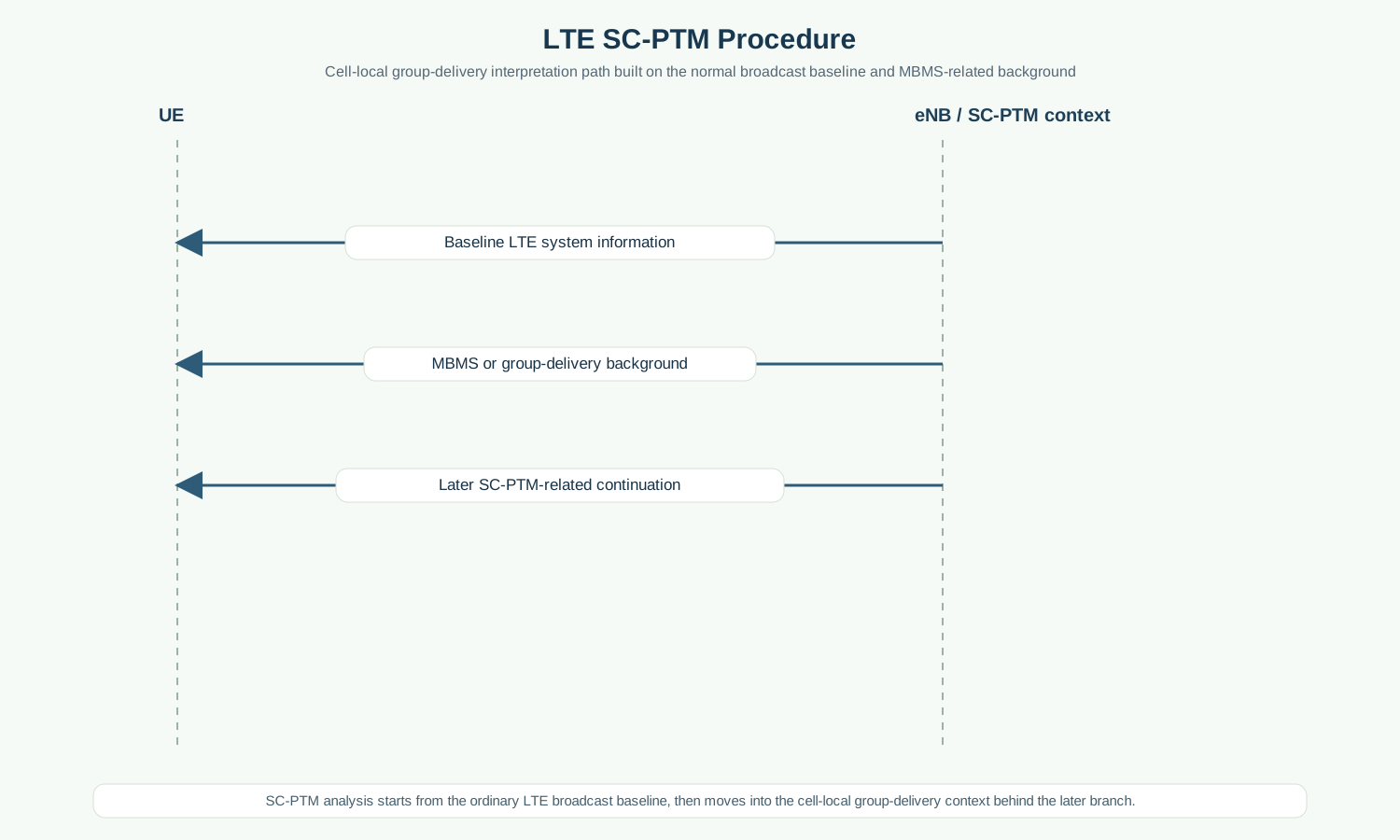
UE                         eNB / SC-PTM context
|<--broadcast baseline--------|
|<--MBMS / group context-------|
|<--SC-PTM-related continuation|
|--later group delivery------->|
Major Phases
| Phase | What happens |
|---|---|
| 1. Baseline broadcast read | The UE starts from the normal LTE broadcast context. |
| 2. Group-delivery context read | The UE builds the MBMS-adjacent or group-delivery view needed for SC-PTM interpretation. |
| 3. SC-PTM continuation context | The cell-specific SC-PTM-related continuation becomes visible. |
| 4. Later group-delivery behavior | The UE now has the context needed to interpret later SC-PTM behavior. |
Step-by-Step Breakdown
Start from the normal broadcast baseline
Sender -> receiver: eNB -> UE
Message(s): LTE system information
Purpose: Anchor SC-PTM analysis in the normal LTE broadcast view first.
State or context change: The UE has the baseline cell context before group-delivery interpretation begins.
Note: A weak broadcast baseline can distort the later SC-PTM reading path.
Read MBMS or group-delivery background
Sender -> receiver: eNB -> UE
Message(s): SIB13 and related MBMS context
Purpose: Provide the group-delivery background that leads into SC-PTM interpretation.
State or context change: The UE now has the MBMS-adjacent context needed before later SC-PTM continuation is meaningful.
Note: This is the bridge between ordinary LTE broadcast context and group-oriented delivery behavior.
Correlate the later SC-PTM-related continuation
Sender -> receiver: eNB -> UE
Message(s): SC-PTM-related continuation in the LTE cell context
Purpose: Tie the earlier broadcast-side context to the later single-cell group-delivery behavior.
State or context change: The SC-PTM branch is now visible as either context-complete or context-incomplete.
Note: The main value is correlation: whether the later group-delivery branch had a valid context foundation.
Interpret later group-delivery behavior
Sender -> receiver: UE
Message(s): Later SC-PTM behavior
Purpose: Use the earlier context path to explain the later SC-PTM result.
State or context change: The later SC-PTM branch can now be interpreted against a proven context background.
Note: This is where later symptoms should be tied back to the earlier cell-side group context.
Important Messages
| Message | Protocol | Direction | Purpose in this procedure | What to inspect briefly |
|---|---|---|---|---|
| LTE System Information Reference | RRC | eNB -> UE | Provides the normal broadcast baseline before group-delivery analysis. | Check the baseline system-information view before moving into SC-PTM-specific interpretation. |
| System Information Block Type 13 | RRC | eNB -> UE | Provides MBMS-related background that supports later group-delivery interpretation. | Check whether the cell exposed the expected MBMS or group-delivery background. |
| System Information MBMS r14 | RRC | eNB -> UE | Useful related MBMS-specific context where the SC-PTM reading path overlaps MBMS-oriented broadcast handling. | Check whether the later MBMS-specific context supports the SC-PTM interpretation. |
Important Parameters to Inspect
| Parameter | What it is | Where it appears | Why it matters | Common issues |
|---|---|---|---|---|
| Baseline LTE context | The normal LTE broadcast view before group-delivery interpretation starts. | System-information baseline | Needed to avoid blaming SC-PTM for a more basic broadcast problem. | The SC-PTM symptom is actually rooted in the earlier broadcast baseline. |
| Group-delivery background | The MBMS-adjacent or cell-specific context behind later SC-PTM behavior. | SIB13 and related context | Explains why the later branch belongs to single-cell group delivery. | Later SC-PTM behavior is analyzed with no background context. |
| Cell-local scope | The single-cell scope that defines SC-PTM behavior. | Serving-cell context | Keeps the analysis tied to the correct cell rather than a wider MBMS assumption. | The analysis drifts into wider MBMS logic instead of cell-local delivery. |
| Later continuation timing | When the later SC-PTM-related behavior appeared after the background context. | Across the full branch | Useful when the later group-delivery branch appears out of sequence. | The later branch is treated as unrelated because timing was not checked. |
| Context completeness | Whether the earlier cell-side context was complete enough for the later branch. | Across broadcast and group-delivery steps | Shows whether the later SC-PTM branch had a real foundation. | The later symptom is blamed without proving the earlier context path. |
Successful Completion
Success means the later SC-PTM behavior can be explained from a valid earlier cell-side context path.
Common Failures and Troubleshooting
| Symptom | Likely cause | Where to inspect | Relevant message(s) | Relevant interface(s) | Likely next step |
|---|---|---|---|---|---|
| SC-PTM-related behavior appears, but the context behind it is unclear | The earlier broadcast or group-delivery path was not proved first. | Baseline system information and MBMS-related background. | System information, SIB13, MBMS-related context | LTE Uu | Start from the earlier context path before interpreting the later branch. |
| The later branch looks like MBMS or SC-PTM, but the analysis drifts between both | The cell-local group-delivery scope was not kept separate from wider MBMS context. | Serving-cell scope and MBMS-related background. | SIB13 and later MBMS context | LTE Uu | Keep the analysis cell-local when the procedure is specifically SC-PTM. |
What to Check in Logs and Traces
- Prove the baseline system-information view first.
- Use SIB13 and related MBMS context as the background for later SC-PTM interpretation.
- Keep the analysis cell-local when reading SC-PTM behavior.
Related Pages
Related sub-procedures
Related message reference pages
Related troubleshooting pages
Notes
This page treats SC-PTM as a cell-local group-delivery interpretation path. Start with the earlier cell-side context before reading the later branch.
FAQ
What is the LTE SC-PTM Procedure?
It is the LTE path used to interpret and prepare for single-cell point-to-multipoint group-delivery behavior.
How should I start SC-PTM analysis?
Start with the normal system-information baseline, then move into the MBMS-adjacent group-delivery background before reading the later branch.