LTE SCG Failure Information Procedure Call Flow
LTE SCG Failure Information Procedure is the LTE failure-handling branch used when a procedure cannot continue normally and the network or UE has to reject, report, or classify the problem.
This page focuses on the failure path itself rather than the earlier success flow that should have happened before it.
Introduction
SCG Failure Information is the LTE report used when the secondary cell group has failed and the UE later returns that failure context to the network.
Use this page when the secondary branch failed and the main question is whether the UE later reported that failure clearly.
What Is LTE SCG Failure Information Procedure in Simple Terms?
- What starts the procedure: The UE detects a secondary cell group failure and later reports it back to the controlling side.
- What the UE and network want to achieve: Return clear UE-side evidence that the SCG branch failed.
- What success looks like: The UE sends SCG Failure Information and it lines up with the earlier SCG-side break.
- What failure means: The SCG branch failed, but the later report is missing or is not tied back to the right earlier event.
Why this procedure matters
Secondary-branch failures can be easy to miss if the master side stays alive. This report is often the cleanest proof that the SCG branch really broke.
Quick Fact Sheet
| Procedure name | LTE SCG Failure Information Procedure |
|---|---|
| Domain | LTE secondary cell group failure reporting |
| Main trigger | The UE detects a secondary cell group failure and later reports it back to the controlling side. |
| Start state | A wider LTE procedure is already in progress and something has gone wrong or become invalid |
| End state | The network receives a UE-side SCG failure report for the failing secondary branch |
| Main nodes | UE, eNB, MME / network side |
| Main protocols | RRC, NAS, procedure context |
| Main success outcome | The failure branch is clearly identified and the next corrective action is possible |
| Main failure outcome | The real break point stays unclear or the wrong failure branch is assumed |
| Most important messages | SCG Failure Information r12 |
| Main specs | TS 36.331 |
Preconditions
- A wider LTE procedure is already underway or has just failed.
- The network and UE still have enough context to reject, report, or classify the failure.
- The trace includes the messages immediately before and after the failure branch.
Nodes and Interfaces
Nodes involved
| Node | Role in this procedure |
|---|---|
| UE | Detects the condition, rejects the invalid branch, or reports failure context after the earlier problem. |
| eNB | Carries the LTE radio side and receives failure or reject behavior from the UE. |
| MME / network side | Interprets the reject, timeout, or failure report and decides the next correction or release step. |
Interfaces used
| Interface | Path | Role |
|---|---|---|
| LTE Uu | UE <-> eNB | Carries the reject or failure-report signaling seen on the radio side. |
| S1-MME | eNB <-> MME | Carries the wider procedure context behind the failure or reject branch. |
End-to-End Call Flow
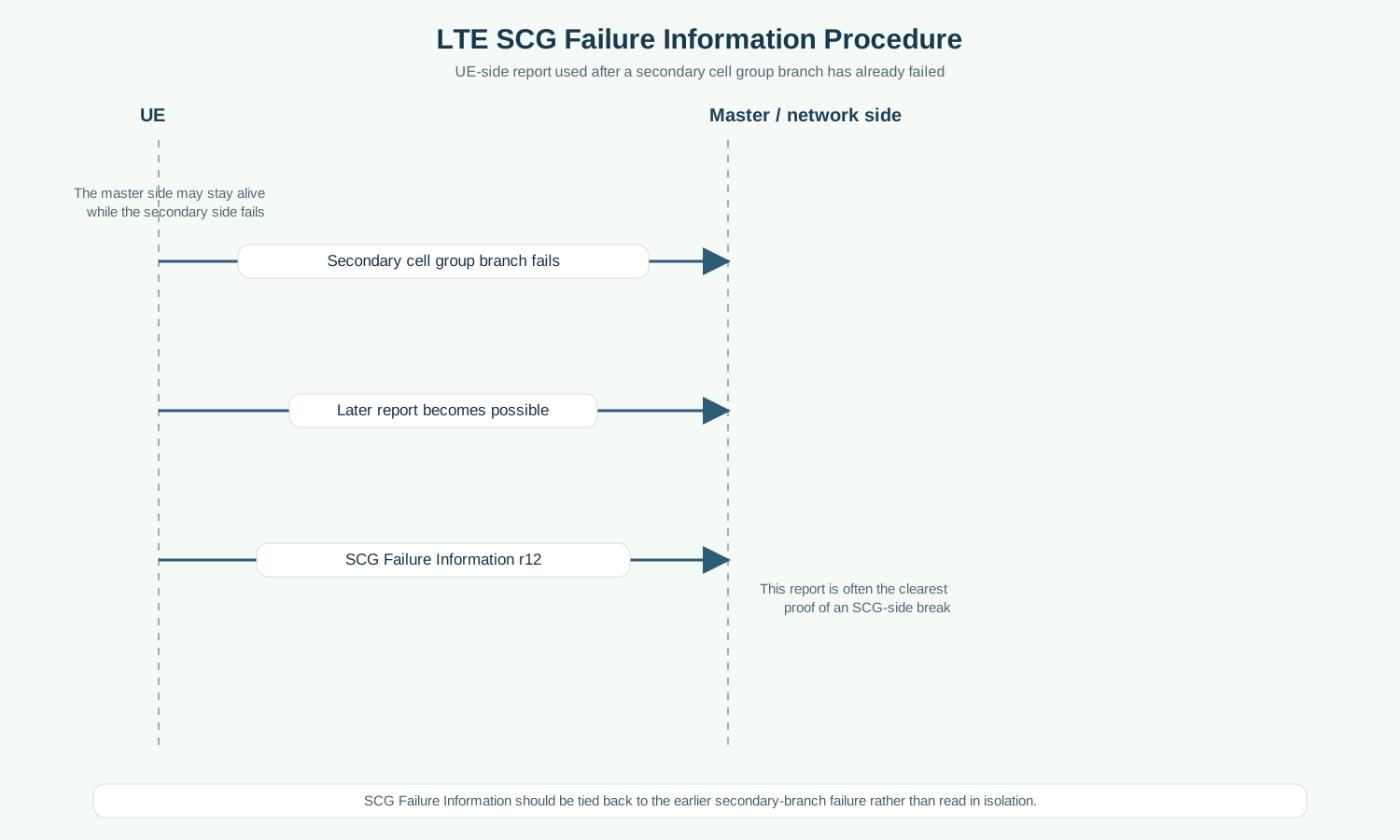
UE                   network side
|--SCG branch fails----|
|--later report------->|
|--SCG Failure Info---->|
Major Phases
| Phase | What happens |
|---|---|
| 1. SCG branch failure | The secondary cell group side breaks first. |
| 2. Later report opportunity | The UE becomes able to send the SCG failure report. |
| 3. UE-side failure upload | SCG Failure Information is sent. |
Step-by-Step Breakdown
Step 1: Track the earlier SCG break
Sender -> receiver: UE and network side
Message(s): Earlier SCG-side failure branch
Purpose: Identify the branch that actually failed before the later report appears.
State or context change: The SCG side is already in trouble before the report is sent.
Note: This is the context that gives the later SCG report its value.
Step 2: Reach report readiness
Sender -> receiver: UE
Message(s): Later failure reporting readiness
Purpose: Reach a state where the UE can send the SCG failure report.
State or context change: The UE can now return explicit SCG-side evidence.
Note: The report does not replace the earlier failure; it explains it.
Step 3: Send SCG Failure Information
Sender -> receiver: UE -> network side
Message(s): SCG Failure Information r12
Purpose: Return explicit evidence that the SCG branch failed.
State or context change: The network now has a direct UE-side SCG failure message.
Note: This is often the cleanest proof that the secondary branch was the real failure point.
Important Messages
| Message | Protocol | Direction | Purpose in this procedure | What to inspect briefly |
|---|---|---|---|---|
| SCG Failure Information r12 | RRC | UE -> network side | Reports the SCG-side failure after the earlier break. | Check the timing against the earlier secondary-branch failure. |
| Failure Information r15 | RRC | UE -> network side | Useful comparison message when the failure path also reports a more generic later failure. | Check whether SCG-specific reporting or generic failure reporting best explains the event. |
Important Parameters to Inspect
| Parameter | What it is | Where it appears | Why it matters | Common issues |
|---|---|---|---|---|
| SCG branch identity | The secondary branch that failed. | Earlier branch and later report | Shows which secondary-side context the report belongs to. | The wrong secondary branch is assumed. |
| Report timing | The gap between the SCG failure and the later report. | SCG Failure Information arrival | Useful when the report appears later than the visible radio issue. | The later report is treated as unrelated because of timing. |
| Secondary-side evidence | What the message says about the SCG failure. | SCG Failure Information payload | Explains why the message is the key SCG evidence point. | The report is found but not actually read against the earlier SCG event. |
| Master-side continuity | Whether the main branch stayed alive while SCG failed. | Wider dual-branch context | Important because SCG failure can hide under a still-working main branch. | The overall connection looks alive, so the SCG failure is missed. |
| Subsequent recovery action | What the network did after the SCG report. | Later messages | Shows whether the report led to release, recovery, or reconfiguration. | The report is identified, but later action is never checked. |
Successful Completion
Success here means the SCG failure report is present and clearly tied to the earlier secondary-branch break.
Common Failures and Troubleshooting
| Symptom | Likely cause | Where to inspect | Relevant message(s) | Relevant interface(s) | Likely next step |
|---|---|---|---|---|---|
| The secondary branch looks unstable, but no SCG failure report is found | The UE may not have reached a later reporting point, or the report was not captured. | The period after the visible SCG break. | Earlier SCG failure only | Dual-connectivity context | Do not assume the absence of the report means the SCG branch never failed. |
| SCG report is present, but the wrong branch is blamed | The earlier secondary-side failure was not correlated correctly. | Earlier secondary-side events and the report timing. | SCG Failure Information r12 | LTE Uu | Correlate the report strictly with the failing SCG-side branch. |
What to Check in Logs and Traces
- Correlate the SCG report with the earlier secondary-branch problem.
- Check whether the master side stayed alive while the SCG side failed.
- Follow what the network did after receiving the SCG report.
Related Pages
Related sub-procedures
Related message reference pages
Related troubleshooting pages
Notes
This page is about the SCG-specific failure report. The actual secondary-branch failure happens earlier and should be correlated first.
FAQ
What is LTE SCG Failure Information?
It is the UE-side LTE report used to tell the network that the secondary cell group failed.
Can the main branch stay alive while this report appears?
Yes. That is one reason this message is so useful in dual-branch analysis.