LTE SRVCC Procedure Call Flow
LTE SRVCC is the voice continuity procedure that moves an active VoLTE call from LTE and IMS handling toward legacy voice access when LTE radio conditions or policy require that transition.
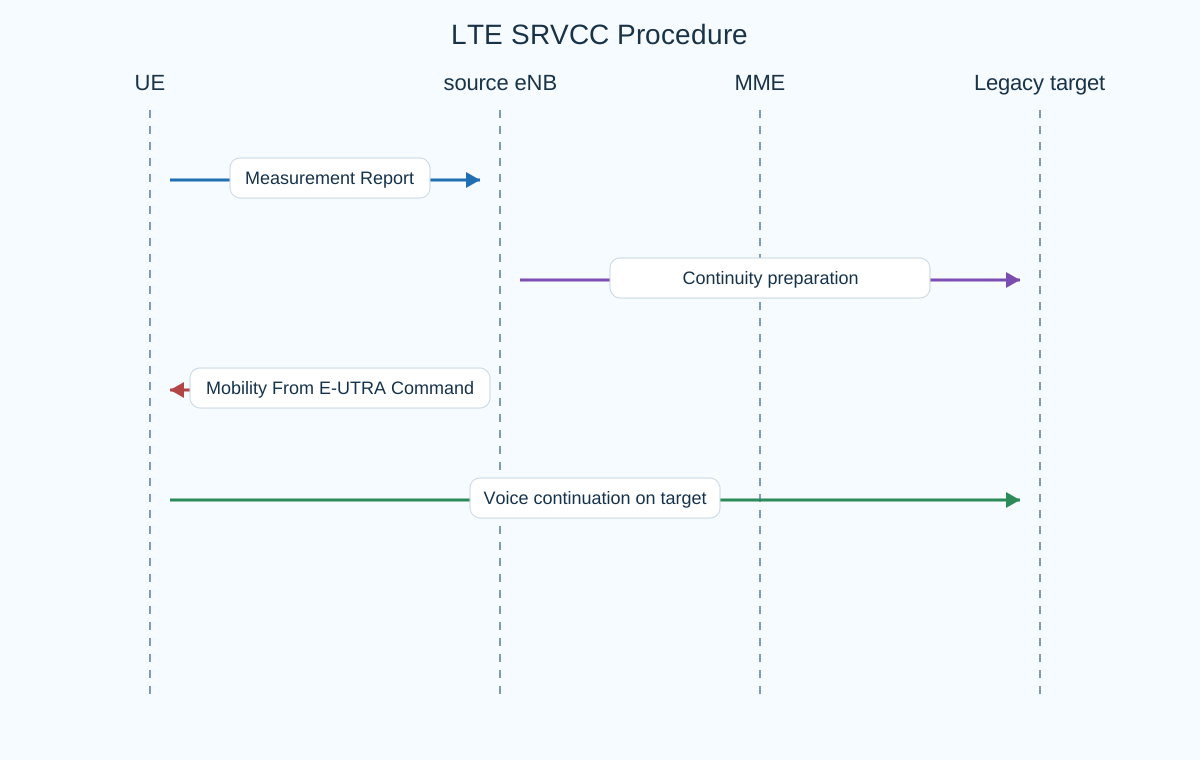
This page focuses on the continuity path itself: the LTE measurement trigger, the move out of LTE, and the point where voice service continues on the target legacy side.
Introduction
SRVCC begins while a VoLTE call is already active. LTE mobility logic decides that the call should leave LTE, the UE receives the command to move out of LTE, and the voice session continues through legacy access.
The main nodes are the UE, source eNB, MME, and the legacy voice side reached through the continuity path.
What Is SRVCC Procedure in Simple Terms?
- What starts the procedure: An active VoLTE call needs continuity away from LTE because of coverage or mobility conditions.
- What the UE and network want to achieve: Preserve the ongoing voice session while leaving LTE for legacy voice access.
- What success looks like: The UE leaves LTE and the voice call continues on the target legacy side.
- What failure means: The LTE call leaves the radio layer but the voice session does not continue cleanly on the target side.
Why this procedure matters
SRVCC is one of the highest-value continuity procedures because the user already has an active voice session when the move happens. Late handover, wrong target preparation, or broken continuity handling become immediately visible.
Quick Fact Sheet
| Procedure name | LTE SRVCC Procedure |
|---|---|
| Domain | VoLTE voice continuity to legacy access |
| Main trigger | Active VoLTE call must leave LTE while preserving continuity |
| Start state | VoLTE call is active on LTE |
| End state | Voice call continues on the target legacy access |
| Main nodes | UE, source eNB, MME, legacy target side |
| Main protocols | RRC, mobility support, IMS continuity context |
| Main success outcome | Voice continuity is preserved during the move out of LTE |
| Main failure outcome | The call drops or continuity breaks during the transition |
| Most important messages | Measurement Report, Mobility From E-UTRA Command |
| Main specs | TS 23.216, TS 36.331 |
Preconditions
- A VoLTE call is already active on LTE.
- SRVCC support and target legacy continuity are provisioned.
- The LTE side has a valid mobility reason or policy trigger for leaving LTE.
Nodes and Interfaces
Nodes involved
| Node | Role in this procedure |
|---|---|
| UE | Maintains the active voice session while executing the move out of LTE. |
| Source eNB | Detects the mobility need and starts the move toward the target legacy side. |
| MME | Supports the continuity path and related control-plane handling. |
| Legacy target side | Takes over the voice session after LTE is left. |
Interfaces used
| Interface | Path | Role |
|---|---|---|
| LTE Uu | UE <-> source eNB | Carries the measurement result and the LTE exit command. |
| S1-MME | source eNB <-> MME | Carries continuity support on the EPC side. |
| Legacy access path | UE <-> target side | Carries the continued voice session after LTE is left. |
End-to-End Call Flow
UE              source eNB / MME           legacy side
|--Measurement Report------------->|
|<-Mobility From E-UTRA Command----|
|   leave LTE and continue call -->|
Major Phases
| Phase | What happens |
|---|---|
| 1. Mobility trigger | LTE detects that the active VoLTE call should leave LTE. |
| 2. Continuity preparation | The network prepares the target legacy side for the voice move. |
| 3. LTE exit command | The UE receives the command to leave LTE. |
| 4. Voice continuation | The call continues on the target side if continuity succeeds. |
Step-by-Step Breakdown
Step 1: Detect the continuity trigger
Sender -> receiver: UE -> source eNB
Message(s): Measurement Report
Purpose: Show that the active call is reaching the conditions where LTE continuity is no longer preferred.
State or context change: The source side now has the measurement input used for the continuity decision.
Note: The reporting point is often where late SRVCC decisions first become visible.
Step 2: Prepare the move out of LTE
Sender -> receiver: source eNB / MME -> legacy target side
Message(s): SRVCC continuity preparation
Purpose: Prepare the target side so the ongoing voice session can continue after LTE is left.
State or context change: The continuity branch exists on the target side before the UE is told to move.
Note: If target preparation is weak, the call may leave LTE but still drop.
Step 3: Command the UE to leave LTE
Sender -> receiver: source eNB -> UE
Message(s): Mobility From E-UTRA Command
Purpose: Tell the UE to exit LTE toward the target continuity system.
State or context change: The UE leaves LTE and starts continuity on the target side.
Note: This is the most visible LTE-side confirmation that SRVCC really started.
Step 4: Continue the voice call
Sender -> receiver: UE -> legacy target side
Message(s): Target-side continuation
Purpose: Preserve the call on the target system.
State or context change: The active voice session is no longer on LTE but should remain active to the user.
Note: The LTE page stops at the transition boundary; target-specific legacy signaling continues afterward.
Important Messages
| Message | Protocol | Direction | Purpose in this procedure | What to inspect briefly |
|---|---|---|---|---|
| Measurement Report | RRC | UE -> source eNB | Shows why the source side triggered continuity away from LTE. | Check the reported radio condition and whether the trigger was early, late, or expected. |
| Mobility From E-UTRA Command | RRC | source eNB -> UE | Commands the UE to leave LTE for the target continuity system. | Check target-system details and continuity timing. |
| BYE | SIP | IMS side | Useful when the IMS dialog release must be correlated around the continuity move. | Check whether IMS release happened at the expected point relative to continuity. |
Important Parameters to Inspect
| Parameter | What it is | Where it appears | Why it matters | Common issues |
|---|---|---|---|---|
| Trigger timing | The point where LTE decided to leave the current serving state. | Measurement Report and command timing | Explains whether continuity was started too late or too early. | Late trigger causes dropped continuity. |
| Target legacy system | The system chosen for continuity after LTE is left. | Mobility From E-UTRA Command | Needed to confirm the UE was sent to the right target side. | Wrong target preparation breaks voice continuity. |
| Active call state | The fact that the voice session is already active during the move. | Before and during SRVCC | Distinguishes SRVCC from a normal idle or non-call mobility branch. | The continuity move is mistaken for a normal mobility event. |
| IMS release timing | When the IMS side is released relative to continuity. | Around target continuation | Helps explain whether the IMS call leg ended at the right point. | IMS release is too early or too late for smooth continuity. |
| Target continuation result | Whether the voice session stayed active after leaving LTE. | Target-side continuation | This is the real user-visible outcome of SRVCC. | The UE leaves LTE but the call still drops. |
Successful Completion
Success means the active VoLTE call leaves LTE and continues on the target legacy side without user-visible call loss.
Common Failures and Troubleshooting
| Symptom | Likely cause | Where to inspect | Relevant message(s) | Relevant interface(s) | Likely next step |
|---|---|---|---|---|---|
| SRVCC starts too late | The measurement trigger or continuity preparation happened too late for clean preservation. | Measurement Report, command timing, and the point of radio degradation. | Measurement Report, Mobility From E-UTRA Command | LTE Uu, S1-MME | Check whether the trigger was delayed relative to deteriorating radio conditions. |
| UE leaves LTE but call still drops | Target-side preparation or voice continuity failed after the LTE exit command. | The target continuation branch after the LTE command. | Mobility From E-UTRA Command | LTE exit plus target legacy side | Move into target-side continuity analysis. |
| Trace looks like normal mobility instead of SRVCC | The active voice state was not considered during correlation. | The active call state before the move and the continuity context. | Measurement Report, Mobility From E-UTRA Command | LTE Uu | Re-classify the move as voice continuity, not generic mobility. |
What to Check in Logs and Traces
- Start with the active call state, then find the measurement trigger and LTE exit command.
- Check whether the command timing was late relative to deteriorating radio conditions.
- Confirm continuity on the target side rather than stopping analysis at the LTE exit command.
Related Pages
Related sub-procedures
- LTE Measurement-Controlled Handover
- LTE Mobility From E-UTRA Procedure
- LTE VoLTE Call Release Procedure
Related message reference pages
Related troubleshooting pages
Notes
SRVCC should be read as a voice continuity procedure first and a mobility procedure second. The presence of an already-active call changes how the timing and failure impact should be interpreted.
FAQ
What is the most important LTE-side SRVCC message?
Mobility From E-UTRA Command is the clearest LTE-side command showing that the UE is leaving LTE for continuity.
Is SRVCC the same as a normal inter-RAT handover?
No. It is a voice continuity procedure with an already-active call, so the continuity outcome matters more than generic mobility success alone.