LTE System Information Acquisition Procedure Call Flow
LTE System Information Acquisition Procedure is the broadcast-side path the UE follows before it can treat an LTE cell as usable for normal access, idle behavior, paging, reselection, warning handling, or MBMS-related reading.
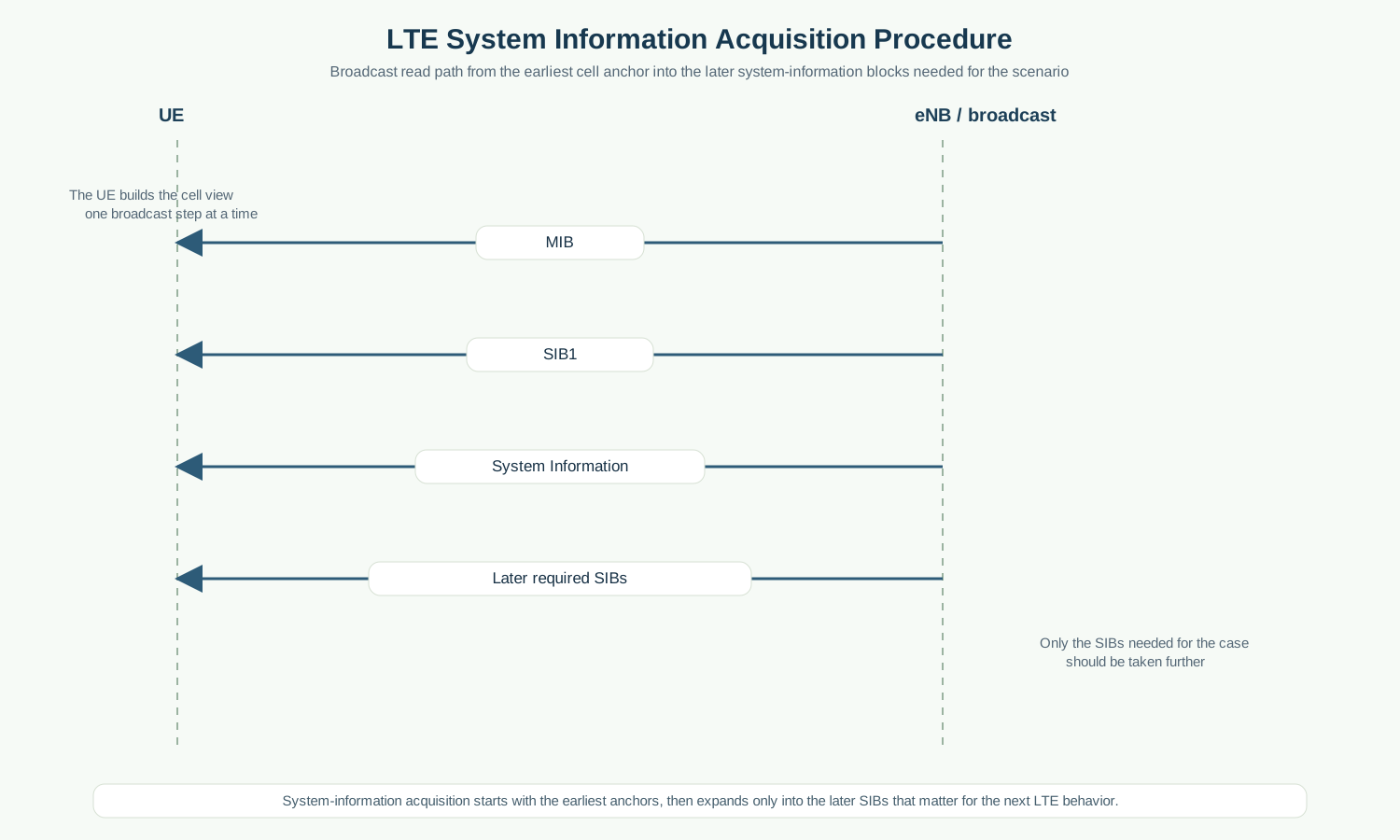
This procedure starts from MIB, continues through SIB1, and then expands only into the later system-information blocks that match the feature or problem being investigated.
Introduction
The LTE System Information Acquisition Procedure is the broad read path that gives the UE the common cell context needed before later LTE procedures can proceed normally.
Use this page when the main question is whether the UE obtained the correct broadcast context before access, paging, idle mobility, warning handling, or MBMS-related behavior.
What Is LTE System Information Acquisition Procedure in Simple Terms?
- What starts the procedure: The UE selects, reselects, or returns to an LTE cell and needs the broadcast context for that cell.
- What the UE and network want to achieve: A usable LTE broadcast view built from MIB, SIB1, and the later SIBs that apply to the scenario.
- What success looks like: The UE reads the required broadcast blocks and can continue into the next expected LTE behavior.
- What failure means: The UE never gets enough valid broadcast context, so later access, paging, mobility, or feature behavior becomes incomplete or wrong.
Why this procedure matters
Many later LTE problems start much earlier in the broadcast path. If MIB, SIB1, or the needed later SIB is missing, stale, or misread, the later procedure may fail even though the symptom appears in a different layer.
Quick Fact Sheet
| Procedure name | LTE System Information Acquisition Procedure |
|---|---|
| Domain | LTE broadcast RRC context acquisition |
| Main trigger | Cell selection, reselection, return to coverage, or broadcast refresh |
| Start state | UE can detect the LTE cell but does not yet have the full broadcast context it needs |
| End state | UE has the required broadcast context for the next expected LTE behavior |
| Main nodes | UE, eNB |
| Main protocols | RRC broadcast system information |
| Main success outcome | The UE can continue into access, idle monitoring, warning handling, or MBMS-related behavior |
| Main failure outcome | The UE stays blocked on incomplete broadcast context or misreads the cell configuration |
| Most important messages | Master Information Block, SIB1, System Information, later feature-specific SIBs |
| Main specs | TS 36.331, TS 36.304, TS 36.300 |
Preconditions
- The UE can detect and synchronize to the LTE cell.
- The cell is broadcasting the expected LTE system-information set.
- The scenario requires the UE to read at least the essential broadcast blocks before continuing.
Nodes and Interfaces
Nodes involved
| Node | Role in this procedure |
|---|---|
| UE | Builds the broadcast view of the cell from the earliest anchor through the later required SIBs. |
| eNB | Schedules the broadcast information and exposes the cell-wide context the UE needs. |
| Broadcast context | Defines access conditions, idle behavior, warning handling, and feature-specific cell assumptions. |
Interfaces used
| Interface | Path | Role |
|---|---|---|
| LTE Uu | UE <-> eNB | Carries the full broadcast read path. |
| BCH / PBCH | eNB -> UE | Carry the earliest MIB anchor. |
| BCCH / DL-SCH | eNB -> UE | Carry SIB1 and later System Information content. |
End-to-End Call Flow
UE                         eNB / broadcast
|--cell detection------------>|
|<--MIB-----------------------|
|<--SIB1----------------------|
|<--System Information--------|
|<--Later required SIBs-------|
Major Phases
| Phase | What happens |
|---|---|
| 1. Earliest broadcast anchor | The UE detects the LTE cell and reads the earliest broadcast anchor. |
| 2. Access and scheduling anchor | The UE reads SIB1 to understand access identity and later scheduling. |
| 3. Common system-information read | The UE reads System Information carrying the later SIBs needed for the scenario. |
| 4. Scenario-specific continuation | The UE continues only after the required broadcast context is complete enough for the next procedure. |
Step-by-Step Breakdown
Read the earliest anchor
Sender -> receiver: eNB -> UE
Message(s): Master Information Block
Purpose: Provide the first essential LTE broadcast anchor.
State or context change: The UE can begin building the cell view needed for later broadcast continuation.
Note: If MIB read is unstable, later SIB problems may be secondary.
Read the main access anchor
Sender -> receiver: eNB -> UE
Message(s): System Information Block Type 1
Purpose: Provide access identity, scheduling, and change-detection context.
State or context change: The UE now knows how to continue toward the wider SIB set.
Note: SIB1 is the main operational decision point in the LTE broadcast path.
Read the later required SIBs
Sender -> receiver: eNB -> UE
Message(s): SIB2, mobility SIBs, warning SIBs, or MBMS SIBs
Purpose: Collect the later broadcast blocks needed for the actual scenario.
State or context change: The UE has the common or feature-specific broadcast context needed for the next LTE behavior.
Note: Not every cell broadcasts every SIB. Read only the blocks that matter for the case you are debugging.
Continue to the next LTE branch
Sender -> receiver: UE
Message(s): Access, idle monitoring, paging, warning handling, or MBMS continuation
Purpose: Use the acquired broadcast context in the next expected LTE behavior.
State or context change: The broadcast path is complete enough for the next procedure or feature path.
Note: This is where later symptoms should be tied back to the broadcast assumptions first.
Important Messages
| Message | Protocol | Direction | Purpose in this procedure | What to inspect briefly |
|---|---|---|---|---|
| Master Information Block | RRC | eNB -> UE | Starts the LTE broadcast read path. | Check whether the UE can recover the earliest cell-wide context reliably. |
| System Information Block Type 1 | RRC | eNB -> UE | Provides the main access and scheduling anchor. | Check PLMN, TAC, access context, and later SI scheduling assumptions. |
| System Information Block Type 2 | RRC | eNB -> UE | Provides common radio and access-side context. | Check common radio assumptions before blaming later access behavior. |
| LTE System Information Reference | RRC | eNB -> UE | Maps the wider SIB family used after MIB and SIB1. | Check which later SIB actually matters for the scenario. |
Important Parameters to Inspect
| Parameter | What it is | Where it appears | Why it matters | Common issues |
|---|---|---|---|---|
| systemInfoValueTag | Broadcast change indicator used with SIB1 context. | SIB1 and later refresh behavior | Explains whether the UE should refresh the later broadcast set. | The UE is following stale broadcast assumptions. |
| PLMN / TAC / cell identity | Cell identity and access-side broadcast context. | SIB1 | Needed to confirm the UE is reading the expected LTE cell. | The UE reads a valid cell, but not the intended one. |
| Common radio configuration | Shared radio assumptions used before dedicated signaling exists. | SIB2 | Explains later access and idle behavior from the broadcast side. | Later radio symptoms are blamed without checking the common broadcast model. |
| Later SIB availability | Whether the feature-specific SIB is present and decodable. | System Information and later broadcast blocks | Shows whether the required scenario-specific context actually exists. | The later procedure expects a SIB that the cell never provided. |
| Broadcast timing and refresh | When the UE read the blocks and whether a refresh happened. | Across MIB, SIB1, and later SIBs | Useful when behavior changed after SI refresh. | Old and new broadcast views are mixed together in one analysis. |
Successful Completion
Success means the UE reads the required LTE broadcast context and the next expected procedure or feature path can continue normally.
Common Failures and Troubleshooting
| Symptom | Likely cause | Where to inspect | Relevant message(s) | Relevant interface(s) | Likely next step |
|---|---|---|---|---|---|
| UE detects the cell but later LTE behavior still looks wrong | The required broadcast block may be missing, stale, or not the one the trace assumed. | MIB, SIB1, and the specific later SIB tied to the symptom. | MIB, SIB1, later SIBs | LTE Uu | Check the broadcast chain in order instead of jumping directly to the later symptom. |
| Feature behavior is missing even though the cell looks healthy | The feature-specific SIB may not be present or may not have been refreshed. | Later SIB set and systemInfoValueTag behavior. | System Information and later SIBs | LTE Uu | Prove the needed feature-specific SIB exists before assuming a higher-layer fault. |
What to Check in Logs and Traces
- Start with MIB and SIB1 before looking at later broadcast blocks.
- Check only the SIBs that matter for the feature or symptom under review.
- Keep broadcast refresh timing visible when the behavior changed over time.
Related Pages
Related sub-procedures
Related message reference pages
Related troubleshooting pages
Notes
This page is the broad broadcast acquisition path. Use the MIB and SIB-specific page when the main question is the exact early read order.
FAQ
What is the LTE System Information Acquisition Procedure?
It is the LTE broadcast read path the UE follows from MIB through the later SIBs needed for the scenario.
Does the UE need every SIB before later LTE behavior can continue?
No. The UE needs the essential early blocks first, then only the later SIBs that matter for the specific feature or procedure.