LTE UL Handover Preparation Transfer Call Flow
UL Handover Preparation Transfer is the uplink preparation information branch used when LTE needs to send target-relevant preparation content before the UE leaves E-UTRA.
This page focuses on the transfer of preparation content, not the final interworking execution itself.
Introduction
Some interworking paths depend on an uplink preparation transfer that carries target-relevant preparation information before the actual move begins. This stage helps the target side understand the source-side decision and be ready for continuation.
The main nodes are the source LTE side and the target-side preparation context.
What Is UL Handover Preparation Transfer in Simple Terms?
- What starts the procedure: The target preparation branch needs source-side uplink transfer content before execution.
- What the UE and network want to achieve: Deliver the source-side preparation information needed by the target branch.
- What success looks like: The preparation transfer reaches the target side and is usable later.
- What failure means: The target side starts later execution without the source-side preparation it expected.
Why this procedure matters
This step is easy to overlook because it is not the final move, but it can explain why a target branch later looks underprepared or inconsistent.
Quick Fact Sheet
| Procedure name | LTE UL Handover Preparation Transfer |
|---|---|
| Domain | Interworking preparation content transfer |
| Main trigger | The target side needs source-side preparation content before execution |
| Start state | Preparation is already underway, but execution has not started |
| End state | The target side has the uplink preparation transfer content |
| Main nodes | source side, target-side preparation context |
| Main protocols | Interworking support signaling |
| Main success outcome | Target preparation has the source-side content it needs |
| Main failure outcome | The target side lacks the needed transfer context later |
| Most important messages | Preparation transfer and target-side receipt |
| Main specs | Interworking preparation context |
Preconditions
- A target preparation branch already exists.
- The source side has relevant information to transfer before execution.
- The target side can accept that preparation content.
Nodes and Interfaces
Nodes involved
| Node | Role in this procedure |
|---|---|
| source LTE side | Creates and sends the preparation-transfer content. |
| Target-side preparation context | Receives and stores the transfer content for later execution. |
Interfaces used
| Interface | Path | Role |
|---|---|---|
| Preparation transfer path | source side <-> target side | Carries the source-side preparation content before execution. |
End-to-End Call Flow
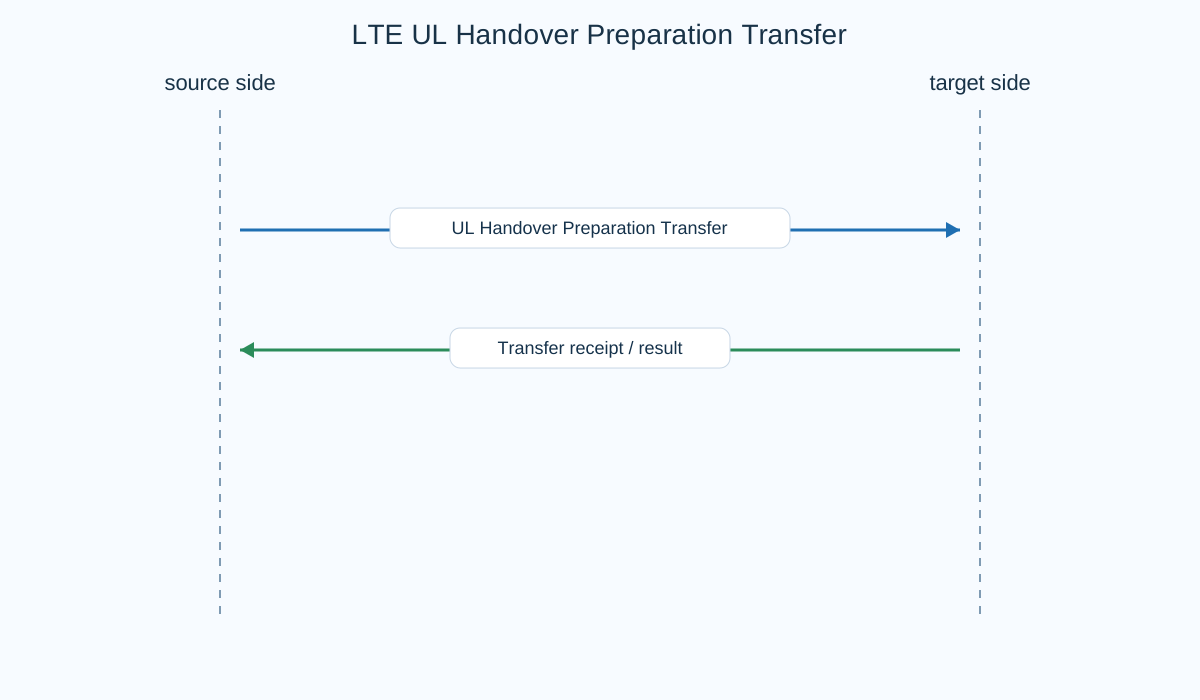
source side                  target side
|--UL preparation transfer------->|
|<--transfer receipt / result-----|
Major Phases
| Phase | What happens |
|---|---|
| 1. Create transfer content | The source side gathers the information needed by the target branch. |
| 2. Send preparation transfer | The content is sent before the later move out of LTE. |
| 3. Target-side handling | The target side receives and stores the transfer content. |
| 4. Ready-for-use state | The preparation transfer is available for later execution. |
Step-by-Step Breakdown
Step 1: Build the transfer content
Sender -> receiver: source LTE side
Message(s): UL Handover Preparation Transfer content
Purpose: Create the information that the target branch needs before execution.
State or context change: The preparation-transfer payload is now ready to be sent.
Note: This content is valuable because it explains what the target side was supposed to know before the UE arrived.
Step 2: Send the transfer
Sender -> receiver: source side -> target side
Message(s): UL Handover Preparation Transfer
Purpose: Deliver the preparation content to the target side.
State or context change: The target branch can now use that content in later execution.
Note: If this step is weak or missing, the later target behavior may look surprisingly incomplete.
Important Messages
| Message | Protocol | Direction | Purpose in this procedure | What to inspect briefly |
|---|---|---|---|---|
| UL Handover Preparation Transfer | Interworking support | source side -> target side | Delivers source-side preparation content before execution. | Check whether the transfer reached the expected target branch and carried the right context. |
| Transfer result or receipt | Interworking support | target side -> source side | Confirms target-side handling of the transfer content. | Check whether the target side actually accepted the transferred content. |
Important Parameters to Inspect
| Parameter | What it is | Where it appears | Why it matters | Common issues |
|---|---|---|---|---|
| Transfer payload intent | The purpose of the source-side content sent to the target. | Preparation transfer | Explains why the target side later behaves the way it does. | The target branch is analyzed without knowing what was transferred. |
| Target branch identity | The exact target-side branch receiving the content. | Preparation transfer | Shows whether the transfer was routed to the correct target side. | The content is sent to the wrong target branch. |
| Transfer timing | The gap between the transfer and the later execution step. | Preparation transfer and later move | Useful when transferred context may be stale later. | The transfer happens too early and ages out. |
| Receipt quality | Whether the target side actually accepted the content. | Transfer result | Separates visible signaling from truly usable preparation. | The transfer exists in the trace but is not usable. |
| Execution dependency | How much the later move depends on this transfer. | Preparation context | Explains whether a transfer issue can really break the later move. | The transfer is assumed irrelevant when it was actually critical. |
Successful Completion
Success means the target side receives and stores the preparation-transfer content needed for later execution.
Common Failures and Troubleshooting
| Symptom | Likely cause | Where to inspect | Relevant message(s) | Relevant interface(s) | Likely next step |
|---|---|---|---|---|---|
| Preparation transfer is present but later execution still looks weak | The content was incomplete, stale, or not actually used by the target side. | Transfer content, receipt, and later execution timing. | UL Handover Preparation Transfer | Preparation transfer path | Check whether the target side treated the transfer as usable context. |
| Later execution lacks expected target readiness | The preparation transfer was missing or never accepted. | The period before execution and the target-side receipt. | UL Handover Preparation Transfer | Preparation transfer path | Confirm whether the source side actually sent the content expected by the target branch. |
What to Check in Logs and Traces
- Check whether the target side ever received the expected transfer content.
- Compare the transfer timing with the later execution timing.
- Do not assume the transfer was irrelevant just because it is not the user-visible step.
Related Pages
Related sub-procedures
- LTE Handover From E-UTRA Preparation Request
- LTE PS Handover / SRVCC Preparation Flows
- LTE Inter-RAT Handover Procedure
Related message reference pages
Related troubleshooting pages
Notes
This page is a preparation-transfer reference. It explains how target-side preparation content moves before execution, not the visible end-user move itself.
FAQ
What is UL Handover Preparation Transfer?
It is the transfer of source-side preparation content to the target branch before execution.
Why does this matter if the UE has not left LTE yet?
Because the target side may rely on that content later when the UE finally leaves LTE.