LTE VoLTE Call Release Procedure Call Flow
LTE VoLTE call release is the dialog teardown procedure used when an active VoLTE call ends normally or is cleared by one side.
This page focuses on the SIP BYE branch and the LTE cleanup that follows after the voice session is no longer needed.
Introduction
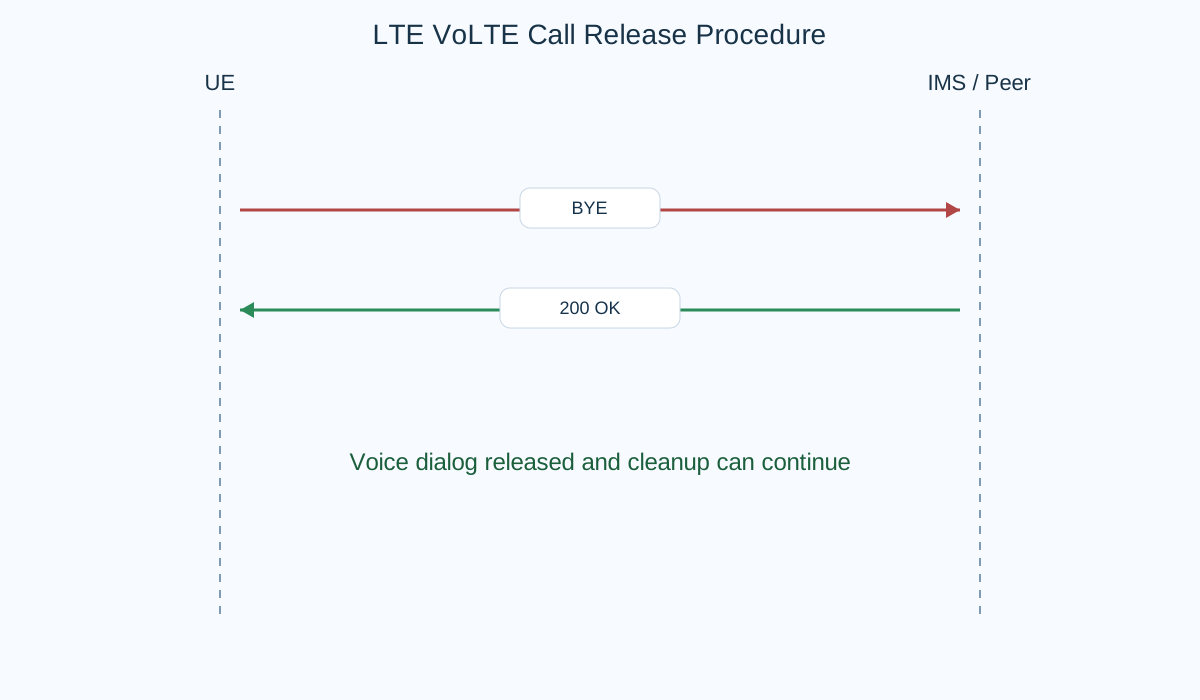
The release path starts while the call is already active. One side sends BYE, the other side returns 200 OK, and the active dialog ends.
After SIP release, the LTE bearer branch may also be cleared if a voice-specific dedicated bearer was in use.
What Is VoLTE Call Release Procedure in Simple Terms?
- What starts the procedure: An active VoLTE call is ended by the UE or the remote side.
- What the UE and network want to achieve: Tear down the active SIP dialog and remove voice-specific service context cleanly.
- What success looks like: BYE receives 200 OK and the call leaves active state cleanly.
- What failure means: The dialog does not clear cleanly or the voice-specific bearer or media state remains inconsistent.
Why this procedure matters
Release analysis is important when calls end abnormally, linger in traces, or leave bearer state behind after the user thinks the call is finished.
Quick Fact Sheet
| Procedure name | LTE VoLTE Call Release Procedure |
|---|---|
| Domain | VoLTE dialog teardown |
| Main trigger | One side ends an active VoLTE call |
| Start state | VoLTE call is active |
| End state | The SIP dialog and voice-specific session state are cleared |
| Main nodes | UE, IMS, LTE bearer context |
| Main protocols | SIP, LTE bearer cleanup support |
| Main success outcome | Call clears cleanly and no voice dialog remains active |
| Main failure outcome | The call is stuck, half-cleared, or leaves voice context behind |
| Most important messages | BYE, 200 OK |
| Main specs | TS 24.229 |
Preconditions
- The VoLTE call is already active.
- The SIP dialog is still valid and routable.
- Any dedicated voice bearer can be cleared after dialog release if needed.
Nodes and Interfaces
Nodes involved
| Node | Role in this procedure |
|---|---|
| UE | Starts or receives the LTE voice or messaging service and exchanges SIP signaling with IMS. |
| eNB | Carries the LTE radio side used for IMS-capable packet service. |
| MME / EPC | Preserve LTE access, bearer, and paging continuity behind the IMS transaction. |
| P-CSCF / S-CSCF | Handle the SIP signaling path used for registration, call control, and service continuity. |
Interfaces used
| Interface | Path | Role |
|---|---|---|
| LTE Uu | UE <-> eNB | Carries the radio access needed before and during IMS service use. |
| S1-MME | eNB <-> MME | Carries LTE control-plane continuation behind paging, service request, or bearer handling. |
| Gm | UE <-> P-CSCF | Carries SIP requests and responses between the UE and IMS. |
End-to-End Call Flow
UE                 IMS / peer
|--BYE---------------------------->|
|<--200 OK------------------------|
|   voice dialog cleared          |
Major Phases
| Phase | What happens |
|---|---|
| 1. Release trigger | One side decides to end the active VoLTE call. |
| 2. BYE transaction | The SIP dialog enters its release exchange. |
| 3. Final confirmation | 200 OK confirms the dialog ended cleanly. |
| 4. Cleanup | Voice-specific bearer or service context can now be cleared. |
Step-by-Step Breakdown
Step 1: Start call release
Sender -> receiver: UE or peer -> other side
Message(s): BYE
Purpose: Request teardown of the active SIP dialog.
State or context change: The call is now in release progression.
Note: Use BYE as the main release pivot, not the earlier call-setup messages.
Step 2: Confirm release
Sender -> receiver: Peer -> requester
Message(s): 200 OK
Purpose: Confirm that the dialog has been torn down successfully.
State or context change: The SIP call is no longer active.
Note: This is the main success confirmation for the release path.
Step 3: Clear voice-specific context
Sender -> receiver: LTE service context
Message(s): Bearer or media cleanup as needed
Purpose: Remove the dedicated voice-specific service state after the dialog ends.
State or context change: The UE returns to non-call VoLTE-ready state or general IMS-registered state.
Note: Some failures appear only after BYE if the bearer cleanup lingers.
Important Messages
| Message | Protocol | Direction | Purpose in this procedure | What to inspect briefly |
|---|---|---|---|---|
| BYE | SIP | UE or peer -> other side | Starts teardown of the active VoLTE dialog. | Check which side cleared the call and at what time. |
| 200 OK | SIP | Peer -> requester | Confirms that the call release completed cleanly. | Check whether the confirmation arrives quickly and closes the dialog cleanly. |
| Activate Dedicated EPS Bearer Context Request | NAS | Network -> UE | Useful earlier context when a dedicated voice bearer existed during the call. | Check whether a dedicated voice bearer should also be cleared after release. |
Important Parameters to Inspect
| Parameter | What it is | Where it appears | Why it matters | Common issues |
|---|---|---|---|---|
| Release initiator | Which side sent BYE. | BYE | Explains whether the user side or network side cleared the call. | The wrong side is blamed for release. |
| Dialog identifiers | The call identifiers of the dialog being released. | BYE / 200 OK | Needed to match release to the correct active call. | Release is associated with the wrong call attempt. |
| Release timing | The exact point where the call moved from active to released. | BYE / 200 OK | Useful when user reports do not match trace timing. | The release looks early or late because the wrong pivot was used. |
| Dedicated bearer cleanup | Whether a voice-specific bearer remained or was cleared. | Post-release LTE context | Shows whether the LTE side returned to the expected state after release. | The call clears but bearer state lingers. |
| Final media state | What happened to media after BYE. | Release boundary | Separates normal teardown from abnormal lingering media behavior. | Media seems active after the dialog should have ended. |
Successful Completion
Success means the active dialog receives 200 OK to BYE and the voice-specific service state returns to normal non-call status.
Common Failures and Troubleshooting
| Symptom | Likely cause | Where to inspect | Relevant message(s) | Relevant interface(s) | Likely next step |
|---|---|---|---|---|---|
| BYE is sent but the call does not clear cleanly | The far side or IMS path does not confirm the release. | BYE and the absence or delay of 200 OK. | BYE, 200 OK | Gm | Check whether the BYE reached the far side and whether the dialog stayed routable. |
| SIP release succeeds but LTE voice context lingers | Bearer cleanup or media-side teardown is incomplete after dialog success. | Post-BYE bearer and service state. | BYE, 200 OK | Gm, LTE bearer path | Move into bearer cleanup analysis after the SIP part is confirmed. |
| Release timing is disputed | Different traces use different pivot messages to mark call end. | Use BYE and 200 OK as the release boundary. | BYE, 200 OK | Gm | Standardize on the SIP release pair before comparing other traces. |
What to Check in Logs and Traces
- Use BYE and its final 200 OK as the release boundary.
- Check whether the release was initiated by the UE side or the far side.
- Look at bearer cleanup only after the SIP release pair is confirmed.
Related Pages
Related sub-procedures
- LTE VoLTE Mobile Originated Call Procedure
- LTE VoLTE Mobile Terminated Call Procedure
- LTE Dedicated Bearer Setup for VoLTE
Related message reference pages
Related troubleshooting pages
Notes
A normal call release is simple on the SIP side, but it is still worth checking whether the voice-specific LTE bearer state returned to the expected non-call condition afterward.
FAQ
What is the main VoLTE call release message?
BYE is the main SIP release request for an active call.
What confirms VoLTE call release success?
The SIP release is confirmed by 200 OK to BYE.