LTE WLAN Interworking Procedure Call Flow
LTE WLAN Interworking Procedure is the control path used when LTE service behavior needs to take WLAN availability and WLAN-assisted continuation into account.
The procedure is usually visible through RRC Connection Reconfiguration, WLAN Connection Status Report r13, and the LTE-side decision logic that keeps service aligned with the actual WLAN state seen by the UE.
Introduction
This page covers the broad LTE-to-WLAN interworking control layer rather than one narrow feature flavor. The practical question is whether the network made WLAN-aware decisions using current UE status and the right connected-mode configuration.
Use it when the trace moves beyond pure LTE-only control and starts reflecting WLAN-assisted continuity, offload, or policy-driven traffic preference.
What Is LTE WLAN Interworking Procedure in Simple Terms?
- What starts the procedure: The network wants to use or evaluate WLAN as part of the service-continuity or traffic path.
- What the UE and network want to achieve: An LTE-connected state that is aware of current WLAN availability and can act on it.
- What success looks like: LTE control and WLAN status stay aligned and the intended interworking behavior appears.
- What failure means: The network works from stale WLAN state or the interworking branch does not match the live UE condition.
Why this procedure matters
WLAN interworking issues are often not pure Wi-Fi issues and not pure LTE issues. They usually come from the boundary between the two, where LTE control decisions no longer match the real WLAN state the UE is reporting.
Quick Fact Sheet
| Procedure name | LTE WLAN Interworking Procedure |
|---|---|
| Domain | LTE-WLAN interworking control |
| Main trigger | Need to align LTE service behavior with WLAN availability or preference |
| Start state | UE already has LTE connectivity and WLAN may be available |
| End state | Service continues with WLAN-aware control decisions |
| Main nodes | UE, eNB, WLAN side |
| Main protocols | RRC, WLAN-side status context |
| Main success outcome | LTE decisions reflect the actual WLAN situation |
| Main failure outcome | Interworking decisions use stale, missing, or mismatched WLAN context |
| Most important messages | RRC Connection Reconfiguration, WLAN Connection Status Report r13 |
| Main specs | TS 36.300, TS 36.331 |
Preconditions
- The UE already has LTE service.
- A WLAN path or WLAN-related policy is relevant to the current service.
- The LTE side can configure and read WLAN-aware continuation state.
Nodes and Interfaces
Nodes involved
| Node | Role in this procedure |
|---|---|
| UE | Maintains LTE service while also exposing WLAN status or moving traffic toward an LTE-WLAN branch. |
| eNB | Decides when WLAN interworking, status reporting, or traffic steering should be applied. |
| WLAN side | Provides the WLAN connectivity path used for offload, aggregation, or IP-layer interworking. |
| Transport / anchor | Preserves the LTE-side control and bearer view behind the WLAN-assisted path. |
Interfaces used
| Interface | Path | Role |
|---|---|---|
| LTE Uu | UE <-> eNB | Carries the LTE control path used to configure and supervise the WLAN-related branch. |
| WLAN link | UE <-> WLAN side | Carries the WLAN connection that may be used for offload, aggregation, or continuity. |
| Interworking control | eNB <-> WLAN side | Carries the network-side coordination behind WLAN-aware continuation. |
End-to-End Call Flow
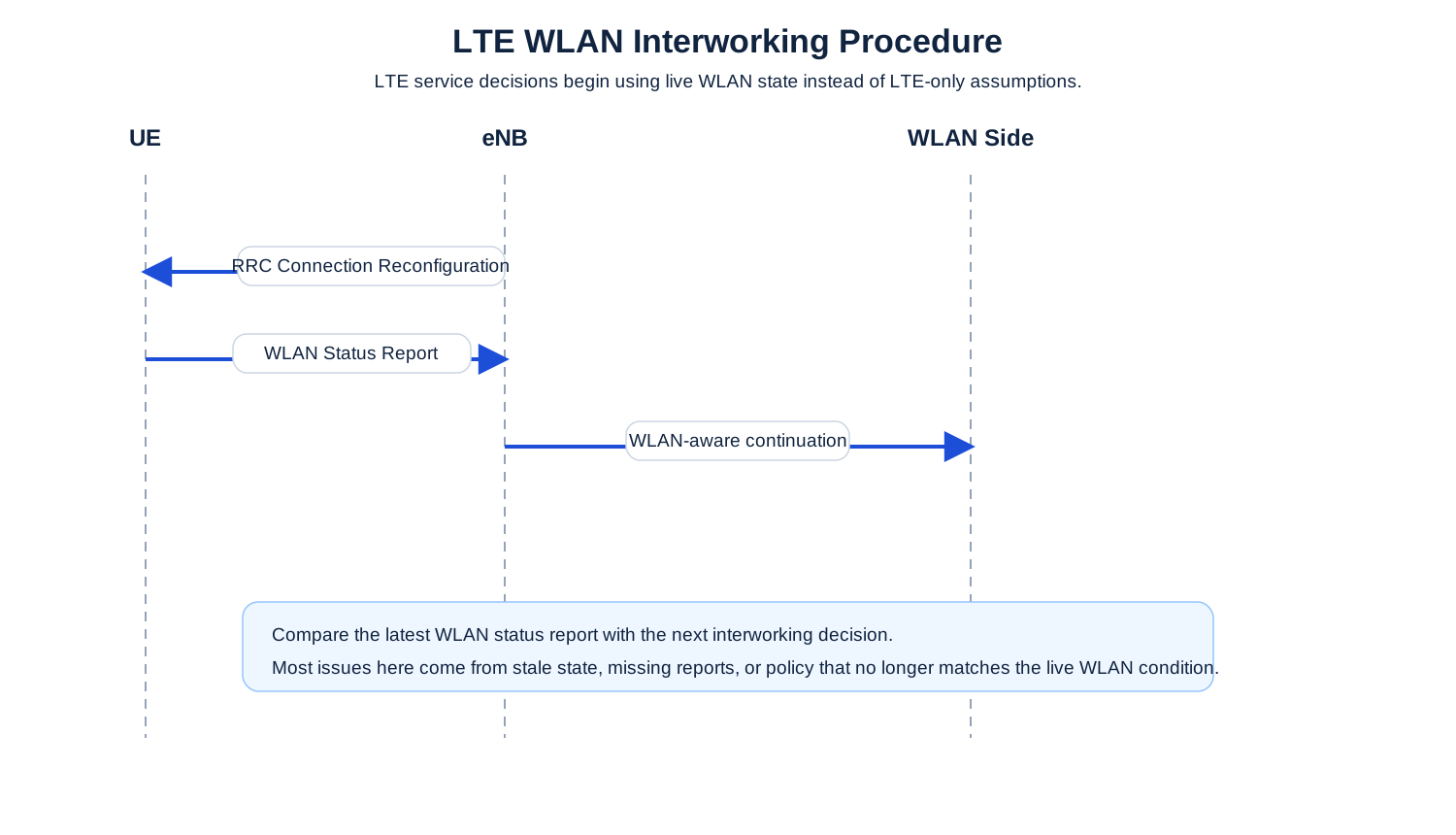
UE                   eNB                   WLAN side
|<--RRC Reconfig------|                        |
|--WLAN Status Report>|                        |
|==== LTE service uses WLAN-aware decisioning =>|
Major Phases
| Phase | What happens |
|---|---|
| 1. Enable WLAN-aware control | The LTE side decides that WLAN interworking should influence service handling. |
| 2. Deliver the WLAN-aware configuration | The UE receives the connected-mode update for WLAN-aware continuation. |
| 3. Report live WLAN state | The UE exposes the WLAN connection status back to the network. |
| 4. Continue under interworking control | The service now follows LTE decisions that take WLAN status into account. |
Step-by-Step Breakdown
Signal WLAN-aware continuation
Sender -> receiver: eNB -> UE
Message(s): RRC Connection Reconfiguration
Purpose: Configure the UE for WLAN-aware LTE continuation.
State or context change: The UE now has LTE control context that includes WLAN-related behavior.
Note: This is the main LTE-side start point for WLAN-aware handling.
Report the actual WLAN state
Sender -> receiver: UE -> eNB
Message(s): WLAN Connection Status Report r13
Purpose: Expose the real WLAN connection condition to the LTE side.
State or context change: The network now has live WLAN state instead of only policy assumptions.
Note: This is often the best message for proving whether the network was working from current WLAN visibility.
Apply the interworking decision
Sender -> receiver: eNB / WLAN side
Message(s): WLAN-aware control decision
Purpose: Choose how LTE service should continue given the reported WLAN condition.
State or context change: The connection is now operating under a live LTE-WLAN decision model.
Note: This step may not map to one air-interface message, but it explains the outcome of the previous two messages.
Continue service with LTE and WLAN aligned
Sender -> receiver: UE <-> LTE / WLAN side
Message(s): Offload, continuity, or steering continuation
Purpose: Use the WLAN-aware branch in the expected service path.
State or context change: The service now reflects the combined LTE and WLAN control model.
Note: If the service outcome looks wrong, compare it directly against the latest reported WLAN state.
Important Messages
| Message | Protocol | Direction | Purpose in this procedure | What to inspect briefly |
|---|---|---|---|---|
| RRC Connection Reconfiguration | RRC | eNB -> UE | Enables WLAN-aware connected-mode behavior. | Check whether the WLAN-related continuation really starts at this point. |
| WLAN Connection Status Report r13 | RRC | UE -> eNB | Reports the current WLAN connection state to the LTE side. | Check whether the reported status matches the decision the network made afterward. |
| RRC Connection Reconfiguration Complete | RRC | UE -> eNB | Confirms the UE accepted the WLAN-aware configuration. | Check whether status reporting or later WLAN-aware continuation follows the configuration as expected. |
| UL Information Transfer MRDC r15 | RRC | UE -> eNB | Useful contrast only when advanced branch reporting overlaps the WLAN case. | Check whether the trace is mixing WLAN interworking with a different advanced connected-mode branch. |
Important Parameters to Inspect
| Parameter | What it is | Where it appears | Why it matters | Common issues |
|---|---|---|---|---|
| WLAN-aware config point | The reconfiguration that introduced WLAN-related behavior. | RRC reconfiguration | Shows where LTE started expecting WLAN-aware continuation. | The trace assumes WLAN interworking before the UE was actually configured for it. |
| Reported WLAN state | The connection status the UE sent back to the network. | WLAN Connection Status Report r13 | Useful for comparing live WLAN reality with the next network decision. | The network seems wrong because the analyst did not check the actual reported state. |
| Decision timing | How close the network decision was to the latest WLAN status report. | Around WLAN-aware continuation | Explains whether the network acted on fresh or stale state. | An old WLAN report is mistaken for the one that drove the decision. |
| Service outcome | What the user-plane or continuity behavior looked like after the WLAN-aware choice. | Post-decision period | Separates good policy from good operational result. | The control path is correct, but the service result still does not match it. |
| Overlap with other advanced features | Whether the trace also shows MR-DC or other advanced branch logic. | Whole connected-mode context | Prevents WLAN analysis from being mixed with an unrelated advanced branch issue. | The wrong advanced feature family is blamed for the behavior. |
Successful Completion
Success means LTE control decisions stay aligned with the UE’s actual WLAN state and the intended interworking behavior appears cleanly.
Common Failures and Troubleshooting
| Symptom | Likely cause | Where to inspect | Relevant message(s) | Relevant interface(s) | Likely next step |
|---|---|---|---|---|---|
| WLAN-aware decisions look wrong for the live UE condition | The network may be working from stale or missing WLAN status. | The latest WLAN status report and the decision timing that followed it. | WLAN Connection Status Report r13 | LTE Uu, interworking control | Check whether the network decision used the current report or an older one. |
| The UE was configured, but WLAN-aware continuation never really happens | The LTE-side feature path may be configured while the WLAN side is unavailable or inconsistent. | Configuration point, WLAN status, and the first expected interworking effect. | RRC Connection Reconfiguration, WLAN Connection Status Report r13 | LTE Uu, WLAN link | Separate feature enablement from actual WLAN availability. |
What to Check in Logs and Traces
- Anchor the analysis on the reconfiguration that enabled WLAN-aware behavior.
- Use the latest WLAN status report as the main reference for the next decision.
- Keep LTE control timing and live WLAN state side by side.
Related Pages
Related sub-procedures
Related message reference pages
- WLAN Connection Status Report r13
- RRC Connection Reconfiguration
- RRC Connection Reconfiguration Complete
Related troubleshooting pages
Notes
This is the broad LTE-WLAN control page. Use the status-reporting and traffic-steering pages when the trace question is narrower than the full interworking path.
FAQ
What is LTE WLAN interworking?
It is the LTE control path that uses WLAN availability and WLAN state as part of the service-continuity or traffic decision model.
Which message is most useful in WLAN interworking analysis?
WLAN Connection Status Report r13 is often the clearest proof of what WLAN state the network actually knew.