LTE WLAN Traffic Steering Procedure Call Flow
LTE WLAN Traffic Steering Procedure is the control path used when the network actively decides whether traffic should remain on LTE or move toward a WLAN-assisted path.
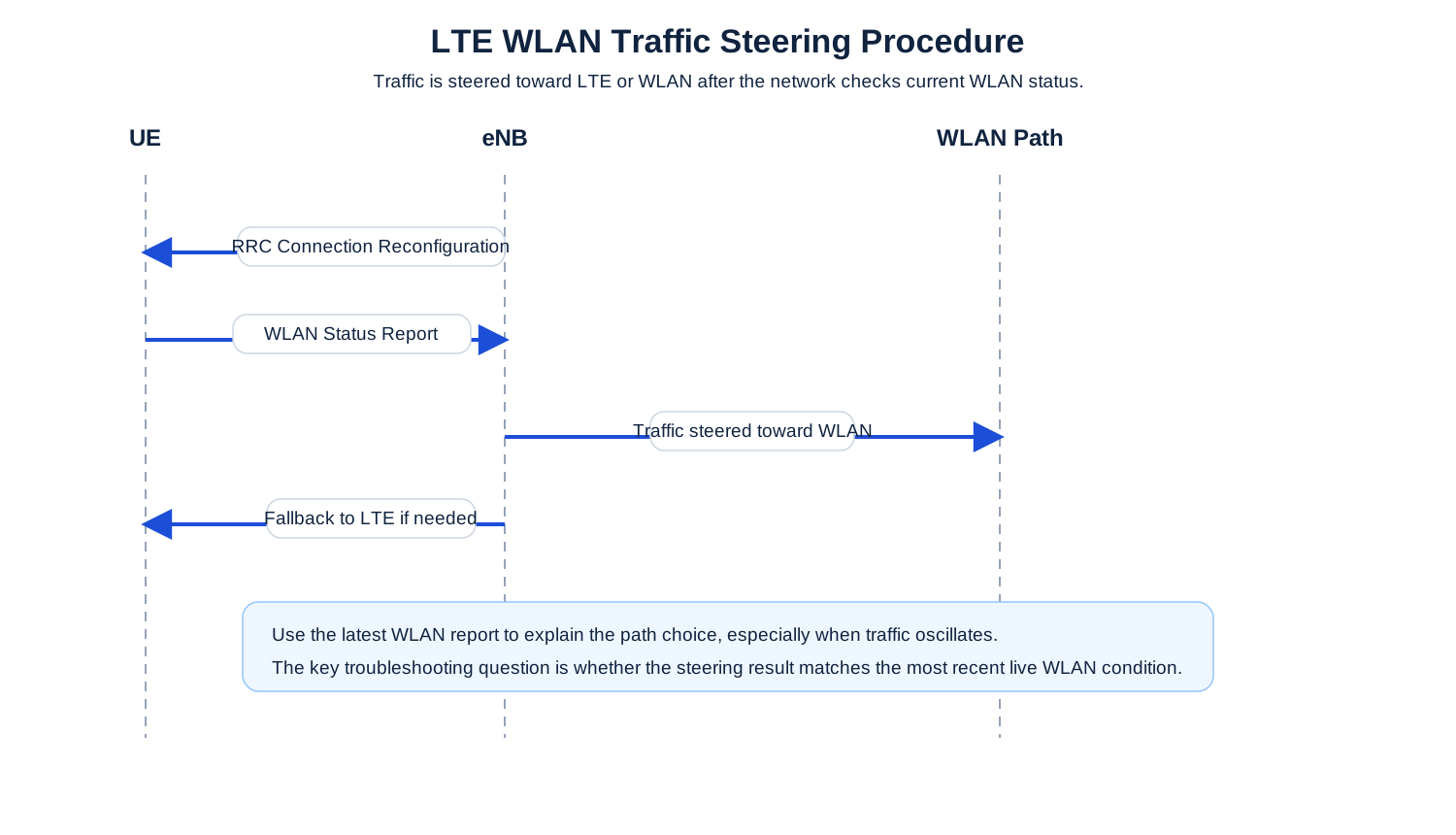
The main trace anchors are RRC Connection Reconfiguration and WLAN Connection Status Report r13, followed by the actual service outcome that shows whether the steering choice matched the live WLAN state.
Introduction
Traffic steering is one of the most practical LTE-WLAN questions because it directly affects where the service actually runs. This page focuses on the decision path rather than on one specific offload flavor.
Use it when the UE appears capable of both LTE and WLAN-assisted continuation, but the trace needs to explain why traffic was kept, shifted, or returned.
What Is LTE WLAN Traffic Steering Procedure in Simple Terms?
- What starts the procedure: The network reaches a point where traffic placement between LTE and WLAN needs to be decided or revised.
- What the UE and network want to achieve: A traffic path that matches policy, radio conditions, and live WLAN availability.
- What success looks like: The steering decision matches the current WLAN state and the service outcome is consistent.
- What failure means: Traffic is steered on stale assumptions, oscillates, or does not match the reported WLAN condition.
Why this procedure matters
Traffic steering problems show up as user-facing instability very quickly. The service may bounce between LTE and WLAN or stay on the wrong side unless the decision logic is matched against the live status reports.
Quick Fact Sheet
| Procedure name | LTE WLAN Traffic Steering Procedure |
|---|---|
| Domain | LTE-WLAN traffic placement |
| Main trigger | Need to decide whether service should stay on LTE or use WLAN-assisted continuation |
| Start state | LTE service is active and WLAN-aware continuation is possible or expected |
| End state | Traffic follows the chosen LTE or WLAN-assisted path |
| Main nodes | UE, eNB, WLAN side |
| Main protocols | RRC, WLAN status context |
| Main success outcome | Traffic steering aligns with live WLAN state |
| Main failure outcome | Traffic path does not match the state or policy that should drive it |
| Most important messages | RRC Connection Reconfiguration, WLAN Connection Status Report r13 |
| Main specs | TS 36.300, TS 36.331 |
Preconditions
- The UE already has active LTE service.
- The service path can potentially use WLAN-assisted continuation or offload.
- The network has the needed WLAN-aware configuration and decision logic in place.
Nodes and Interfaces
Nodes involved
| Node | Role in this procedure |
|---|---|
| UE | Maintains LTE service while also exposing WLAN status or moving traffic toward an LTE-WLAN branch. |
| eNB | Decides when WLAN interworking, status reporting, or traffic steering should be applied. |
| WLAN side | Provides the WLAN connectivity path used for offload, aggregation, or IP-layer interworking. |
| Transport / anchor | Preserves the LTE-side control and bearer view behind the WLAN-assisted path. |
Interfaces used
| Interface | Path | Role |
|---|---|---|
| LTE Uu | UE <-> eNB | Carries the LTE control path used to configure and supervise the WLAN-related branch. |
| WLAN link | UE <-> WLAN side | Carries the WLAN connection that may be used for offload, aggregation, or continuity. |
| Interworking control | eNB <-> WLAN side | Carries the network-side coordination behind WLAN-aware continuation. |
End-to-End Call Flow
UE                   eNB                   WLAN side
|<--RRC Reconfig------|                        |
|--WLAN Status Report>|                        |
|==== traffic steered toward LTE or WLAN =====>|
Major Phases
| Phase | What happens |
|---|---|
| 1. Reach a steering decision point | The network needs to choose the best current traffic path. |
| 2. Confirm the UE’s WLAN context | The LTE side checks or receives the relevant WLAN state. |
| 3. Apply the steering choice | The network uses the WLAN-aware control model to place traffic. |
| 4. Observe the result | The service outcome is checked against the expected steering decision. |
Step-by-Step Breakdown
Enable steering-capable context
Sender -> receiver: eNB -> UE
Message(s): RRC Connection Reconfiguration
Purpose: Provide the LTE-side configuration that allows traffic steering decisions to matter.
State or context change: The connected mode is now capable of WLAN-aware steering behavior.
Note: Without this context, later traffic behavior may still be pure LTE even if WLAN exists nearby.
Check the current WLAN condition
Sender -> receiver: UE -> eNB
Message(s): WLAN Connection Status Report r13
Purpose: Expose whether WLAN is currently usable for the steering decision.
State or context change: The network now has live UE-side WLAN visibility.
Note: This is the message to inspect when the chosen traffic path looks counterintuitive.
Apply the steering choice
Sender -> receiver: eNB / interworking control
Message(s): Traffic placement decision
Purpose: Choose LTE retention, WLAN use, or fallback based on the current decision model.
State or context change: The service path now reflects a steering choice instead of a static LTE-only path.
Note: The steering action may be operational rather than a single named RRC message.
Validate the service path
Sender -> receiver: UE <-> LTE / WLAN side
Message(s): Observed traffic continuation
Purpose: Check whether the actual service path matches the intended steering result.
State or context change: The traffic now demonstrates whether the steering choice was useful and consistent.
Note: If the path outcome does not match the report, focus on decision timing first.
Important Messages
| Message | Protocol | Direction | Purpose in this procedure | What to inspect briefly |
|---|---|---|---|---|
| RRC Connection Reconfiguration | RRC | eNB -> UE | Provides the LTE-side context for steering-aware continuation. | Check where steering-capable behavior was introduced in the trace. |
| WLAN Connection Status Report r13 | RRC | UE -> eNB | Supplies the live WLAN state used by steering logic. | Check whether the traffic path chosen afterward matches the reported state. |
| RRC Connection Reconfiguration Complete | RRC | UE -> eNB | Confirms the steering-capable configuration is active. | Check whether steering analysis starts only after this configuration was accepted. |
Important Parameters to Inspect
| Parameter | What it is | Where it appears | Why it matters | Common issues |
|---|---|---|---|---|
| Steering-capable configuration | The connected-mode point where LTE started allowing WLAN-aware traffic decisions. | RRC reconfiguration | Defines when it becomes fair to expect steering behavior. | The trace expects steering before the UE was configured for it. |
| Latest WLAN status | The most recent UE-reported WLAN condition. | WLAN Connection Status Report r13 | It is the main real-time input to the steering decision. | An older report is used to judge a newer traffic choice. |
| Traffic path result | Where the service actually went after the steering point. | Post-decision continuation | Shows whether the steering decision had the expected operational effect. | The control path looks correct, but the traffic path still did not change as expected. |
| Decision stability | Whether the steering choice stayed stable or oscillated. | Across the steering window | Useful for spotting bounce behavior between LTE and WLAN. | One short path change is mistaken for a stable steering policy. |
| Fallback condition | What made traffic return to LTE-only continuation if that happened. | Later continuity period | Explains whether fallback was due to WLAN loss or decision logic. | The fallback is blamed on LTE even though WLAN became unusable first. |
Successful Completion
Success means the traffic path chosen by the network matches the current WLAN state and remains stable enough for the service.
Common Failures and Troubleshooting
| Symptom | Likely cause | Where to inspect | Relevant message(s) | Relevant interface(s) | Likely next step |
|---|---|---|---|---|---|
| Traffic path does not match the latest WLAN status | The steering decision may be using old information or applying the wrong policy branch. | Latest status report, steering point, and the first path result. | WLAN Connection Status Report r13 | LTE Uu, interworking control | Align the path result with the exact latest WLAN report before diagnosing policy. |
| Traffic oscillates between LTE and WLAN | Steering criteria may be unstable or the WLAN path may not remain usable long enough. | Repeated status changes and repeated path changes. | Repeated WLAN Connection Status Report r13 | LTE Uu, WLAN link | Check whether the state input itself is unstable before blaming the steering rule. |
What to Check in Logs and Traces
- Use the latest WLAN status report as the steering input reference.
- Prove where the traffic actually went after the steering decision.
- Check for repeated steering reversals instead of judging from one isolated moment.
Related Pages
Related sub-procedures
Related message reference pages
Related troubleshooting pages
Notes
This page is about the decision path that places traffic. Use the LWA or LWIP pages when the trace clearly belongs to one specific LTE-WLAN feature flavor.
FAQ
What is LTE WLAN traffic steering?
It is the control path that decides whether service should stay on LTE or use a WLAN-assisted path.
What is the most important input to steering?
The most useful live input is usually the latest WLAN Connection Status Report from the UE.