LTE Measurement Configuration Explained
In LTE, measurement configuration is the RRC-controlled framework that tells the UE what to measure, when to measure it, and when to report it. It is one of the most important parts of LTE mobility because handover, inter-frequency search, inter-RAT search, and many radio-optimization actions depend on correctly configured measurements.
At a practical level, LTE measurement configuration is built around four core concepts: measurement object (measObject), report configuration (reportConfig), measurement identity (measId), and quantity configuration (quantityConfig). Together they define the working loop between the eNodeB, the UE, and the later Measurement Report that feeds mobility decisions.
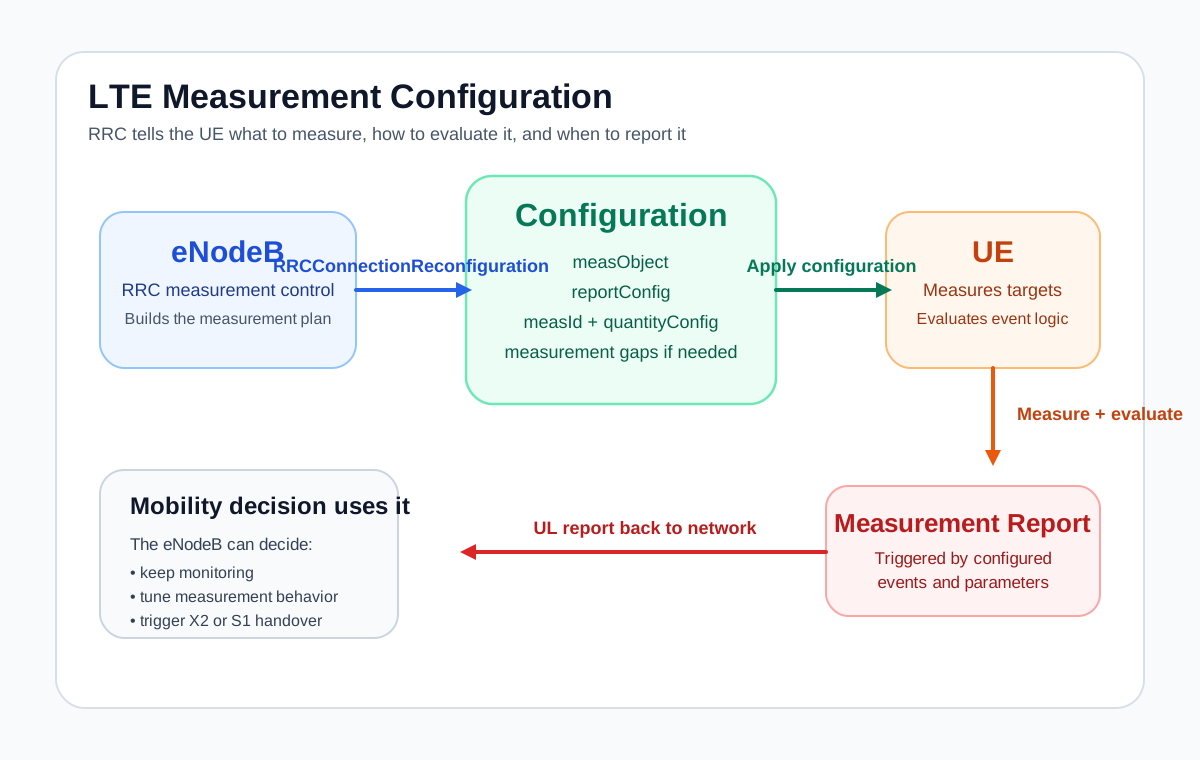
LTE measurement configuration flow
Quick facts
| Configured by | eNodeB through RRC measurement configuration |
|---|---|
| Core objects | measObject, reportConfig, measId, quantityConfig |
| Main outcome | UE measurement behavior becomes reportable and usable for mobility |
| Most important companion topic | LTE measurement events A1 to A5 |
| Key measurement quantities | RSRP and RSRQ in common LTE deployments |
| When gaps matter | Inter-frequency and inter-RAT measurement cases |
Contents
- LTE measurement configuration flow
- Where measurement configuration fits in LTE
- Why this matters
- Core building blocks of LTE measurement configuration
- Measurement object (measObject)
- Report configuration (reportConfig)
- Measurement identity (measId)
- Quantity configuration (quantityConfig)
- Measurement gaps
- Measurement quantities: RSRP and RSRQ
- How configuration and events work together
- Example of how LTE measurement configuration works
- Measurement configuration and mobility
- Common troubleshooting notes
- Optimization view
- Typical procedures or call flows using measurement configuration
- Related pages / next steps
- Key takeaways
- FAQ
Where measurement configuration fits in LTE
Measurement configuration sits between RRC context and mobility control. The eNodeB configures the UE, the UE performs measurements and evaluates the configured logic, then the resulting report gives the network the input it needs for handover, mobility preparation, or optimization decisions.
| Step | What it means in practice |
|---|---|
| eNodeB configures | The network sends measurement objects, reporting rules, measurement identity links, quantity handling, and measurement-gap settings if needed. |
| UE measures | The UE measures the configured frequency or RAT targets using the configured quantities. |
| UE evaluates conditions | The UE checks configured event logic, thresholds, offsets, hysteresis, and time-to-trigger. |
| UE reports | A report is sent when the configured condition is satisfied. |
| eNodeB decides | The network decides whether to hand over, continue observing, or adjust the measurement plan. |
Why this matters
If measurement configuration is wrong, handover performance degrades even when coverage and neighbor definitions look fine. That is why mobility debugging often comes back to the exact RRC configuration rather than only the RF layer.
- controls when the UE starts looking beyond the current serving condition
- determines whether mobility reports arrive early enough to protect service continuity
- governs inter-frequency and inter-RAT search behavior
- strongly affects handover timing, stability, and ping-pong behavior
- is one of the main tuning points for LTE mobility optimization
Core building blocks of LTE measurement configuration
| Component | Purpose |
|---|---|
| measObject | Defines what frequency, RAT, or measurement target the UE should observe. |
| reportConfig | Defines when the UE should report. |
| measId | Links a measurement object to a reporting configuration. |
| quantityConfig | Defines how measurement quantities and filtering are processed. |
| Measurement gaps | Give the UE time to measure other frequencies or RATs when normal activity is not enough. |
Measurement object (measObject)
The measurement object tells the UE what to measure. In practical LTE engineering, that usually means an E-UTRA frequency or another RAT target that the UE should monitor for mobility purposes.
If the correct measurement objects are not configured, the UE may never observe the neighbor layer the network actually wants to use. That can break inter-frequency mobility, delay inter-RAT search, and leave otherwise good target cells invisible to the handover logic.
Report configuration (reportConfig)
The report configuration tells the UE when to send a report. This is where event-based logic such as A1, A2, A3, A4, and A5 is defined together with thresholds, offsets, hysteresis, time-to-trigger, and reporting behavior.
The network may tell the UE to measure several targets, but reportConfig is what decides which of those observations are important enough to return to the eNodeB. This is the part that effectively programs the UE’s measurement-trigger logic.
Measurement identity (measId)
The measurement identity is the working association between a measurement object and a report configuration. It is what turns two separate configuration elements into an active reporting rule for the UE.
This is one of the first items to inspect when measurement behavior looks wrong. A valid object and a valid report rule are not enough by themselves if the UE is not told which reporting rule applies to which target.
| Without measId | With measId |
|---|---|
| The object exists and the report rule exists, but the UE has no operational link between them. | The UE knows which target is measured under which reporting rule. |
| Measurements may happen but not under the expected reporting logic. | Measurement evaluation becomes actionable and reportable. |
Quantity configuration (quantityConfig)
The quantity configuration tells the UE how to process measurement values before evaluating the reporting condition. In day-to-day LTE work, this is where quantities like RSRP and RSRQ and their filtering behavior become important.
This matters because the same threshold can behave very differently depending on the filtering and quantity-processing setup. Too much filtering can delay mobility reaction. Too little filtering can create unstable reports and ping-pong behavior.
Measurement gaps
Measurement gaps are one of the most important practical parts of LTE measurement configuration. They are used when the UE needs explicit time to measure other frequencies or RATs that cannot be observed reliably during normal ongoing radio activity.
From an engineering perspective, gaps become especially important in inter-frequency and inter-RAT mobility. If gaps are missing or badly tuned, the UE may not return the right information early enough for a clean handover decision.
- inter-frequency LTE measurement cases
- inter-RAT mobility toward 3G or other supported targets
- situations where the UE needs scheduling relief to perform the configured measurement
Measurement quantities: RSRP and RSRQ
LTE measurement configuration is closely tied to RSRP and RSRQ. These are the main quantities the UE uses to evaluate cell strength and signal quality before event logic is applied.
In practice, measurement configuration is what turns those raw radio observations into structured handover input. The network does not act on RSRP or RSRQ alone; it acts on the event result after those values pass through the configured logic.
How configuration and events work together
Measurement configuration and measurement events should be read as two halves of the same topic. Measurement configuration defines the framework, while measurement events define the actual trigger conditions inside that framework.
| Topic | What it answers |
|---|---|
| Measurement configuration | What should the UE measure, how should it process it, and which rule applies? |
| Measurement events | Under which exact condition should the UE send a report? |
Example of how LTE measurement configuration works
- The eNodeB configures a measObject for a neighbor LTE frequency or RAT target.
- The eNodeB configures a reportConfig, often using A3 or A5 logic.
- The eNodeB links them with a measId.
- The eNodeB configures quantityConfig and measurement filtering.
- If needed, the eNodeB configures measurement gaps.
- The UE measures, evaluates the condition, and sends a report when the rule is met.
Measurement configuration and mobility
Measurement configuration is one of the direct inputs to LTE mobility performance. It determines when the UE notices a better neighbor, when the serving cell is considered weak, and whether the network receives enough evidence to trigger handover at the right time.
This is why incorrect measurement configuration can cause late handovers, ping-pong behavior, failed inter-frequency mobility, poor load balancing, and a degraded user experience even when the coverage map itself looks acceptable.
Common troubleshooting notes
These failures usually show up as missing reports, late mobility decisions, ping-pong handovers, or handover attempts that arrive too late to protect the radio link.
- wrong or missing measObject for the intended neighbor layer
- reportConfig that is too aggressive or too conservative
- missing or incorrect measId mapping
- offset, hysteresis, or time-to-trigger values that create unstable mobility
- missing measurement gaps for inter-frequency or inter-RAT measurement needs
- quantity filtering that is too slow or too noisy for the deployment
- mismatch between configured logic and the real neighbor plan
Optimization view
From an optimization perspective, LTE measurement configuration is where the network tunes mobility behavior. Common levers include A3 offset, A5 thresholds, hysteresis, time-to-trigger, measurement-gap strategy, and frequency-specific measurement-object design.
The goal is to reduce ping-pong, improve handover success rate, protect throughput, and preserve QoS while still reacting quickly enough to changing radio conditions.
Typical procedures or call flows using measurement configuration
- Measurement configuration procedure is the direct setup path for the framework itself.
- Measurement reporting procedure shows how the UE applies the configuration and returns the report.
- X2 handover commonly depends on measurement-driven mobility triggers.
- S1 handover uses the same measurement logic when mobility needs EPC assistance.
Key takeaways
- LTE measurement configuration defines what the UE measures, how it processes the result, and when it reports.
- The main configuration elements are measObject, reportConfig, measId, and quantityConfig.
- Measurement gaps are important when the UE needs explicit time to measure other frequencies or RATs.
- RSRP and RSRQ are the main LTE measurement quantities behind event evaluation and reporting.
- Correct measurement configuration is essential for stable handover, mobility, and LTE optimization.
FAQ
What is LTE measurement configuration?
LTE measurement configuration is the RRC-controlled setup that tells the UE what to measure, how to evaluate the result, and when to send a report back to the eNodeB.
What are the main parts of LTE measurement configuration?
The main components are measObject, reportConfig, measId, and quantityConfig, with measurement gaps added when the UE needs explicit time to measure other targets.
What is a measId in LTE?
A measId links a measurement object to a reporting configuration so the UE knows which reporting rule applies to which configured measurement target.
Why are measurement gaps needed in LTE?
Measurement gaps are used when the UE needs time to measure other frequencies or RATs that it cannot reliably observe during normal ongoing radio activity.
Which quantities are most important in LTE measurement configuration?
RSRP and RSRQ are the main LTE measurement quantities used for cell evaluation, event logic, and reporting behavior.