What does BYE do in IMS?
It ends an established SIP dialog and starts the release transaction.
| Protocol | ims | Network | 5G and LTE |
|---|---|---|---|
| Spec | RFC 3261 / 3GPP TS 24.229 | Spec Section | SIP BYE method and dialog termination |
| Direction | UE <-> IMS network | Message Type | SIP request method |
| Full message name | IMS SIP BYE |
|---|---|
| Protocol | IMS |
| Technology | 5G and LTE |
| Common deployment | VoNR and VoLTE |
| Direction | UE <-> IMS network |
| Interface | Gm (UE <-> P-CSCF) with onward IMS routing |
| Signaling bearer / channel | IMS SIP signaling / In-dialog SIP termination request |
| Typical trigger | One side ends the call or service session and needs to release the dialog. |
| Main purpose | Ends the active IMS session and tells the far side that the dialog should be released. |
| Main specification | RFC 3261 / 3GPP TS 24.229, SIP BYE method and dialog termination |
| Release added | See specification history |
| Procedures where used | IMS Call Release, VoNR Call Release, VoLTE Call Release |
BYE is the SIP request that terminates an established dialog.
Ends the active IMS session and tells the far side that the dialog should be released.
BYE is the SIP request that ends the active IMS dialog.
Call flow position: Main SIP release request inside the active dialog.
Typical state: The session is already established and is now being terminated.
Preconditions:
Next likely message: 200 OK
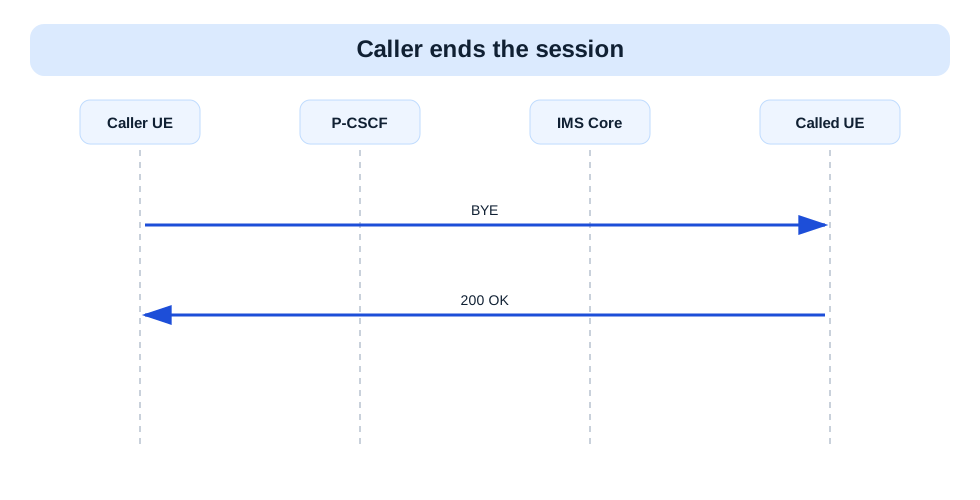
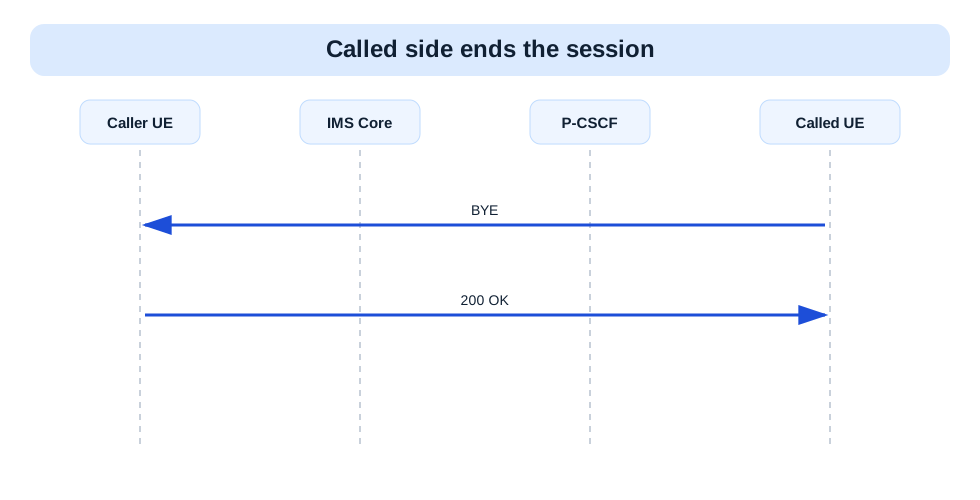
Previous message(s): Established INVITE dialog
Next message(s): 200 OK
Security context: Sent inside an existing dialog after setup has already completed.
BYE sip:user@example.net SIP/2.0
Via:
From:
To:
Call-ID:
CSeq:
Route:                             OPTIONAL
Content-Length:
BYE is a SIP dialog-termination request, not an ASN.1-defined signaling message.
BYE sip:bob@example.net SIP/2.0
Via: SIP/2.0/UDP ue.example.net;branch=z9hG4bK-bye1
From: <sip:alice@example.net>;tag=mo1
To: <sip:bob@example.net>;tag=term1
Call-ID: call-001@example.net
CSeq: 2 BYE
Content-Length: 0
| IE | Required | Description |
|---|---|---|
Request-URI | Yes | Targets the remote dialog endpoint. |
Call-ID | Yes | Identifies the dialog being terminated. |
CSeq | Yes | Orders the BYE inside the dialog. |
Route | Optional | Preserves the dialog route set. |
Request-URITargets the remote dialog endpoint.
Presence: Required
In practice: In practice, compare this field with the original request and with any later release-dependent optional fields so you can see whether the network accepted the same service model the UE asked for.
Call-IDIdentifies the dialog being terminated.
Presence: Required
In practice: In practice, compare this field with the original request and with any later release-dependent optional fields so you can see whether the network accepted the same service model the UE asked for.
CSeqOrders the BYE inside the dialog.
Presence: Required
In practice: In practice, compare this field with the original request and with any later release-dependent optional fields so you can see whether the network accepted the same service model the UE asked for.
RoutePreserves the dialog route set.
Presence: Optional
In practice: In practice, compare this field with the original request and with any later release-dependent optional fields so you can see whether the network accepted the same service model the UE asked for.
Likely cause: BYE may be missing, misrouted, or not correlated to the right dialog.
What to inspect: Check dialog tags, route set, and whether the far side returned 200 OK.
Next step: Follow the BYE transaction end to end before blaming media or bearer cleanup.
It ends an established SIP dialog and starts the release transaction.
Decode this message with the 3GPP Decoder, inspect the related message database, or open the matching call flow to see where this signaling step fits in the full procedure.