What does PRACK do in IMS?
It confirms receipt of a reliable provisional response such as 183 Session Progress.
| Protocol | ims | Network | 5G and LTE |
|---|---|---|---|
| Spec | RFC 3262 / 3GPP TS 24.229 | Spec Section | Reliable provisional responses and PRACK handling |
| Direction | UE <-> IMS network | Message Type | SIP request method |
| Full message name | IMS SIP PRACK |
|---|---|
| Protocol | IMS |
| Technology | 5G and LTE |
| Common deployment | VoNR and VoLTE |
| Direction | UE <-> IMS network |
| Interface | Gm (UE <-> P-CSCF) with onward IMS routing |
| Signaling bearer / channel | IMS SIP signaling / Reliable provisional-response acknowledgment |
| Typical trigger | A reliable provisional response such as 183 Session Progress is received and must be acknowledged. |
| Main purpose | Confirms receipt of a reliable 1xx response so early-session signaling can continue in a controlled way. |
| Main specification | RFC 3262 / 3GPP TS 24.229, Reliable provisional responses and PRACK handling |
| Release added | See specification history |
| Procedures where used | IMS Early Session Progress, IMS Mobile Originated Call, IMS Mobile Terminated Call, VoNR Mobile Originated Call, VoNR Mobile Terminated Call, VoLTE Mobile Originated Call, VoLTE Mobile Terminated Call |
PRACK is the SIP request that acknowledges a reliable provisional response.
Confirms receipt of a reliable 1xx response so early-session signaling can continue in a controlled way.
PRACK acknowledges a reliable provisional SIP response.
Call flow position: Early-session step before the final INVITE result.
Typical state: The dialog is progressing but not yet fully established.
Preconditions:
Next likely message: 200 OK to PRACK or later final response handling
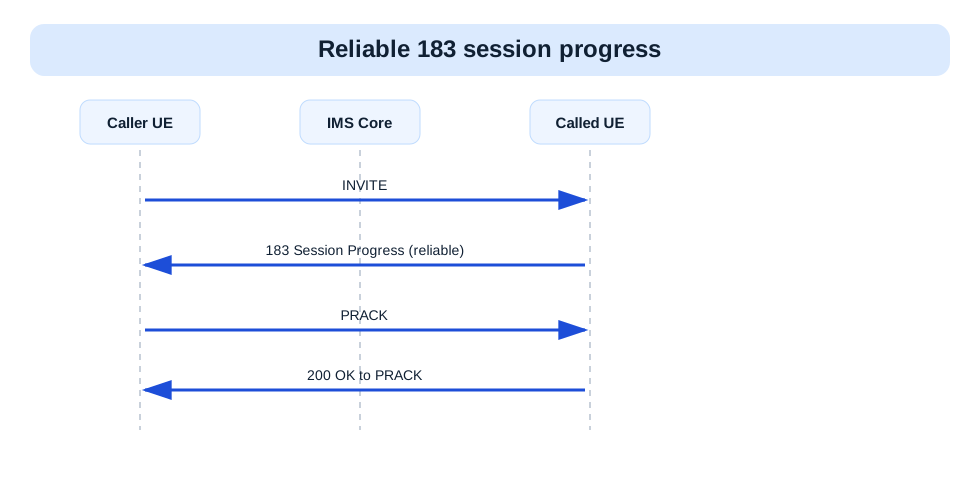
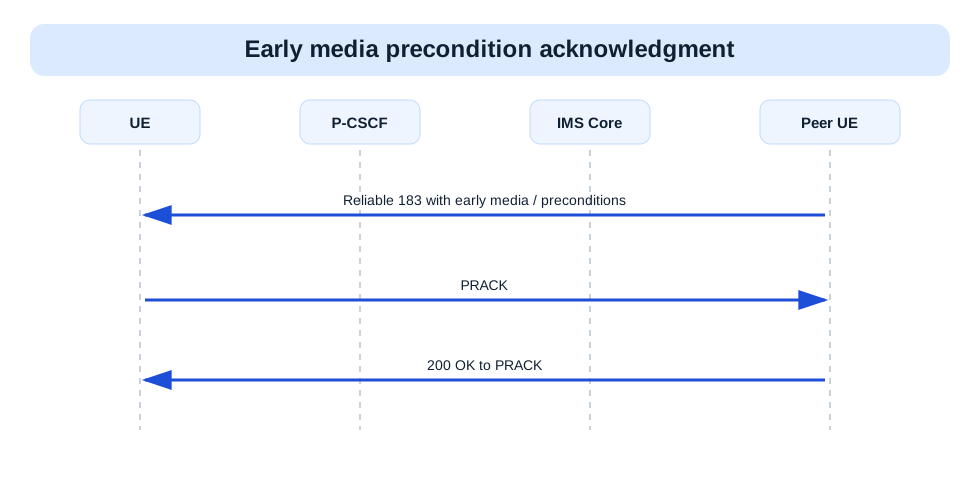
Previous message(s): Reliable 1xx response
Next message(s): 200 OK to PRACK
Security context: Sent inside the early dialog context while the final INVITE result is still pending.
PRACK sip:user@example.net SIP/2.0
Via:
From:
To:
Call-ID:
CSeq:
RAck:
Content-Length:
PRACK is a SIP request method used for reliable provisional response handling.
PRACK sip:bob@example.net SIP/2.0
Via: SIP/2.0/UDP ue.example.net;branch=z9hG4bK-pr1
From: <sip:alice@example.net>;tag=mo1
To: <sip:bob@example.net>;tag=term1
Call-ID: call-001@example.net
CSeq: 2 PRACK
RAck: 1 1 INVITE
Content-Length: 0
| IE | Required | Description |
|---|---|---|
RAck | Yes | Identifies the reliable provisional response being acknowledged. |
Call-ID | Yes | Correlates PRACK with the same early dialog. |
CSeq | Yes | Orders the PRACK transaction itself. |
RAckIdentifies the reliable provisional response being acknowledged.
Presence: Required
In practice: In practice, compare this field with the original request and with any later release-dependent optional fields so you can see whether the network accepted the same service model the UE asked for.
Call-IDCorrelates PRACK with the same early dialog.
Presence: Required
In practice: In practice, compare this field with the original request and with any later release-dependent optional fields so you can see whether the network accepted the same service model the UE asked for.
CSeqOrders the PRACK transaction itself.
Presence: Required
In practice: In practice, compare this field with the original request and with any later release-dependent optional fields so you can see whether the network accepted the same service model the UE asked for.
Likely cause: The reliable provisional branch may be waiting for PRACK or using mismatched RAck values.
What to inspect: Compare PRACK against the exact 1xx response that triggered it.
Next step: Check whether 200 OK to PRACK was returned before the final INVITE result.
It confirms receipt of a reliable provisional response such as 183 Session Progress.
Decode this message with the 3GPP Decoder, inspect the related message database, or open the matching call flow to see where this signaling step fits in the full procedure.