Registration Reject is the NAS message the AMF sends when a 5G registration attempt is refused and the UE must stop the current registration path.
Stops the current registration procedure and returns the 5GMM cause and any backoff or policy context that explains why registration was not accepted.
Why this message matters
Registration Reject is the network telling the UE that the current registration attempt is not allowed, along with the reason why.
Where this message appears in the call flow
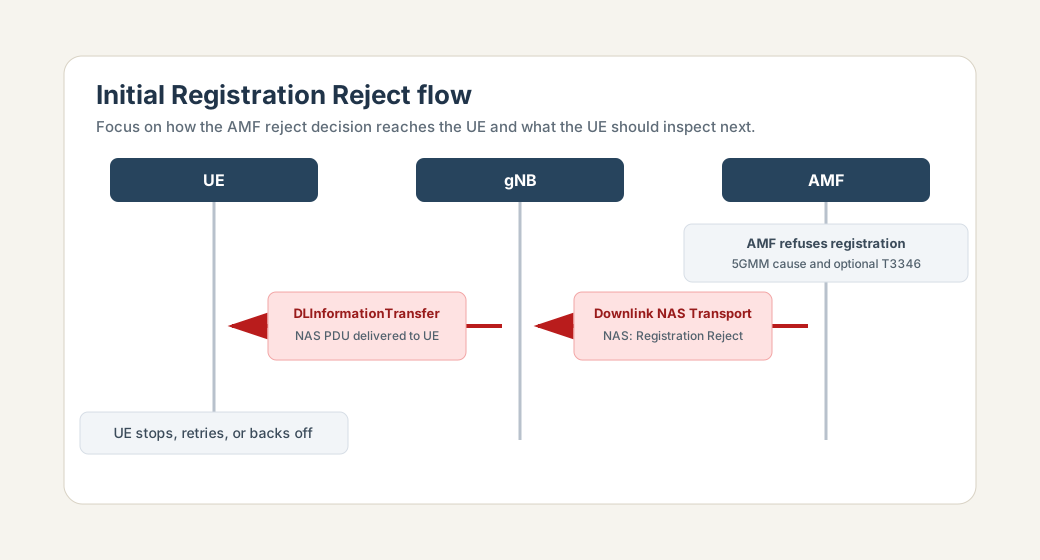
5G Initial Registration
Initial registration context: when the AMF refuses the Registration Request, it sends Registration Reject toward the UE, typically through NGAP Downlink NAS Transport and RRC DLInformationTransfer.
Call flow position: Negative AMF response when the UE's registration attempt cannot be accepted.
Typical state: UE is still trying to enter a registered mobility-management state.
Preconditions:
The AMF has evaluated the Registration Request and related checks.
Next likely message: Retry, wait, or remain deregistered depending on cause
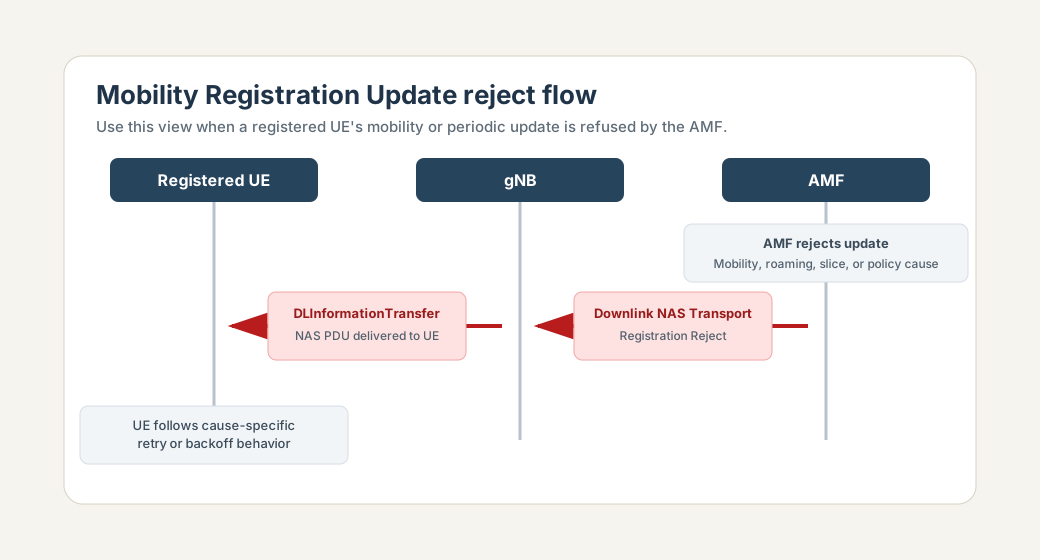
Mobility Registration Update
Mobility update context: Registration Reject tells the UE that the requested update cannot continue; the 5GMM cause and any T3346 value drive the next retry or backoff behavior.
Call flow position: Negative AMF response when a mobility or periodic registration update cannot be accepted.
Typical state: UE already has or recently had registration context, but the update path is refused.
Preconditions:
The AMF has evaluated the update Registration Request and related mobility, roaming, or policy checks.
Next likely message: Backoff, retry, deregistered handling, or limited service depending on cause
Backoff timer that tells the UE how long it should wait before trying again.
Detailed field explanation
5GMM cause
Primary failure reason explaining why registration was refused.
Presence: Mandatory
In practice: In practice, compare this field with the original request and with any later release-dependent optional fields so you can see whether the network accepted the same service model the UE asked for.
T3346 value
Backoff timer that tells the UE how long it should wait before trying again.
Presence: Optional
In practice: In practice, compare this field with the original request and with any later release-dependent optional fields so you can see whether the network accepted the same service model the UE asked for.
What to check in logs and traces
Read the 5GMM cause first and map it to the actual scenario.
Check whether T3346 is present and whether the UE behavior matches that backoff.
Correlate the reject with earlier identity, authentication, slice, or roaming checks.
Confirm whether the message was sent plain or protected and whether that matches the procedure stage.
Common Issues and Troubleshooting
UE receives Registration Reject repeatedly.
Likely cause: The underlying cause is persistent, such as subscription mismatch, roaming restriction, wrong identity context, or barred service.
What to inspect: Check the exact 5GMM cause, slice context, PLMN/TAI alignment, and AMF policy assumptions.
Next step: Troubleshoot by cause rather than retrying blindly, especially if T3346 is present.
The UE does not retry for a long time after reject.
Likely cause: The AMF provided T3346 and the UE is correctly backing off.
What to inspect: Check the timer value and compare it with later UE access behavior.
Next step: Validate whether the retry pause is expected instead of treating it as a separate access failure.
FAQ
What is Registration Reject in 5G?
It is the AMF's failure response when a registration attempt cannot be accepted.
What should engineers inspect first in Registration Reject?
The 5GMM cause and any T3346 backoff timer.
Does Registration Reject always mean radio failure?
No. It usually points to mobility-management, subscription, identity, slice, or policy problems rather than radio decode failure.
Decode this message with the 3GPP Decoder, inspect the related message database, or open the matching call flow to see where this signaling step fits in the full procedure.