What is Failure Information r16 in LTE?
It is the uplink LTE RRC message the UE uses to report release 16 failure information back to the network.
| Protocol | lte-rrc | Network | lte |
|---|---|---|---|
| Spec | 3GPP TS 36.331 | Spec Section | 5.6, 6.2.2 |
| Direction | UE -> eNodeB | Message Type | Failure Reporting |
| Full message name | LTE RRC Failure Information r16 |
|---|---|
| Protocol | LTE-RRC |
| Technology | LTE |
| Direction | UE -> eNodeB |
| Interface | Uu |
| Signaling bearer / channel | SRB1 / UL-DCCH |
| Typical trigger | Triggered when the UE has release 16 failure context available to report. |
| Main purpose | Lets the network receive newer failure-reporting payloads so it can investigate the problem and continue with later recovery or optimization decisions. |
| Main specification | 3GPP TS 36.331, 5.6, 6.2.2 |
| Release added | Release 16 |
| Procedures where used | Failure information reporting |
Uplink LTE RRC message used by the UE to return release 16 failure information to the network.
Lets the network receive newer failure-reporting payloads so it can investigate the problem and continue with later recovery or optimization decisions.
Failure Information r16 is the LTE UE report used to give the network newer release 16 failure context.
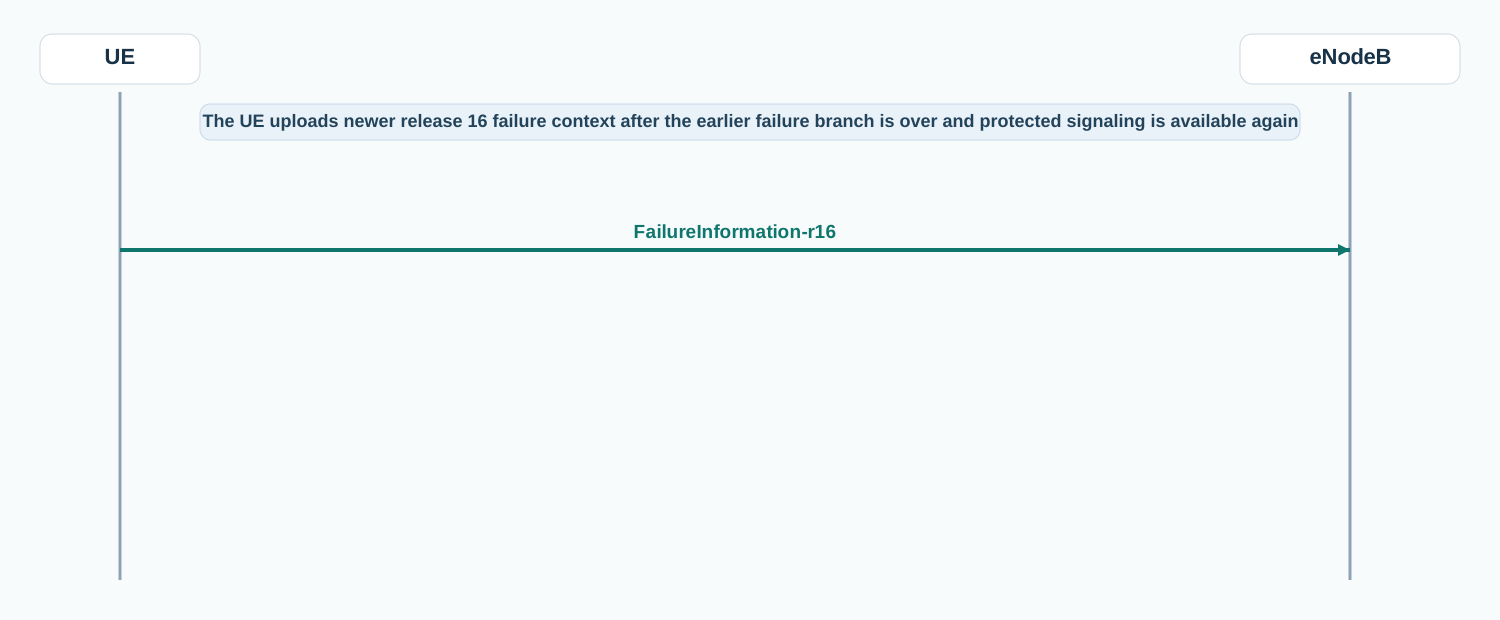
Call flow position: UE failure report sent when release 16 failure context needs to be uploaded.
Typical state: The network is collecting more detailed or newer failure evidence from the UE.
Preconditions:
Next likely message: Failure investigation or later reconfiguration
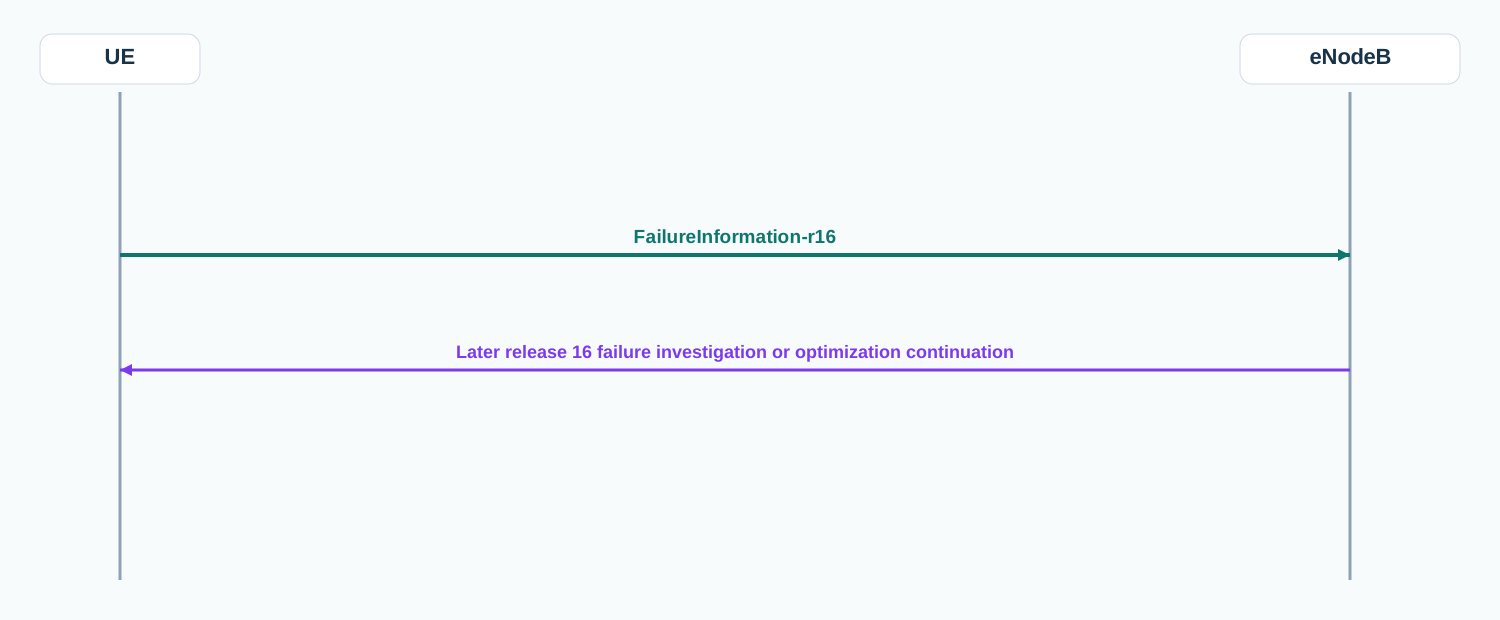
Call flow position: UE report sent after the failing branch was recovered enough to allow protected signaling again.
Typical state: The report explains an earlier failure path rather than representing the failure event itself.
Preconditions:
Next likely message: Investigation or optimization continuation
Previous message(s): Recovery or reconnect continuation
Next message(s): Failure investigation, Later connected-mode continuation
Security context: Sent as protected connected-mode signaling.
FailureInformation-r16 ::= SEQUENCE {
  criticalExtensions CHOICE {
    c1 CHOICE {
      failureInformation-r16 FailureInformation-r16-IEs,
      spare3 NULL,
      spare2 NULL,
      spare1 NULL
    },
    criticalExtensionsFuture SEQUENCE {}
  }
}
Read it as a newer uplink failure-reporting payload that extends the same general failure-evidence idea.
UL-DCCH-Message
  message c1 : failureInformation-r16 : {
    criticalExtensions c1 : failureInformation-r16 : {
      failureInformation-r16 present
    }
  }
| IE | Required | Description |
|---|---|---|
failureInformation-r16 | Yes | Carries the release 16 failure information payload returned by the UE. |
failureInformation-r16Carries the release 16 failure information payload returned by the UE.
Presence: Required
In practice: In practice, compare this field with the original request and with any later release-dependent optional fields so you can see whether the network accepted the same service model the UE asked for.
Likely cause: The UE may have returned Failure Information r16 after the failing branch was recovered enough for protected signaling.
What to inspect: Check the report timing against the earlier failure and the later recovery or reconfiguration branch.
Next step: Treat it as supplementary failure evidence and compare it with the older failure-reporting path if both exist.
It is the uplink LTE RRC message the UE uses to report release 16 failure information back to the network.
Decode this message with the 3GPP Decoder, inspect the related message database, or open the matching call flow to see where this signaling step fits in the full procedure.