What is InterFreqRSTD Measurement Indication r10 in LTE?
It is an uplink LTE RRC indication used in inter-frequency RSTD positioning-related measurement handling.
| Protocol | lte-rrc | Network | lte |
|---|---|---|---|
| Spec | 3GPP TS 36.331 | Spec Section | 5.5, 6.2.2 |
| Direction | UE -> eNodeB | Message Type | Positioning / Measurement Indication |
| Full message name | LTE RRC InterFreqRSTD Measurement Indication r10 |
|---|---|
| Protocol | LTE-RRC |
| Technology | LTE |
| Direction | UE -> eNodeB |
| Interface | Uu |
| Signaling bearer / channel | SRB1 / UL-DCCH |
| Typical trigger | Triggered when the UE needs to indicate inter-frequency RSTD measurement status in a positioning-related branch. |
| Main purpose | Lets the UE inform the network about inter-frequency RSTD measurement progress or constraints so positioning-related control can continue correctly. |
| Main specification | 3GPP TS 36.331, 5.5, 6.2.2 |
| Release added | Release 10 |
| Procedures where used | LTE positioning support, Inter-frequency RSTD measurement handling |
Uplink LTE RRC message used by the UE to indicate status around inter-frequency RSTD measurement handling for positioning-related procedures.
Lets the UE inform the network about inter-frequency RSTD measurement progress or constraints so positioning-related control can continue correctly.
InterFreqRSTD Measurement Indication r10 is an LTE positioning-related UE indication used in inter-frequency RSTD measurement handling.
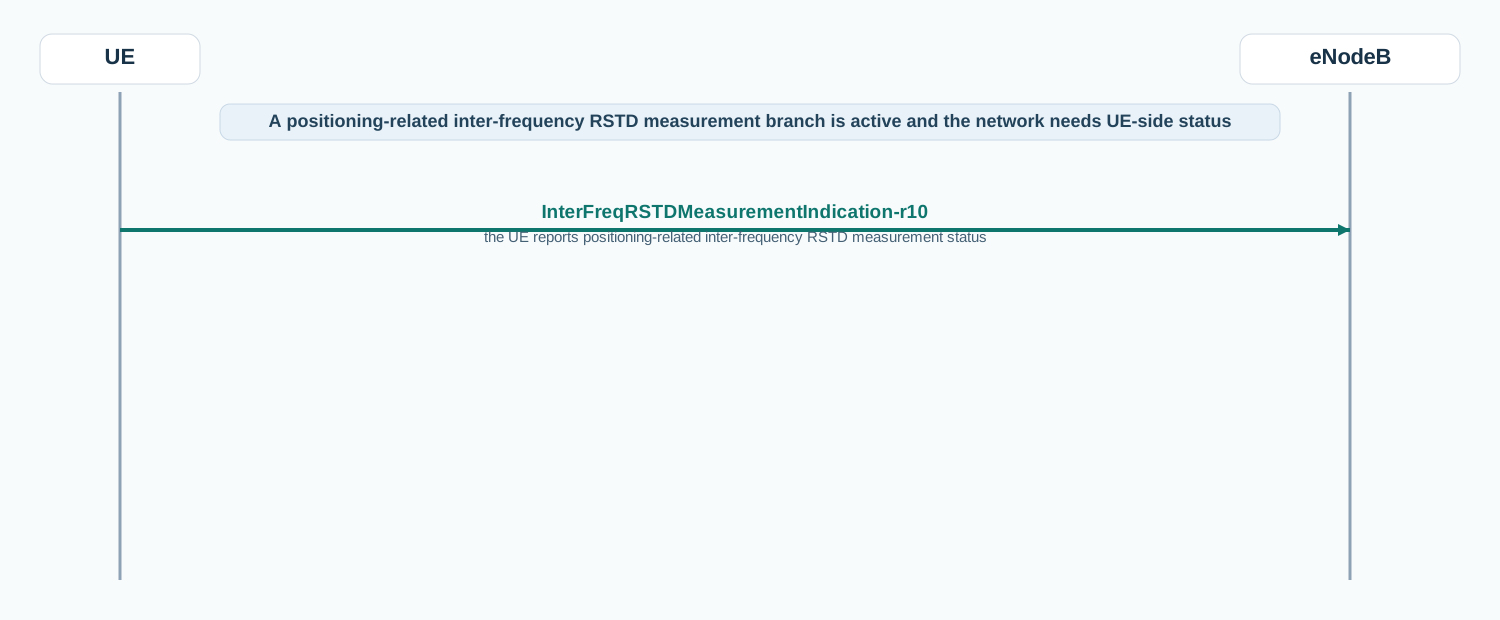
Call flow position: UE indication sent during a positioning-related measurement branch.
Typical state: The network is coordinating inter-frequency RSTD handling and needs UE-side status.
Preconditions:
Next likely message: Later positioning or measurement continuation
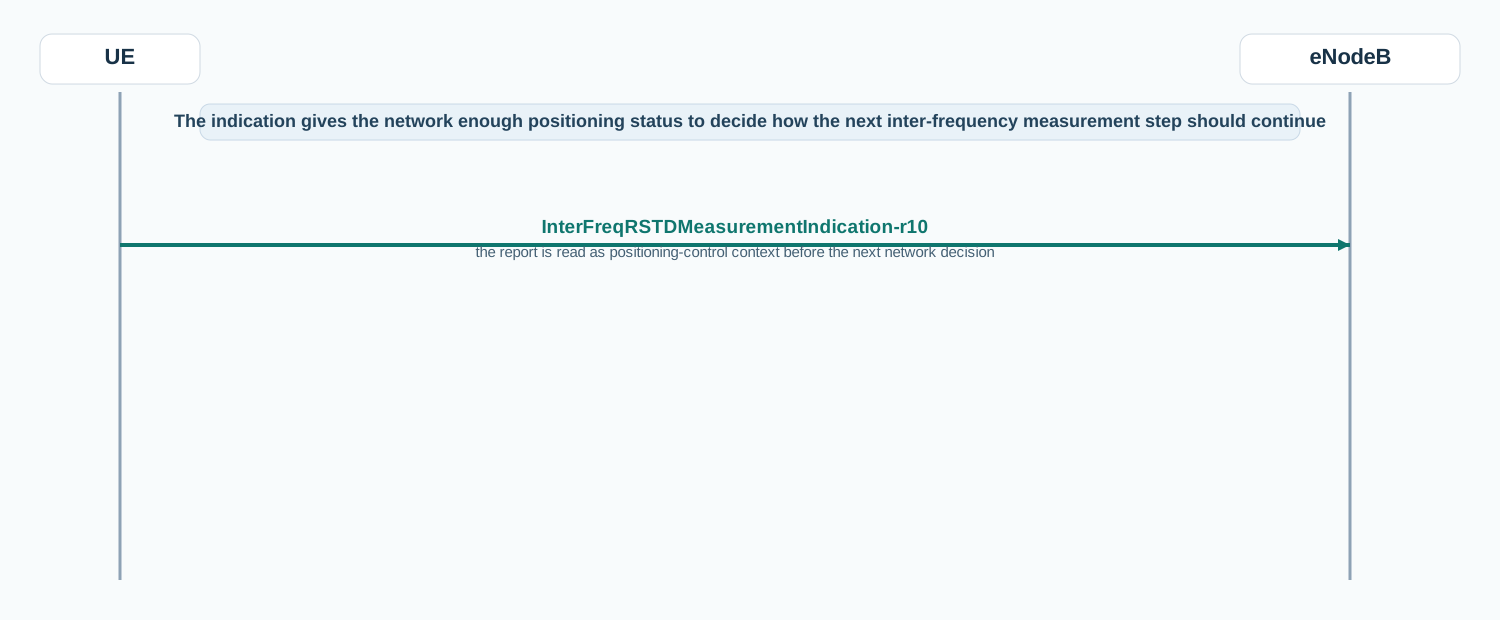
Call flow position: UE-side status update used to continue or adapt the broader positioning branch.
Typical state: The message helps the network interpret whether inter-frequency RSTD measurement can continue as expected.
Preconditions:
Next likely message: Follow-on positioning control
Previous message(s): RRCConnectionReconfiguration
Next message(s): Positioning-related continuation, Later measurement handling
Security context: Sent as protected connected-mode signaling.
InterFreqRSTDMeasurementIndication-r10 ::= SEQUENCE {
  criticalExtensions CHOICE {
    c1 CHOICE {
      interFreqRSTDMeasurementIndication-r10 InterFreqRSTDMeasurementIndication-r10-IEs,
      spare3 NULL,
      spare2 NULL,
      spare1 NULL
    },
    criticalExtensionsFuture SEQUENCE {}
  }
}
The message is best read in a positioning context rather than a general LTE mobility context.
UL-DCCH-Message
  message c1 : interFreqRSTDMeasurementIndication-r10 : {
    criticalExtensions c1 : interFreqRSTDMeasurementIndication-r10 : {
      purpose-r10 positioning
    }
  }
| IE | Required | Description |
|---|---|---|
criticalExtensions | Yes | Carries the InterFreqRSTDMeasurementIndication-r10 branch. |
purpose-r10 | Optional | Indicates the positioning-related purpose or measurement status of the message. |
criticalExtensionsCarries the InterFreqRSTDMeasurementIndication-r10 branch.
Presence: Required
In practice: In practice, compare this field with the original request and with any later release-dependent optional fields so you can see whether the network accepted the same service model the UE asked for.
purpose-r10Indicates the positioning-related purpose or measurement status of the message.
Presence: Optional
In practice: In practice, compare this field with the original request and with any later release-dependent optional fields so you can see whether the network accepted the same service model the UE asked for.
Likely cause: The network may be waiting for or misreading inter-frequency RSTD measurement indication context.
What to inspect: Check whether the indication appears and how it lines up with the surrounding positioning branch.
Next step: Treat the issue as positioning-measurement control rather than ordinary handover reporting.
It is an uplink LTE RRC indication used in inter-frequency RSTD positioning-related measurement handling.
Decode this message with the 3GPP Decoder, inspect the related message database, or open the matching call flow to see where this signaling step fits in the full procedure.