Telecom engineering reference for protocols, messages, call flows, troubleshooting, releases, and tools.
Menu
LTE RRCLTEeNodeB -> UE3GPP TS 36.331
LTE RRC System Information
Broadcast LTE RRC message on BCCH and DL-SCH that carries one or more SIBs such as SIB2 and later system-information blocks after the UE has already read MIB and SIB1.
Message Fact Sheet
Protocol
lte-rrc
Network
lte
Spec
3GPP TS 36.331
Spec Section
5.2.1, 5.2.2.4, 5.2.2.8, 6.2.2
Direction
eNodeB -> UE
Message Type
Broadcast System Information
Full message name
LTE RRC System Information
Protocol
LTE-RRC
Technology
LTE
Direction
eNodeB -> UE
Interface
Uu
Signaling bearer / channel
Broadcast system information transport / BCCH mapped to DL-SCH
Typical trigger
The UE reads SystemInformation when SIB1 scheduling indicates the required SIBs are present, during initial acquisition, after cell reselection, after system information change notification, or whenever stored broadcast information is no longer valid.
Main purpose
Carries the scheduled SIB content the UE needs for common radio configuration, mobility, idle behavior, warning handling, and other broadcast LTE functions beyond the MIB and SIB1 entry point.
Main specification
3GPP TS 36.331, 5.2.1, 5.2.2.4, 5.2.2.8, 6.2.2
Release added
Release 8
Procedures where used
System Information Acquisition, Initial Access, Idle-mode Camping, System Information Change Notification, Paging Preparation
What is LTE RRC System Information in simple terms?
Broadcast LTE RRC message on BCCH and DL-SCH that carries one or more SIBs such as SIB2 and later system-information blocks after the UE has already read MIB and SIB1.
Carries the scheduled SIB content the UE needs for common radio configuration, mobility, idle behavior, warning handling, and other broadcast LTE functions beyond the MIB and SIB1 entry point.
Why this message matters
SystemInformation is the LTE broadcast message that carries the real SIB set the UE needs after MIB and SIB1.
Where this message appears in the call flow
LTE system information acquisition
Call flow position: Scheduled broadcast container read after MIB and SIB1 when the UE needs the remaining required SIBs.
Typical state: UE is building the wider broadcast view of the serving cell before or during idle behavior and before later dedicated access signaling.
Preconditions:
MIB and SIB1 have already been read successfully.
SIB1 scheduling indicates that the required SIBs are present.
Next likely message: RRCConnectionRequest or idle-mode continuation using the acquired SIB content
LTE initial access
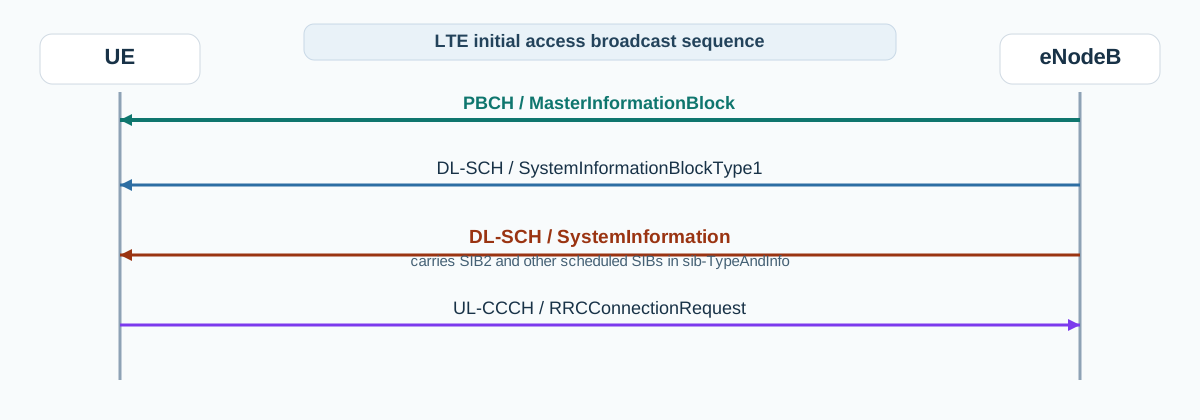
In LTE initial access, SystemInformation is the scheduled broadcast container that carries SIB2 and later SIBs after MIB and SIB1, before the UE can rely on the full access context.
Call flow position: Broadcast follow-on step where the UE reads SIB2 and any other required SIBs before normal connection establishment can proceed.
Typical state: UE is still in the broadcast-acquisition part of access and has not yet moved into dedicated SRB signaling.
Preconditions:
The UE already has the MIB and SIB1 context for the cell.
The serving cell schedules the required SystemInformation content.
Next likely message: RRCConnectionRequest
System information change handling
Call flow position: Reacquisition step entered when paging or validity logic tells the UE that the stored broadcast context changed.
Typical state: UE is refreshing the relevant SIB content before relying on the cell's idle, access, paging, or mobility assumptions again.
Preconditions:
The UE already has stored broadcast context for the cell.
A system-information change indication or validity trigger requires refresh.
Next likely message: Idle continuation or later access using refreshed system information
Domain: Access-side radio control for broadcast cell context beyond the BCH and SIB1 entry layer
Signaling bearer: Broadcast system information transport
Logical channel: BCCH mapped to DL-SCH
Transport / encapsulation: SystemInformation carried on BCCH and transmitted on DL-SCH according to SIB1 scheduling
Security context: Broadcast message with no dedicated SRB or AS security. The UE reads it using the scheduling and validity rules already learned from SIB1.
Message Structure Overview
SystemInformation is a broadcast container message rather than a single-purpose dedicated control step.
Its practical meaning comes from which SIBs are included in sib-TypeAndInfo and why the UE needed them at that point.
In real traces, the most common first read is whether the message carries SIB2 for common radio behavior, then whether later SIBs explain mobility, inter-frequency reselection, warnings, or feature-specific context.
This page uses the Release 18 TS 36.331 V18.3.1 ASN.1 for the regular LTE SystemInformation message. In practice, the outer wrapper matters less than which entries appear inside sib-TypeAndInfo.
The first practical question is which SIBs are present in sib-TypeAndInfo, not just whether the SystemInformation wrapper exists.
SIB2 is often the most important early block because it provides common radio configuration needed for access assumptions.
Later SIBs explain idle mobility, inter-frequency behavior, warning handling, or release-specific features depending on the cell.
Important Information Elements
IE
Required
Description
criticalExtensions
Yes
Versioned wrapper that carries the SystemInformation payload for regular LTE or future extension branches.
sib-TypeAndInfo
Yes
List of one or more included SIBs such as SIB2, SIB3, SIB4, SIB5, and later broadcast blocks scheduled for this SI message.
nonCriticalExtension
Optional
Future-extension branch used by later releases through the criticalExtensions structure.
Detailed field explanation
criticalExtensions
Versioned wrapper that carries the SystemInformation payload for regular LTE or future extension branches.
Presence: Required
In practice: In practice, compare this field with the original request and with any later release-dependent optional fields so you can see whether the network accepted the same service model the UE asked for.
sib-TypeAndInfo
List of one or more included SIBs such as SIB2, SIB3, SIB4, SIB5, and later broadcast blocks scheduled for this SI message.
Presence: Required
In practice: In practice, compare this field with the original request and with any later release-dependent optional fields so you can see whether the network accepted the same service model the UE asked for.
nonCriticalExtension
Future-extension branch used by later releases through the criticalExtensions structure.
Presence: Optional
In practice: In practice, compare this field with the original request and with any later release-dependent optional fields so you can see whether the network accepted the same service model the UE asked for.
What to check in logs and traces
Confirm MIB and SIB1 were acquired before interpreting the SystemInformation message.
Check which SIBs are present in sib-TypeAndInfo.
Verify that the required SIBs for the active scenario are actually scheduled and acquired.
If the UE behaves differently after a change indication, compare the old and new SystemInformation content.
Move from the wrapper into the individual SIB payloads instead of diagnosing from the container name alone.
Common Issues and Troubleshooting
The UE reads MIB and SIB1 but still cannot continue normal LTE access.
Likely cause: The required later SystemInformation content such as SIB2 may be missing, not scheduled as expected, or not decoded reliably.
What to inspect: Check SIB1 scheduling, SystemInformation delivery timing, and whether the needed SIBs are present in sib-TypeAndInfo.
Next step: Validate the required SIB set before debugging later RRCConnectionRequest or access behavior.
Idle behavior or reselection looks wrong even though the cell can be camped.
Likely cause: The relevant mobility or idle-mode SIBs inside SystemInformation may differ from expectations.
What to inspect: Check which later SIBs are carried, especially the ones that govern common radio, reselection, or inter-frequency behavior.
Next step: Compare the serving cell's SystemInformation content with a working cell or an earlier trace.
The UE refreshes broadcast information after paging or a change indication.
Likely cause: systemInfoModification or validity logic triggered reacquisition of the scheduled SystemInformation content.
What to inspect: Check the paging indication, current SIB1 scheduling, and what changed inside the reacquired SystemInformation message.
Next step: Treat the issue as a broadcast refresh path, not just a paging decode problem.
LTE / 5G / Variant Comparison
Compared with MasterInformationBlock
MasterInformationBlock is the BCH entry anchor. SystemInformation is the later BCCH-on-DL-SCH container that carries the scheduled SIB set after the UE already has MIB and SIB1 context.
Compared with SystemInformationBlockType1
SIB1 gives identity, access, and scheduling context. SystemInformation carries the scheduled later SIBs such as SIB2 and mobility-related broadcast content.
Compared with Paging
Paging may tell the UE that broadcast information changed. SystemInformation is the message family the UE then reacquires to refresh the actual SIB content.
FAQ
What is SystemInformation in LTE?
It is the LTE RRC broadcast message that carries one or more scheduled SIBs after the UE has already read MIB and SIB1.
What is inside LTE SystemInformation?
Its main payload is sib-TypeAndInfo, which contains one or more SIBs such as SIB2, SIB3, SIB4, and other release-dependent system-information blocks.
What comes after SystemInformation in LTE initial access?
Once the UE has the required broadcast information such as SIB2 and the needed later SIBs, it can continue normal access and send RRCConnectionRequest.
What should I inspect first in LTE SystemInformation?
Start with which SIBs are present in sib-TypeAndInfo and whether they match the active scenario or problem under investigation.
Decode this message with the 3GPP Decoder, inspect the related message database, or open the matching call flow to see where this signaling step fits in the full procedure.