Telecom engineering reference for protocols, messages, call flows, troubleshooting, releases, and tools.
Menu
LTE RRCLTEeNodeB -> UE3GPP TS 36.331
LTE RRC SIB1 - System Information Block Type 1
Broadcast LTE RRC message on BCCH and DL-SCH that gives the UE the essential access identity, cell selection, scheduling, and change-detection context needed before it can use the wider SIB set.
Message Fact Sheet
Protocol
lte-rrc
Network
lte
Spec
3GPP TS 36.331
Spec Section
5.2.2.3, 5.2.2.4, 5.2.2.8, 6.2.2
Direction
eNodeB -> UE
Message Type
Broadcast System Information
Full message name
LTE RRC SIB1 - System Information Block Type 1
Protocol
LTE-RRC
Technology
LTE
Direction
eNodeB -> UE
Interface
Uu
Signaling bearer / channel
Broadcast system information transport / BCCH mapped to DL-SCH
Typical trigger
The UE reads SystemInformationBlockType1 after MIB when selecting or reselecting a cell, after return from out of coverage, during initial access preparation, and when system information change handling requires a refreshed SIB1 view.
Main purpose
Provides the main broadcast control anchor after MIB by telling the UE whether the cell can be accessed, which PLMN and TAC it belongs to, how other system information is scheduled, and how change detection should be tracked.
Main specification
3GPP TS 36.331, 5.2.2.3, 5.2.2.4, 5.2.2.8, 6.2.2
Release added
Release 8
Procedures where used
System Information Acquisition, Initial Access, Idle-mode Camping, System Information Change Notification, Paging Preparation
What is System Information Block Type 1 in simple terms?
Broadcast LTE RRC message on BCCH and DL-SCH that gives the UE the essential access identity, cell selection, scheduling, and change-detection context needed before it can use the wider SIB set.
Provides the main broadcast control anchor after MIB by telling the UE whether the cell can be accessed, which PLMN and TAC it belongs to, how other system information is scheduled, and how change detection should be tracked.
Why this message matters
SIB1 is the LTE broadcast block that tells the UE whether the cell can be accessed and how to find the rest of the system information.
Where this message appears in the call flow
LTE system information acquisition
Call flow position: Second essential broadcast step after MIB and before the UE can interpret the wider system-information set.
Typical state: UE is building the access and identity view of the cell and does not yet have the full scheduled SIB context.
Preconditions:
The UE has already decoded MIB.
The cell is scheduling SIB1 normally.
Next likely message: SystemInformation carrying SIB2 and later required SIBs
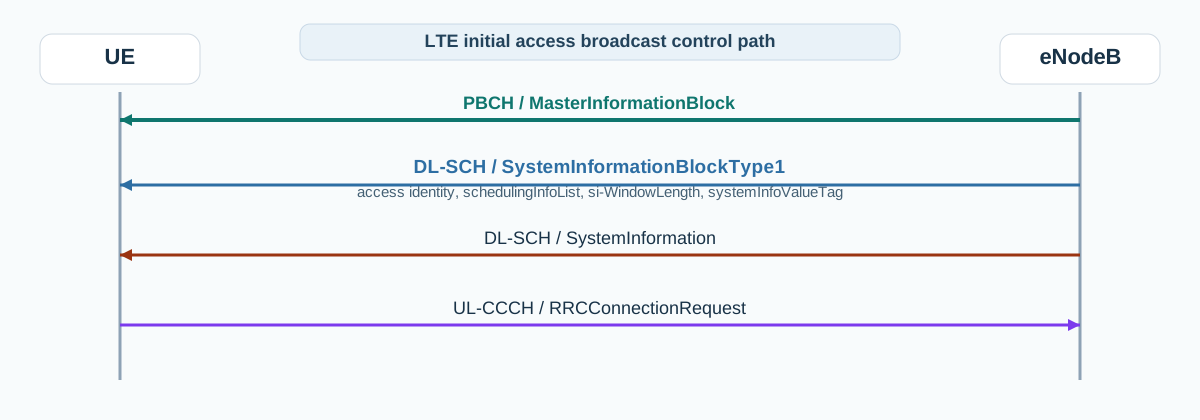
LTE initial access
In LTE initial access, System Information Block Type 1 is the broadcast checkpoint that turns MIB into a usable access and scheduling view before the UE can read later system information and send RRCConnectionRequest.
Call flow position: Main broadcast checkpoint where the UE learns whether the cell is accessible and how to find the rest of system information before connection establishment.
Typical state: UE is still on the broadcast side of access preparation and has not yet entered dedicated SRB signaling.
Preconditions:
MIB was acquired successfully.
The UE can decode BCCH on DL-SCH.
Next likely message: SystemInformation then RRCConnectionRequest
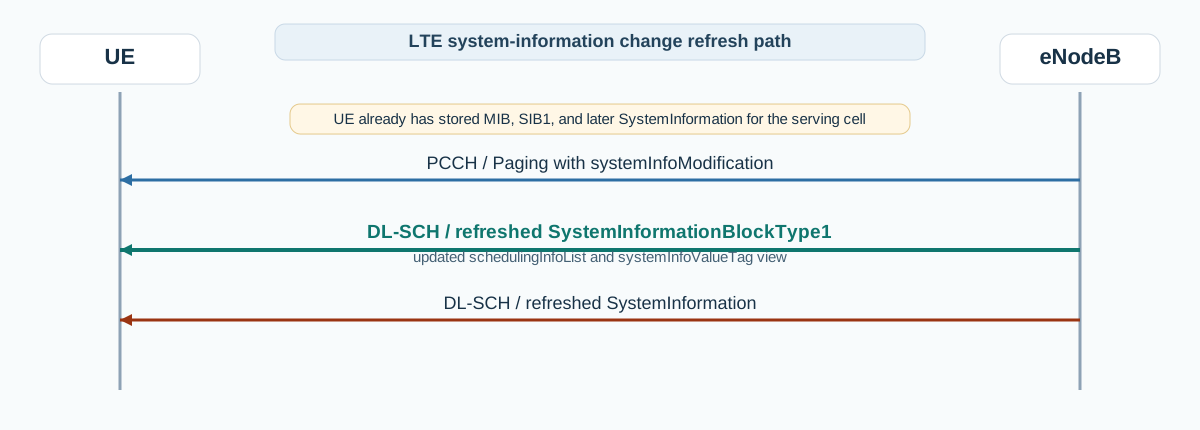
System information change handling
When the network signals a system-information change, the UE refreshes SIB1 first so it can trust the updated scheduling and systemInfoValueTag view before reacquiring later SystemInformation.
Call flow position: Refresh step where the UE reacquires SIB1 to update scheduling, access assumptions, and the systemInfoValueTag view before trusting the cell context again.
Typical state: UE already has stored broadcast context but must refresh it because the network indicated that system information changed.
Preconditions:
Paging or validity logic signaled system-information change.
The UE can reacquire the broadcast DL-SCH content.
Next likely message: Refreshed SystemInformation for the scheduled later SIBs
Domain: Access-side radio control for cell access evaluation, idle behavior, and scheduling of later broadcast information
Signaling bearer: Broadcast system information transport
Logical channel: BCCH mapped to DL-SCH
Transport / encapsulation: SystemInformationBlockType1 carried on BCCH and transmitted on DL-SCH using the fixed SIB1 schedule
Security context: Broadcast message with no dedicated SRB or AS security. It is read before normal LTE access can continue and before the UE relies on later SIB scheduling.
Message Structure Overview
SystemInformationBlockType1 is the practical pivot of LTE broadcast reading because it turns the MIB anchor into a usable access and scheduling view.
The two highest-value reading areas are access identity and barring in cellAccessRelatedInfo, and later-SI scheduling in schedulingInfoList together with systemInfoValueTag.
Many LTE idle, paging, and access problems are really SIB1 interpretation problems even when the later symptom appears elsewhere.
ASN.1 for LTE RRC SIB1 - System Information Block Type 1
This page uses the classic Release 18 SIB1 reading model from TS 36.331, centered on the still-operationally important top-level fields that drive access evaluation and later SI scheduling. Later-release extensions exist through the extension chain, but most everyday LTE troubleshooting still starts with cellAccessRelatedInfo, schedulingInfoList, and systemInfoValueTag.
LTE RRC SIB1 - System Information Block Type 1 - Example Dump
Start by checking whether the cell is actually accessible: PLMN, TAC, cellBarred, and intraFreqReselection shape the first decision path.
systemInfoValueTag is one of the most useful fields when validating whether later SI changed.
schedulingInfoList tells you where to look next for the later SIBs rather than leaving SystemInformation acquisition to guesswork.
Important Information Elements
IE
Required
Description
cellAccessRelatedInfo
Yes
PLMN identity, TAC, cell identity, barred-state, reselection permission, and related access identity information for the cell.
cellSelectionInfo
Yes
Cell-selection threshold information such as q-RxLevMin and related offsets used in access and camping decisions.
p-Max
Optional
Optional maximum UE transmit power constraint for the cell.
freqBandIndicator
Yes
Operating frequency-band indicator used as part of the LTE cell interpretation.
schedulingInfoList
Yes
Scheduling map that tells the UE how later SystemInformation messages and their SIB payloads are organized.
si-WindowLength
Yes
Scheduling window length for acquiring later system information.
systemInfoValueTag
Yes
Change-detection tag that helps the UE know when the later system information set has changed.
nonCriticalExtension
Optional
Release-extension branch used for later additions such as unified access control and newer feature-specific fields.
Detailed field explanation
cellAccessRelatedInfo
PLMN identity, TAC, cell identity, barred-state, reselection permission, and related access identity information for the cell.
Presence: Required
In practice: In practice, compare this field with the original request and with any later release-dependent optional fields so you can see whether the network accepted the same service model the UE asked for.
cellSelectionInfo
Cell-selection threshold information such as q-RxLevMin and related offsets used in access and camping decisions.
Presence: Required
In practice: In practice, compare this field with the original request and with any later release-dependent optional fields so you can see whether the network accepted the same service model the UE asked for.
p-Max
Optional maximum UE transmit power constraint for the cell.
Presence: Optional
In practice: In practice, compare this field with the original request and with any later release-dependent optional fields so you can see whether the network accepted the same service model the UE asked for.
freqBandIndicator
Operating frequency-band indicator used as part of the LTE cell interpretation.
Presence: Required
In practice: In practice, compare this field with the original request and with any later release-dependent optional fields so you can see whether the network accepted the same service model the UE asked for.
schedulingInfoList
Scheduling map that tells the UE how later SystemInformation messages and their SIB payloads are organized.
Presence: Required
In practice: In practice, compare this field with the original request and with any later release-dependent optional fields so you can see whether the network accepted the same service model the UE asked for.
si-WindowLength
Scheduling window length for acquiring later system information.
Presence: Required
In practice: In practice, compare this field with the original request and with any later release-dependent optional fields so you can see whether the network accepted the same service model the UE asked for.
systemInfoValueTag
Change-detection tag that helps the UE know when the later system information set has changed.
Presence: Required
In practice: In practice, compare this field with the original request and with any later release-dependent optional fields so you can see whether the network accepted the same service model the UE asked for.
nonCriticalExtension
Release-extension branch used for later additions such as unified access control and newer feature-specific fields.
Presence: Optional
In practice: In practice, compare this field with the original request and with any later release-dependent optional fields so you can see whether the network accepted the same service model the UE asked for.
What to check in logs and traces
Confirm MIB was already decoded before reading SIB1.
Check PLMN, TAC, cell identity, and barred-state assumptions in cellAccessRelatedInfo.
Verify cellSelectionInfo and any p-Max constraint if access or camping behavior looks unusual.
Inspect schedulingInfoList and si-WindowLength to understand how later SIBs should be acquired.
Compare systemInfoValueTag across traces when validating system-information change handling.
Common Issues and Troubleshooting
The UE can read MIB but still cannot continue normal access.
Likely cause: SIB1 may show the cell as barred, expose unexpected PLMN or TAC context, or fail to provide the expected scheduling for later system information.
What to inspect: Check cellAccessRelatedInfo, schedulingInfoList, si-WindowLength, and whether the required later SIBs are really reachable.
Next step: Treat SIB1 as the main access-gating broadcast checkpoint before debugging later dedicated signaling.
Paging or idle behavior works differently across cells.
Likely cause: The SIB1 view of TAC, PLMN, cell selection, or SI change-detection context may differ even if the later dedicated behavior looks similar.
What to inspect: Compare the SIB1 fields and systemInfoValueTag handling between the working and failing cells.
Next step: Validate the broadcast identity and scheduling assumptions before moving deeper into paging or reselection analysis.
The UE reacquires broadcast information after a change indication.
Likely cause: SIB1 and its systemInfoValueTag changed, so the UE is refreshing the scheduled later SIB set.
What to inspect: Check the refreshed SIB1 first, then compare the later SystemInformation content against the earlier version.
Next step: Use SIB1 as the bridge between the change indication and the reacquired later SIBs.
LTE / 5G / Variant Comparison
Compared with MasterInformationBlock
MasterInformationBlock gives the minimal BCH anchor. System Information Block Type 1 gives the real access identity, cell-selection, and later-SI scheduling model.
Compared with SystemInformation
SIB1 tells the UE how to find and validate the later system information. SystemInformation is the later container that actually carries SIB2 and the rest of the scheduled SIB set.
Compared with Paging
Paging may signal that system information changed, but SIB1 is the block that lets the UE interpret the refreshed scheduling and systemInfoValueTag state.
FAQ
What is System Information Block Type 1 in LTE?
It is the LTE RRC broadcast block that tells the UE whether the cell can be accessed and how the later system information is scheduled.
What is the difference between SIB1 and SystemInformation in LTE?
SIB1 gives access identity, scheduling, and change-detection context. SystemInformation carries the later scheduled SIBs such as SIB2 and mobility-related blocks.
Why is SIB1 important in LTE troubleshooting?
Because many access, paging, and idle-behavior problems are really caused by the SIB1 view of PLMN, TAC, barred-state, scheduling, or systemInfoValueTag.
What should I inspect first in LTE SIB1?
Start with cellAccessRelatedInfo, schedulingInfoList, si-WindowLength, and systemInfoValueTag.
Decode this message with the 3GPP Decoder, inspect the related message database, or open the matching call flow to see where this signaling step fits in the full procedure.