Telecom engineering reference for protocols, messages, call flows, troubleshooting, releases, and tools.
Menu
LTE RRCLTEeNodeB -> UE3GPP TS 36.331
LTE RRC SIB13 - System Information Block Type 13
Broadcast LTE RRC system information block carried inside System Information that provides MBMS and MBSFN area information used before MCCH reception.
Message Fact Sheet
Protocol
lte-rrc
Network
lte
Spec
3GPP TS 36.331
Spec Section
5.2.2, 5.2.4, 6.2.2
Direction
eNodeB -> UE
Message Type
Broadcast System Information
Full message name
LTE RRC SIB13 - System Information Block Type 13
Protocol
LTE-RRC
Technology
LTE
Direction
eNodeB -> UE
Interface
Uu
Signaling bearer / channel
Broadcast system information transport / BCCH mapped to DL-SCH
Typical trigger
The UE reads System Information carrying SIB13 when MBMS service support is relevant, during MBMS service discovery, MBMS monitoring preparation, system-information refresh, or other MBSFN-area analysis.
Main purpose
Provides the MBSFN area identity and notification configuration the UE needs before it can follow MBMS control signaling and receive MBMS services.
Main specification
3GPP TS 36.331, 5.2.2, 5.2.4, 6.2.2
Release added
Release 9
Procedures where used
System Information Acquisition, MBMS Service Discovery, MBMS Monitoring Preparation, Broadcast-Service Area Evaluation, System Information Change Notification
What is System Information Block Type 13 in simple terms?
Broadcast LTE RRC system information block carried inside System Information that provides MBMS and MBSFN area information used before MCCH reception.
Provides the MBSFN area identity and notification configuration the UE needs before it can follow MBMS control signaling and receive MBMS services.
Why this message matters
SIB13 is the LTE broadcast block that tells the UE which MBMS area context exists before MCCH reception.
Where this message appears in the call flow
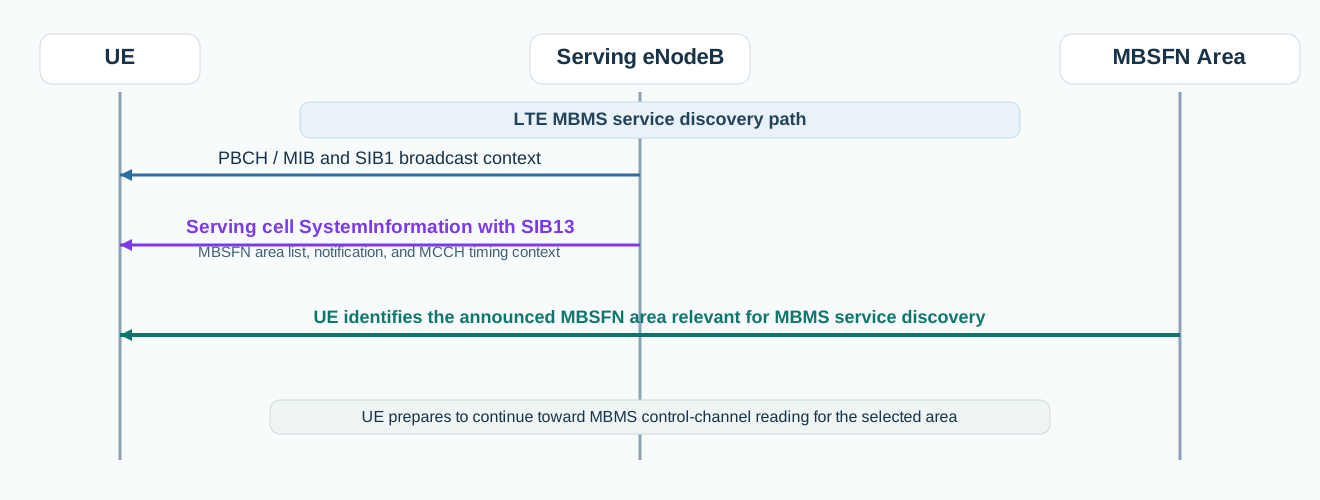
LTE MBMS service discovery
In LTE MBMS service discovery, System Information Block Type 13 gives the UE the MBSFN area context needed before any later MBMS control-channel reading.
Call flow position: Broadcast preparation step used after the UE already has the basic LTE system-information context and now needs MBMS area information.
Typical state: UE is camped on LTE and is checking whether the cell provides MBMS service context relevant to the requested service.
Preconditions:
MIB and the relevant LTE system-information scheduling context have already been acquired.
System Information containing SIB13 is present and decodable.
Next likely message: MCCH monitoring for the selected MBSFN area
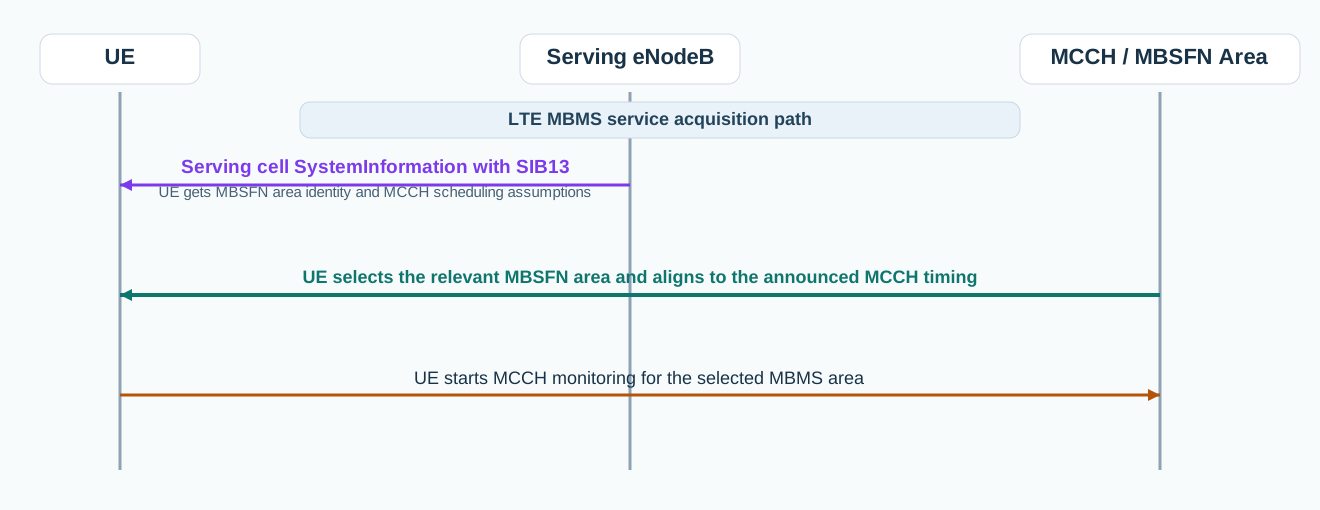
LTE MBMS service acquisition
In LTE MBMS service acquisition, the UE uses SIB13 to identify the relevant MBSFN area and then continues toward MCCH monitoring.
Call flow position: MBMS setup step where the UE uses the SIB13 area context before moving to MBMS control-channel reading.
Typical state: UE is preparing to receive MBMS service information for an announced MBSFN area.
Preconditions:
The UE has identified that MBMS service in the cell is relevant.
SIB13 has been acquired successfully.
Next likely message: MCCH monitoring and MBMS control information acquisition
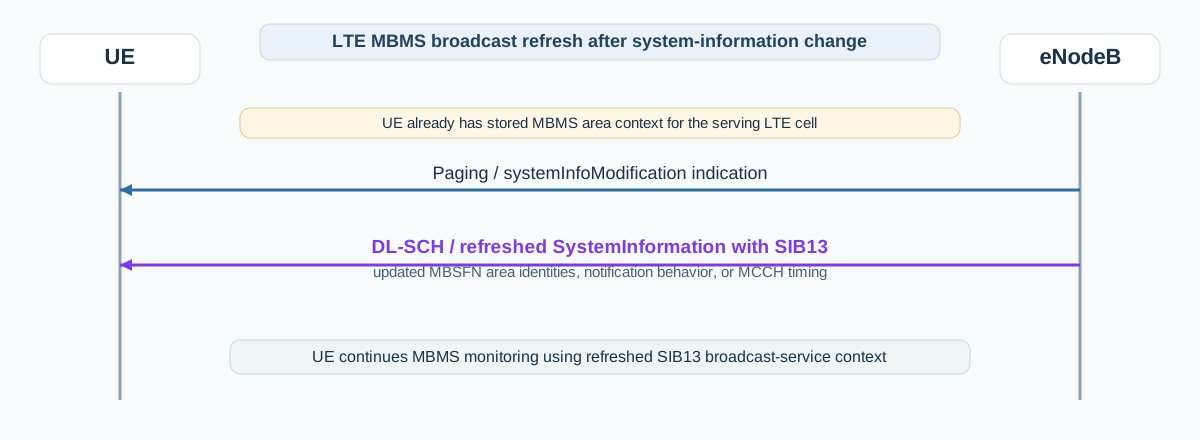
System information change handling
When system information changes, the UE refreshes SIB13 so that later MBMS monitoring follows the updated MBSFN area and MCCH assumptions.
Call flow position: Refresh step where the UE reacquires SIB13 because MBMS area or notification assumptions may have changed.
Typical state: UE must refresh stored MBMS broadcast assumptions before continuing to rely on them.
Preconditions:
A system-information refresh was triggered.
Refreshed LTE system-information scheduling context is available.
Next likely message: Continued MBMS monitoring using refreshed SIB13 data
Next message(s): MCCH monitoring for the selected MBSFN area, Idle continuation without MBMS reception, MBMS service acquisition using the announced area context
Message direction and transport
Sender and receiver: eNodeB -> UE
Interface: Uu
Domain: Access-side radio control for LTE MBMS broadcast-service preparation
Signaling bearer: Broadcast system information transport
Logical channel: BCCH mapped to DL-SCH
Transport / encapsulation: System Information carried on BCCH and transmitted on DL-SCH with SIB13 included in sib-TypeAndInfo
Security context: Broadcast message with no dedicated SRB or AS security. The UE reads it after the LTE broadcast context and before MBMS control-channel use.
Message Structure Overview
System Information Block Type 13 extends LTE broadcast reading into MBMS and MBSFN service preparation.
Its practical meaning comes from which MBSFN areas are advertised and how the UE should interpret MBMS notification behavior before reading MCCH.
In troubleshooting, SIB13 is most useful when the question is whether the cell announced the MBMS area and control context needed for later MBMS reception.
ASN.1 for LTE RRC SIB13 - System Information Block Type 13
This page focuses on the stable SIB13 reading model used in practice: which MBSFN areas are advertised, whether notification is enabled, and what MCCH scheduling context follows.
LTE RRC SIB13 - System Information Block Type 13 - Example Dump
The first useful question is whether the cell actually advertises SIB13 and which MBSFN areas appear in the list.
If MBMS reception did not progress, verify that the announced area and MCCH timing assumptions match the observed behavior.
If MBMS behavior changed after a refresh, compare the old and new MBSFN area data before assuming a receiver issue.
Important Information Elements
IE
Required
Description
mbsfn-AreaInfoList
Yes
List of MBSFN area descriptions advertised by the cell for MBMS operation.
notificationConfig
Optional
MBMS notification configuration used when the cell supports notification behavior for MBMS.
lateNonCriticalExtension
Optional
Late extension branch for later release additions.
nonCriticalExtension
Optional
Release-extension branch used for newer MBMS additions.
Detailed field explanation
mbsfn-AreaInfoList
List of MBSFN area descriptions advertised by the cell for MBMS operation.
Presence: Required
In practice: In practice, compare this field with the original request and with any later release-dependent optional fields so you can see whether the network accepted the same service model the UE asked for.
notificationConfig
MBMS notification configuration used when the cell supports notification behavior for MBMS.
Presence: Optional
In practice: In practice, compare this field with the original request and with any later release-dependent optional fields so you can see whether the network accepted the same service model the UE asked for.
lateNonCriticalExtension
Late extension branch for later release additions.
Presence: Optional
In practice: In practice, compare this field with the original request and with any later release-dependent optional fields so you can see whether the network accepted the same service model the UE asked for.
nonCriticalExtension
Release-extension branch used for newer MBMS additions.
Presence: Optional
In practice: In practice, compare this field with the original request and with any later release-dependent optional fields so you can see whether the network accepted the same service model the UE asked for.
What to check in logs and traces
Confirm MIB, SIB1, and the relevant System Information scheduling context were acquired before interpreting SIB13.
Check whether SIB13 is present in the relevant System Information message.
Inspect the MBSFN area identities and confirm the expected MBMS area is actually announced.
Decode this message with the 3GPP Decoder, inspect the related message database, or open the matching call flow to see where this signaling step fits in the full procedure.