Telecom engineering reference for protocols, messages, call flows, troubleshooting, releases, and tools.
Menu
LTE RRCLTEeNodeB -> UE3GPP TS 36.331
LTE RRC SIB2 - System Information Block Type 2
Broadcast LTE RRC system information block carried inside System Information that gives the UE the common radio, access barring, timer, and uplink-related context needed before normal LTE access can proceed.
Message Fact Sheet
Protocol
lte-rrc
Network
lte
Spec
3GPP TS 36.331
Spec Section
5.2.2, 5.2.2.8, 6.2.2
Direction
eNodeB -> UE
Message Type
Broadcast System Information
Full message name
LTE RRC SIB2 - System Information Block Type 2
Protocol
LTE-RRC
Technology
LTE
Direction
eNodeB -> UE
Interface
Uu
Signaling bearer / channel
Broadcast system information transport / BCCH mapped to DL-SCH
Typical trigger
The UE reads System Information carrying SIB2 after MIB and SIB1 during cell selection, reselection, return from out of coverage, system-information refresh, or any other case where valid common radio configuration is needed.
Main purpose
Provides the common shared-channel and access-side radio configuration the UE needs for initial access, camping, barring interpretation, uplink timing alignment behavior, and later common-channel assumptions.
Main specification
3GPP TS 36.331, 5.2.2, 5.2.2.8, 6.2.2
Release added
Release 8
Procedures where used
System Information Acquisition, Initial Access, Random Access Preparation, Idle-mode Camping, System Information Change Notification
What is System Information Block Type 2 in simple terms?
Broadcast LTE RRC system information block carried inside System Information that gives the UE the common radio, access barring, timer, and uplink-related context needed before normal LTE access can proceed.
Provides the common shared-channel and access-side radio configuration the UE needs for initial access, camping, barring interpretation, uplink timing alignment behavior, and later common-channel assumptions.
Why this message matters
SIB2 is the LTE broadcast block that gives the UE the common radio and access settings it needs before normal LTE access can really work.
Where this message appears in the call flow
LTE system information acquisition
Call flow position: First later system-information payload normally needed after MIB and SIB1 so the UE can use the cell's common radio model correctly.
Typical state: UE has the basic broadcast identity and scheduling context from SIB1 but still needs the common radio details that enable normal access and idle interpretation.
Preconditions:
MIB and SIB1 have already been read.
System Information containing SIB2 is scheduled and decodable.
Next likely message: Random Access Preamble or idle continuation using the acquired common configuration
LTE initial access
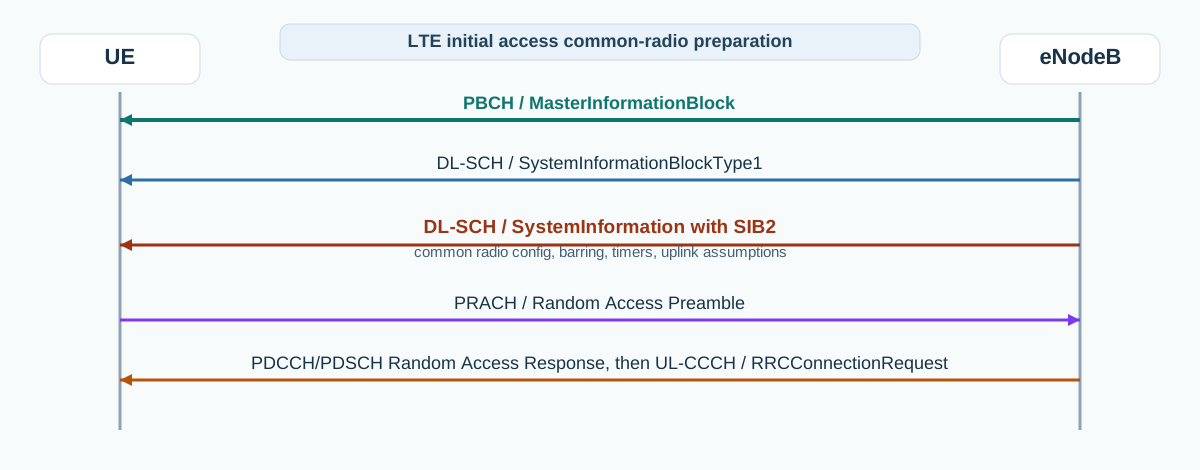
In LTE initial access, System Information Block Type 2 is the common-radio payload inside System Information that prepares the UE for random access and later RRCConnectionRequest.
Call flow position: Broadcast preparation step where the UE acquires the common channel, barring, and timer information needed before random access and connection establishment.
Typical state: UE is still in the broadcast-acquisition side of access and has not yet entered dedicated LTE RRC signaling.
Preconditions:
SIB1 schedulingInfoList leads the UE to the relevant System Information.
The UE needs valid common radio configuration for access.
Next likely message: Random Access Preamble, Random Access Response, then RRCConnectionRequest
System information change handling
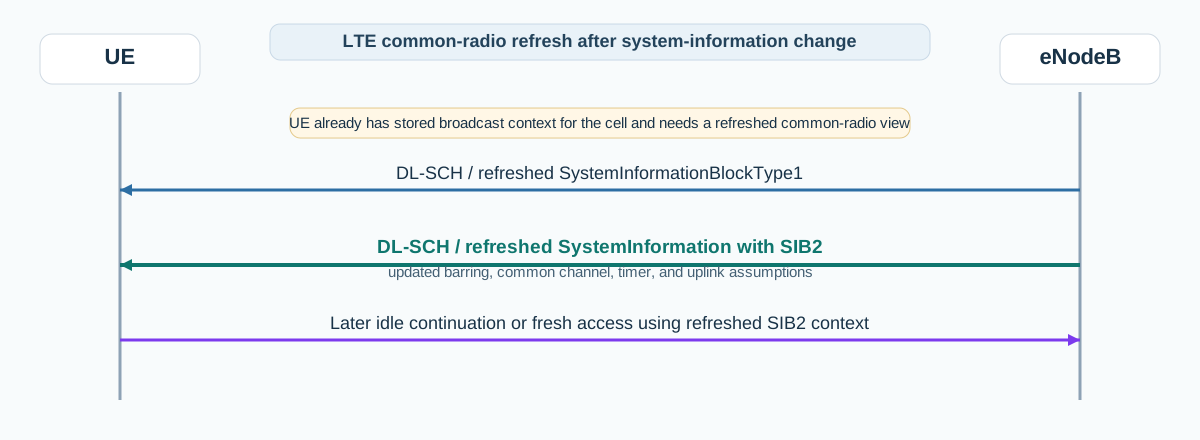
When system information changes, the UE refreshes SIB1 and then reacquires SIB2 so the common radio and barring assumptions are updated before later idle or access behavior continues.
Call flow position: Refreshed later-SI step where the UE reacquires SIB2 after a system-information change notification or validity-based refresh.
Typical state: UE already knows the cell but must refresh its common radio assumptions before relying on them again.
Preconditions:
A system-information refresh was triggered.
MIB and refreshed SIB1 have already been reacquired as needed.
Next likely message: Idle continuation or later access using the refreshed common radio context
Domain: Access-side radio control for common-channel configuration and access preparation
Signaling bearer: Broadcast system information transport
Logical channel: BCCH mapped to DL-SCH
Transport / encapsulation: System Information carried on BCCH and transmitted on DL-SCH with SIB2 included in sib-TypeAndInfo
Security context: Broadcast message with no dedicated SRB or AS security. The UE reads it after MIB and SIB1 and uses it before dedicated LTE RRC signaling exists.
Message Structure Overview
System Information Block Type 2 is the first common-radio payload most readers inspect after SIB1.
Its practical meaning is not identity or scheduling, but whether the UE now has the common channel, barring, timer, and uplink assumptions needed to use the cell correctly.
In troubleshooting, the highest-value areas are usually ac-BarringInfo, radioResourceConfigCommon, ue-TimersAndConstants, and timeAlignmentTimerCommon.
ASN.1 for LTE RRC SIB2 - System Information Block Type 2
This page uses the classic Release 18 SIB2 reading model from TS 36.331. The operationally important top-level view is still access barring, common radio resource configuration, UE timers/constants, frequency information, and timeAlignmentTimerCommon.
LTE RRC SIB2 - System Information Block Type 2 - Example Dump
The real first question is whether SIB2 is present inside System Information and whether the UE can use it, not just whether the outer container was decoded.
If access behaves oddly, compare ac-BarringInfo and radioResourceConfigCommon before blaming later dedicated signaling.
timeAlignmentTimerCommon is especially useful when uplink continuity or timing-related behavior looks inconsistent.
Important Information Elements
IE
Required
Description
ac-BarringInfo
Optional
Access barring configuration that can limit mobile-originated or special access attempts under defined conditions.
radioResourceConfigCommon
Yes
Common radio configuration for uplink and downlink behavior including common channel and random access related settings.
ue-TimersAndConstants
Yes
Core LTE timers and constants used by the UE for connection establishment, re-establishment, and related control behavior.
freqInfo
Yes
Frequency-related common parameters including uplink frequency information and additional spectrum handling context where applicable.
timeAlignmentTimerCommon
Yes
Common timer controlling how long uplink timing alignment is considered valid.
additionalSpectrumEmission
Yes
Additional spectrum emission requirement for the serving cell.
mbsfn-SubframeConfigList
Optional
Optional MBMS-related subframe configuration where relevant.
nonCriticalExtension
Optional
Release-extension branch for later additions such as enhanced barring and service-specific controls.
Detailed field explanation
ac-BarringInfo
Access barring configuration that can limit mobile-originated or special access attempts under defined conditions.
Presence: Optional
In practice: In practice, compare this field with the original request and with any later release-dependent optional fields so you can see whether the network accepted the same service model the UE asked for.
radioResourceConfigCommon
Common radio configuration for uplink and downlink behavior including common channel and random access related settings.
Presence: Required
In practice: In practice, compare this field with the original request and with any later release-dependent optional fields so you can see whether the network accepted the same service model the UE asked for.
ue-TimersAndConstants
Core LTE timers and constants used by the UE for connection establishment, re-establishment, and related control behavior.
Presence: Required
In practice: In practice, compare this field with the original request and with any later release-dependent optional fields so you can see whether the network accepted the same service model the UE asked for.
freqInfo
Frequency-related common parameters including uplink frequency information and additional spectrum handling context where applicable.
Presence: Required
In practice: In practice, compare this field with the original request and with any later release-dependent optional fields so you can see whether the network accepted the same service model the UE asked for.
timeAlignmentTimerCommon
Common timer controlling how long uplink timing alignment is considered valid.
Presence: Required
In practice: In practice, compare this field with the original request and with any later release-dependent optional fields so you can see whether the network accepted the same service model the UE asked for.
additionalSpectrumEmission
Additional spectrum emission requirement for the serving cell.
Presence: Required
In practice: In practice, compare this field with the original request and with any later release-dependent optional fields so you can see whether the network accepted the same service model the UE asked for.
mbsfn-SubframeConfigList
Optional MBMS-related subframe configuration where relevant.
Presence: Optional
In practice: In practice, compare this field with the original request and with any later release-dependent optional fields so you can see whether the network accepted the same service model the UE asked for.
nonCriticalExtension
Release-extension branch for later additions such as enhanced barring and service-specific controls.
Presence: Optional
In practice: In practice, compare this field with the original request and with any later release-dependent optional fields so you can see whether the network accepted the same service model the UE asked for.
What to check in logs and traces
Confirm MIB and SIB1 were acquired before reading SIB2.
Check whether SIB2 is present in the first relevant System Information message.
Inspect ac-BarringInfo if access attempts are unexpectedly delayed or blocked.
Inspect radioResourceConfigCommon and freqInfo before debugging random access or uplink assumptions.
Check ue-TimersAndConstants and timeAlignmentTimerCommon when setup or continuity behavior differs across cells.
Common Issues and Troubleshooting
The UE can read MIB and SIB1 but still cannot start normal access correctly.
Likely cause: SIB2 may be missing, delayed, barred, or carrying common radio settings that do not match the expected access scenario.
What to inspect: Check whether SIB2 is present, then inspect ac-BarringInfo, radioResourceConfigCommon, freqInfo, and ue-TimersAndConstants.
Next step: Validate the common radio and barring model before debugging RRCConnectionRequest or later dedicated messages.
Access works on one cell but not another even though both look reachable.
Likely cause: The cells may differ in common radio setup, barring policy, timer configuration, or uplink timing assumptions carried in SIB2.
What to inspect: Compare SIB2 side by side, especially barring, random access related common config, timers, and timeAlignmentTimerCommon.
Next step: Treat the issue as a broadcast common-configuration mismatch until proven otherwise.
The UE refreshes broadcast context after a system-information change.
Likely cause: The refreshed System Information may contain an updated SIB2 that changes access or common-channel behavior.
What to inspect: Compare the old and new SIB2 values rather than looking only at the change indication.
Next step: Check whether the refreshed common radio model explains the new UE behavior.
LTE / 5G / Variant Comparison
Compared with System Information Block Type 1
SIB1 tells the UE how to access the cell and where later system information is scheduled. SIB2 gives the common radio and barring details the UE then actually uses.
Compared with System Information
System Information is the container message. System Information Block Type 2 is one of the most important payloads inside it, especially for common radio and access behavior.
Compared with RRCConnectionRequest
SIB2 is still broadcast preparation before dedicated signaling exists. RRCConnectionRequest comes later, after the UE has the required common broadcast context.
FAQ
What is System Information Block Type 2 in LTE?
It is the LTE broadcast block that gives the UE common radio, access barring, timer, and uplink-related configuration after MIB and SIB1.
Why is LTE SIB2 important?
Because it often explains whether access is barred and whether the UE has the common channel and timer settings needed for random access and normal LTE behavior.
What should I inspect first in LTE SIB2?
Start with ac-BarringInfo, radioResourceConfigCommon, ue-TimersAndConstants, freqInfo, and timeAlignmentTimerCommon.
What comes after SIB2 in LTE initial access?
After the UE has the required common broadcast context, it can continue the random access path and then send RRCConnectionRequest.
Decode this message with the 3GPP Decoder, inspect the related message database, or open the matching call flow to see where this signaling step fits in the full procedure.