Telecom engineering reference for protocols, messages, call flows, troubleshooting, releases, and tools.
Menu
LTE RRCLTEeNodeB -> UE3GPP TS 36.331
LTE RRC SIB5 - System Information Block Type 5
Broadcast LTE RRC system information block carried inside System Information that provides inter-frequency reselection information for other LTE carrier frequencies in idle mode.
Message Fact Sheet
Protocol
lte-rrc
Network
lte
Spec
3GPP TS 36.331
Spec Section
5.2.2, 5.2.4, 6.2.2
Direction
eNodeB -> UE
Message Type
Broadcast System Information
Full message name
LTE RRC SIB5 - System Information Block Type 5
Protocol
LTE-RRC
Technology
LTE
Direction
eNodeB -> UE
Interface
Uu
Signaling bearer / channel
Broadcast system information transport / BCCH mapped to DL-SCH
Typical trigger
The UE reads System Information carrying SIB5 when idle mobility may involve another LTE carrier frequency, during initial camping, inter-frequency reselection evaluation, system-information refresh, or other idle-mode mobility analysis across LTE carriers.
Main purpose
Provides the other-E-UTRA-frequency priorities, thresholds, and neighbor-frequency detail the UE needs when deciding whether to leave the serving LTE carrier and camp on a different LTE frequency.
Main specification
3GPP TS 36.331, 5.2.2, 5.2.4, 6.2.2
Release added
Release 8
Procedures where used
System Information Acquisition, Idle-mode Camping, Cell Reselection, Inter-frequency Mobility Evaluation, System Information Change Notification
What is System Information Block Type 5 in simple terms?
Broadcast LTE RRC system information block carried inside System Information that provides inter-frequency reselection information for other LTE carrier frequencies in idle mode.
Provides the other-E-UTRA-frequency priorities, thresholds, and neighbor-frequency detail the UE needs when deciding whether to leave the serving LTE carrier and camp on a different LTE frequency.
Why this message matters
SIB5 is the LTE broadcast block that tells an idle UE how to judge other LTE frequencies for reselection.
Where this message appears in the call flow
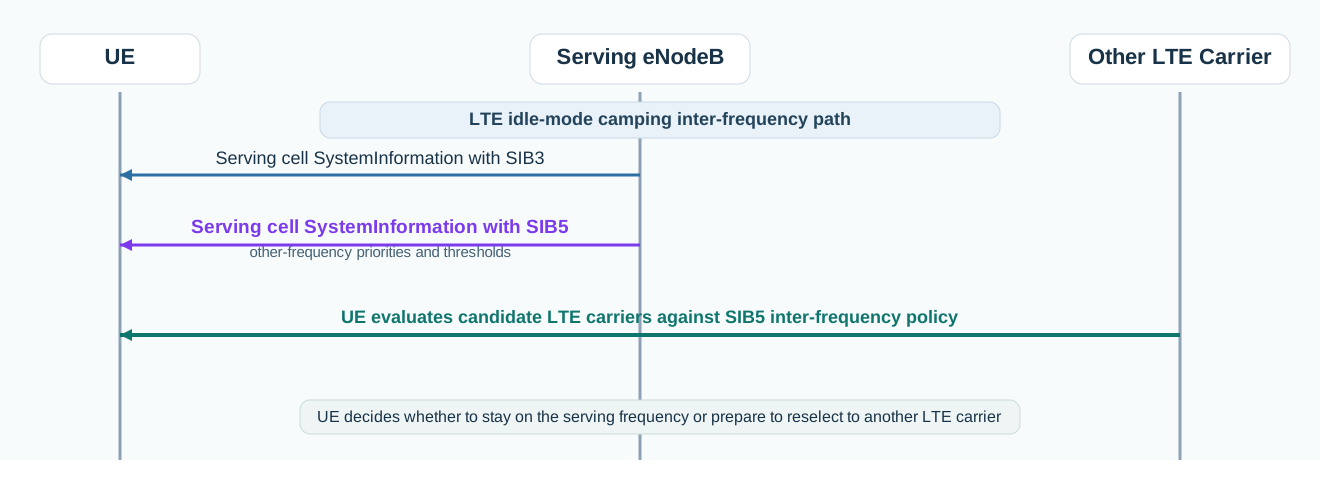
LTE idle-mode camping
In LTE idle-mode camping, System Information Block Type 5 gives the UE the inter-frequency mobility view it needs when considering other LTE carriers beyond the serving frequency.
Call flow position: Inter-frequency mobility preparation step used after the UE already has the serving-frequency context and now needs other-LTE-frequency reselection information.
Typical state: UE is camped in idle mode and is building the broader LTE mobility view beyond the current serving frequency.
Preconditions:
MIB, SIB1, SIB2, and SIB3 have already been acquired.
System Information containing SIB5 is present and decodable.
Next likely message: Continued camping or inter-frequency candidate ranking
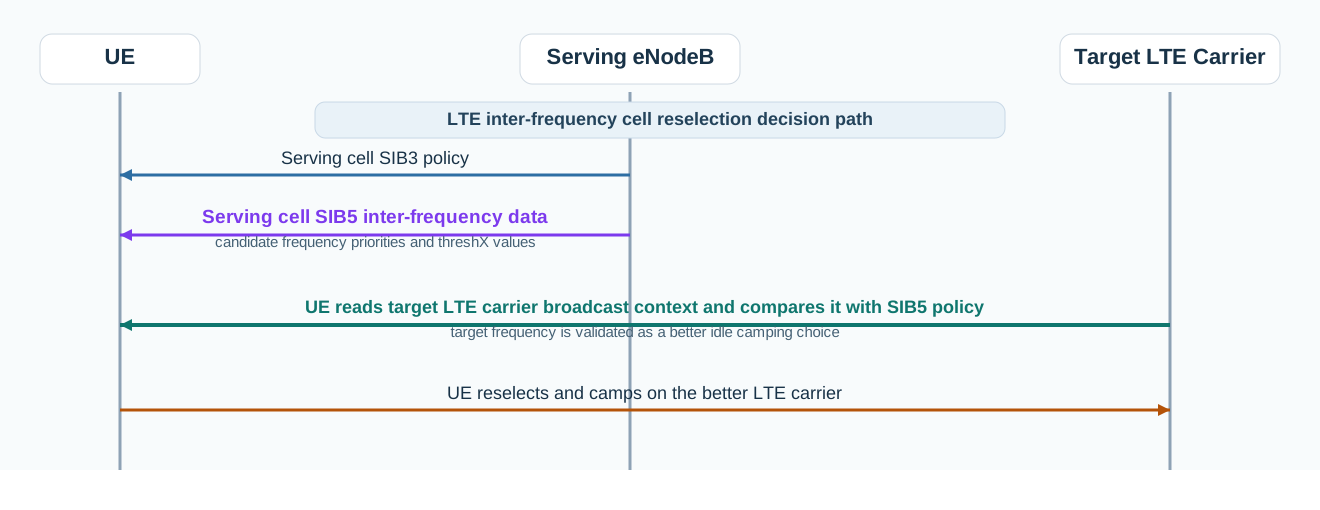
LTE cell reselection
In LTE cell reselection, the UE combines the serving-frequency policy from SIB3 with the inter-frequency carrier data from SIB5 to decide whether to camp on a different LTE frequency.
Call flow position: Inter-frequency candidate-frequency evaluation step where the UE compares the current serving frequency against other LTE carrier frequencies.
Typical state: UE is idle and is deciding whether another LTE frequency offers a better camping choice than the serving carrier.
Preconditions:
The UE is already camped on an LTE serving frequency.
Reselection evaluation has already been triggered.
Next likely message: Stay on the serving frequency or camp on a better LTE frequency
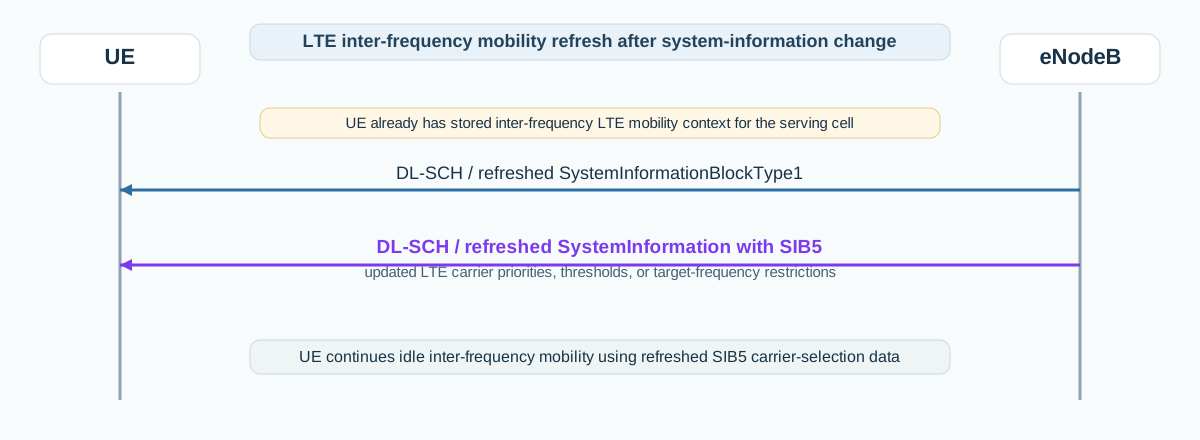
System information change handling
When system information changes, the UE refreshes SIB5 so that inter-frequency mobility decisions follow the updated LTE carrier priorities and thresholds.
Call flow position: Refresh step where the UE reacquires SIB5 because inter-frequency reselection data may have changed.
Typical state: UE must refresh stored other-frequency mobility assumptions before continuing to rely on them.
Preconditions:
A system-information refresh was triggered.
Refreshed SIB1 and the relevant later System Information are available.
Next likely message: Idle mobility continuation using refreshed SIB5 inter-frequency data
Next message(s): Inter-frequency candidate-frequency ranking and reselection decision, Idle continuation on the serving LTE frequency, Camping on a better LTE frequency
Message direction and transport
Sender and receiver: eNodeB -> UE
Interface: Uu
Domain: Access-side radio control for inter-frequency idle mobility and other-LTE-carrier reselection
Signaling bearer: Broadcast system information transport
Logical channel: BCCH mapped to DL-SCH
Transport / encapsulation: System Information carried on BCCH and transmitted on DL-SCH with SIB5 included in sib-TypeAndInfo
Security context: Broadcast message with no dedicated SRB or AS security. The UE reads it after MIB, SIB1, and the earlier serving-frequency broadcast context.
Message Structure Overview
System Information Block Type 5 extends the LTE mobility view away from the current serving frequency toward other LTE carriers.
Its practical meaning comes from which candidate frequencies are advertised, how they are prioritized, and what thresholds or restrictions control movement toward them.
In troubleshooting, SIB5 is most useful when the question is not about a same-frequency neighbor cell, but about why the UE did or did not leave the current LTE carrier for another one.
ASN.1 for LTE RRC SIB5 - System Information Block Type 5
This page focuses on the stable Release 18 SIB5 reading model most often used in practice: which other LTE frequencies are advertised, how they are prioritized, and what thresholds govern movement toward them.
LTE RRC SIB5 - System Information Block Type 5 - Example Dump
The first useful question is which other LTE frequencies are actually advertised to the UE.
If the UE did not leave the serving carrier, compare the candidate frequency priorities and threshX values before blaming measurement quality alone.
If the UE moved to another LTE carrier unexpectedly, SIB5 is one of the highest-value places to compare against a working cell.
Important Information Elements
IE
Required
Description
interFreqCarrierFreqList
Yes
List of other LTE carrier frequencies with their inter-frequency reselection parameters.
carrierFreq
Yes
Specific LTE carrier frequency entry inside the inter-frequency list.
cellReselectionPriority
Optional
Priority used when ranking this other LTE frequency against the serving and other candidate frequencies.
threshX-High / threshX-Low
Optional
Thresholds that govern movement between the serving frequency and this candidate LTE frequency.
q-RxLevMin / p-Max
Optional
Candidate-frequency minimum level and optional maximum UE transmit power assumptions used in reselection evaluation.
interFreqNeighCellList
Optional
Optional list of known neighboring cells on the candidate LTE frequency.
interFreqBlackCellList
Optional
Optional list of blacklisted cells on the candidate LTE frequency.
lateNonCriticalExtension
Optional
Late extension branch for later release additions.
nonCriticalExtension
Optional
Release-extension branch used for newer inter-frequency mobility additions.
Detailed field explanation
interFreqCarrierFreqList
List of other LTE carrier frequencies with their inter-frequency reselection parameters.
Presence: Required
In practice: In practice, compare this field with the original request and with any later release-dependent optional fields so you can see whether the network accepted the same service model the UE asked for.
carrierFreq
Specific LTE carrier frequency entry inside the inter-frequency list.
Presence: Required
In practice: In practice, compare this field with the original request and with any later release-dependent optional fields so you can see whether the network accepted the same service model the UE asked for.
cellReselectionPriority
Priority used when ranking this other LTE frequency against the serving and other candidate frequencies.
Presence: Optional
In practice: In practice, compare this field with the original request and with any later release-dependent optional fields so you can see whether the network accepted the same service model the UE asked for.
threshX-High / threshX-Low
Thresholds that govern movement between the serving frequency and this candidate LTE frequency.
Presence: Optional
In practice: In practice, compare this field with the original request and with any later release-dependent optional fields so you can see whether the network accepted the same service model the UE asked for.
q-RxLevMin / p-Max
Candidate-frequency minimum level and optional maximum UE transmit power assumptions used in reselection evaluation.
Presence: Optional
In practice: In practice, compare this field with the original request and with any later release-dependent optional fields so you can see whether the network accepted the same service model the UE asked for.
interFreqNeighCellList
Optional list of known neighboring cells on the candidate LTE frequency.
Presence: Optional
In practice: In practice, compare this field with the original request and with any later release-dependent optional fields so you can see whether the network accepted the same service model the UE asked for.
interFreqBlackCellList
Optional list of blacklisted cells on the candidate LTE frequency.
Presence: Optional
In practice: In practice, compare this field with the original request and with any later release-dependent optional fields so you can see whether the network accepted the same service model the UE asked for.
lateNonCriticalExtension
Late extension branch for later release additions.
Presence: Optional
In practice: In practice, compare this field with the original request and with any later release-dependent optional fields so you can see whether the network accepted the same service model the UE asked for.
nonCriticalExtension
Release-extension branch used for newer inter-frequency mobility additions.
Presence: Optional
In practice: In practice, compare this field with the original request and with any later release-dependent optional fields so you can see whether the network accepted the same service model the UE asked for.
What to check in logs and traces
Confirm MIB, SIB1, SIB2, and SIB3 were acquired before interpreting SIB5.
Check whether SIB5 is present in the relevant System Information message.
Inspect interFreqCarrierFreqList for candidate frequencies, priorities, and threshX values.
Inspect any interFreqNeighCellList or interFreqBlackCellList when a specific target frequency behaves unexpectedly.
Compare SIB5 against SIB3 when explaining why the UE stayed on the serving frequency or moved to another LTE carrier.
Common Issues and Troubleshooting
The UE stays on the serving LTE frequency even though another carrier looks better.
Likely cause: The SIB5 priorities or threshX values may legitimately favor staying on the serving carrier longer than expected.
What to inspect: Check interFreqCarrierFreqList, cellReselectionPriority, threshX-High, threshX-Low, and compare them with the measured radio conditions.
Next step: Validate the inter-frequency mobility policy before blaming the UE implementation.
The UE reselects to a different LTE carrier earlier than expected.
Likely cause: The candidate frequency may carry higher priority or more favorable reselection thresholds in SIB5.
What to inspect: Compare the serving-frequency view from SIB3 with the candidate-frequency policy in SIB5.
Next step: Use SIB5 as the main explanation path for the inter-frequency jump.
Inter-frequency mobility changed after a system-information refresh.
Likely cause: The refreshed SIB5 may have updated candidate-frequency priorities, thresholds, or blacklists.
What to inspect: Compare the old and new SIB5 content and correlate the changed values with the new mobility outcome.
Next step: Treat it as a broadcast mobility-policy change until proven otherwise.
LTE / 5G / Variant Comparison
Compared with System Information Block Type 3
SIB3 is about the current serving frequency. SIB5 extends the mobility view toward other LTE frequencies.
Decode this message with the 3GPP Decoder, inspect the related message database, or open the matching call flow to see where this signaling step fits in the full procedure.