What is UE Assistance Information r11 in LTE?
It is the uplink LTE RRC message the UE uses to report assistance information that can help the network optimize connected-mode handling.
| Protocol | lte-rrc | Network | lte |
|---|---|---|---|
| Spec | 3GPP TS 36.331 | Spec Section | 5.6, 6.2.2 |
| Direction | UE -> eNodeB | Message Type | UE Assistance / Optimization |
| Full message name | LTE RRC UE Assistance Information r11 |
|---|---|
| Protocol | LTE-RRC |
| Technology | LTE |
| Direction | UE -> eNodeB |
| Interface | Uu |
| Signaling bearer / channel | SRB1 / UL-DCCH |
| Typical trigger | Triggered when the UE needs to provide assistance information relevant to connected-mode handling. |
| Main purpose | Lets the UE report assistance-related context such as power-preference or traffic-handling hints so the eNodeB can adapt later connected-mode behavior. |
| Main specification | 3GPP TS 36.331, 5.6, 6.2.2 |
| Release added | Release 11 |
| Procedures where used | UE assistance reporting, Connected-mode optimization |
Uplink LTE RRC message used by the UE to provide assistance information the network can use for connected-mode optimization decisions.
Lets the UE report assistance-related context such as power-preference or traffic-handling hints so the eNodeB can adapt later connected-mode behavior.
UE Assistance Information r11 is the UE telling the LTE network about assistance-related context that may influence later handling.
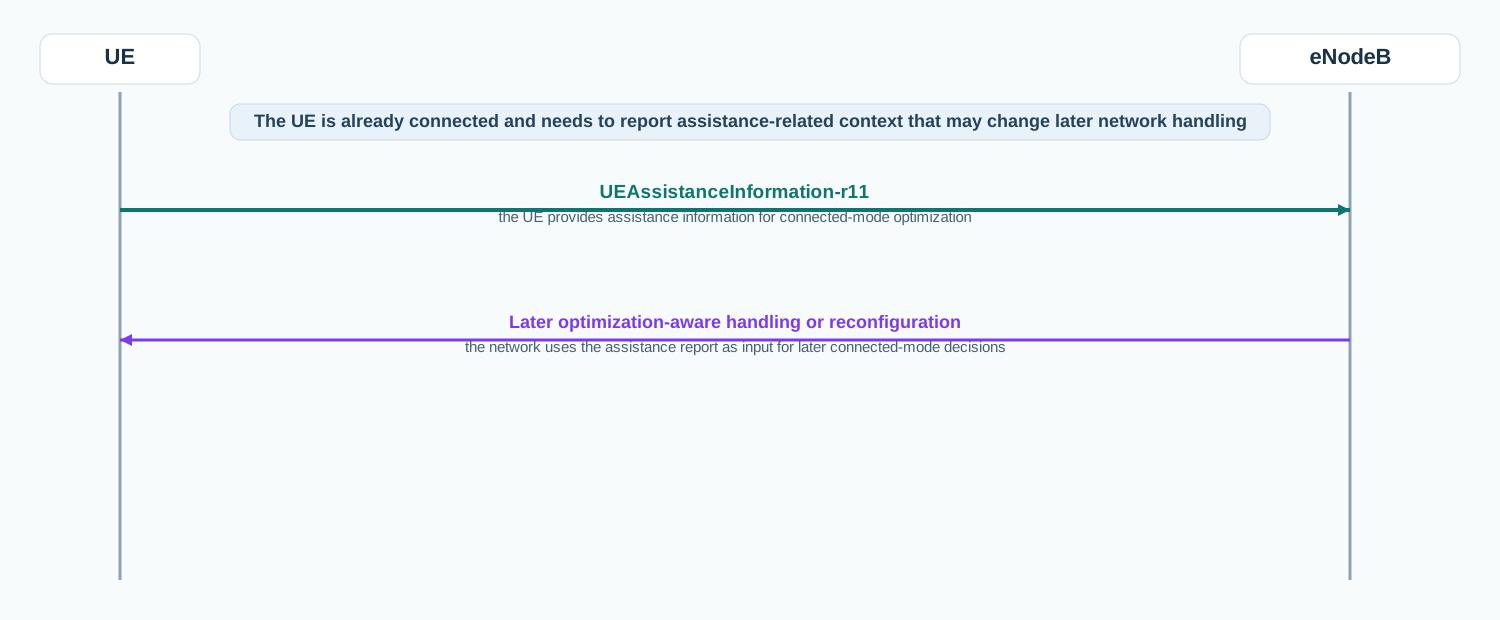
Call flow position: UE-side assistance message sent while the UE is already in connected mode.
Typical state: The network can use the reported assistance information for later scheduling or configuration choices.
Preconditions:
Next likely message: Later RRCConnectionReconfiguration or connected-mode continuation
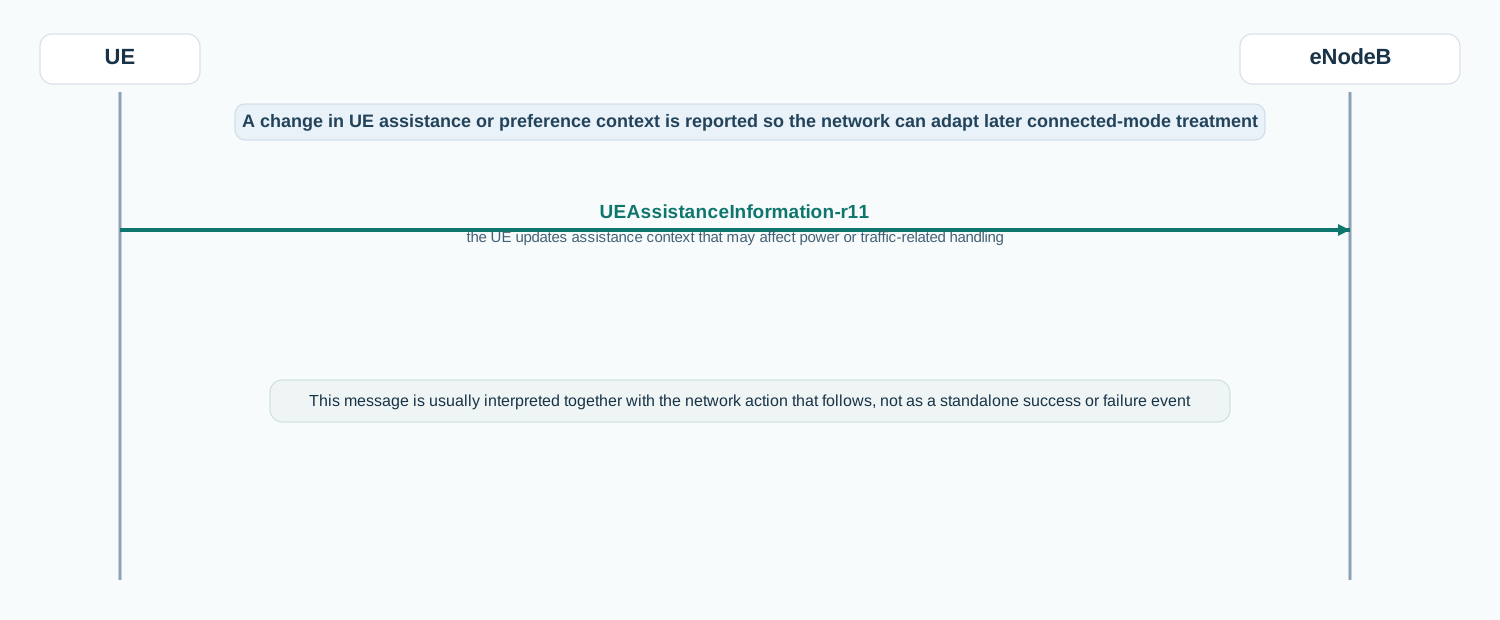
Call flow position: Optimization-oriented report sent when the UE wants the network to take updated assistance context into account.
Typical state: The report itself does not change configuration immediately, but it influences later network-side decisions.
Preconditions:
Next likely message: Network optimization handling
Previous message(s): RRCConnectionReconfiguration, Connected-mode signaling before optimization reporting
Next message(s): Later connected-mode optimization, RRCConnectionReconfiguration
Security context: Sent after LTE AS security activation as protected connected-mode signaling.
UEAssistanceInformation-r11 ::= SEQUENCE {
  criticalExtensions CHOICE {
    c1 CHOICE {
      ueAssistanceInformation-r11 UEAssistanceInformation-r11-IEs,
      spare3 NULL,
      spare2 NULL,
      spare1 NULL
    },
    criticalExtensionsFuture SEQUENCE {}
  }
}
Read this message as a UE-to-network optimization hint rather than a mobility command.
UL-DCCH-Message
  message c1 : ueAssistanceInformation-r11 : {
    criticalExtensions c1 : ueAssistanceInformation-r11 : {
      ue-AssistanceInformation-r11 present
    }
  }
| IE | Required | Description |
|---|---|---|
criticalExtensions | Yes | Carries the release-specific UEAssistanceInformation-r11 branch. |
ue-AssistanceInformation-r11 | Yes | Main information element containing the UE assistance payload. |
criticalExtensionsCarries the release-specific UEAssistanceInformation-r11 branch.
Presence: Required
In practice: In practice, compare this field with the original request and with any later release-dependent optional fields so you can see whether the network accepted the same service model the UE asked for.
ue-AssistanceInformation-r11Main information element containing the UE assistance payload.
Presence: Required
In practice: In practice, compare this field with the original request and with any later release-dependent optional fields so you can see whether the network accepted the same service model the UE asked for.
Likely cause: The UE may not have sent UE Assistance Information r11, or the network may not have used it.
What to inspect: Check the presence and timing of the message and what later connected-mode action followed.
Next step: Compare the report with later reconfiguration or scheduling behavior.
It is the uplink LTE RRC message the UE uses to report assistance information that can help the network optimize connected-mode handling.
Decode this message with the 3GPP Decoder, inspect the related message database, or open the matching call flow to see where this signaling step fits in the full procedure.