Telecom engineering reference for protocols, messages, call flows, troubleshooting, releases, and tools.
Menu
LTE RRCLTEeNodeB -> UE3GPP TS 36.331
LTE RRC UE Information Request r9
Downlink LTE RRC message used by the eNodeB to ask the UE for stored diagnostic information such as random access details or radio link failure context.
Message Fact Sheet
Protocol
lte-rrc
Network
lte
Spec
3GPP TS 36.331
Spec Section
5.6.5, 6.2.2
Direction
eNodeB -> UE
Message Type
Diagnostic Control
Full message name
LTE RRC UE Information Request r9
Protocol
LTE-RRC
Technology
LTE
Direction
eNodeB -> UE
Interface
Uu
Signaling bearer / channel
SRB1 / DL-DCCH
Typical trigger
The network wants UE-side evidence about random access behavior, radio link failure context, or both.
Main purpose
Starts the LTE UE information reporting step so the network can request UE-side diagnostic information and then read the returned report in UEInformationResponse-r9.
Main specification
3GPP TS 36.331, 5.6.5, 6.2.2
Release added
Release 9
Procedures where used
UE information procedure, Radio link failure investigation, Random access investigation
What is LTE RRC UE Information Request r9 in simple terms?
Downlink LTE RRC message used by the eNodeB to ask the UE for stored diagnostic information such as random access details or radio link failure context.
Starts the LTE UE information reporting step so the network can request UE-side diagnostic information and then read the returned report in UEInformationResponse-r9.
Why this message matters
UE Information Request r9 is the LTE network asking the UE to send back stored random access information, radio link failure information, or both.
Where this message appears in the call flow
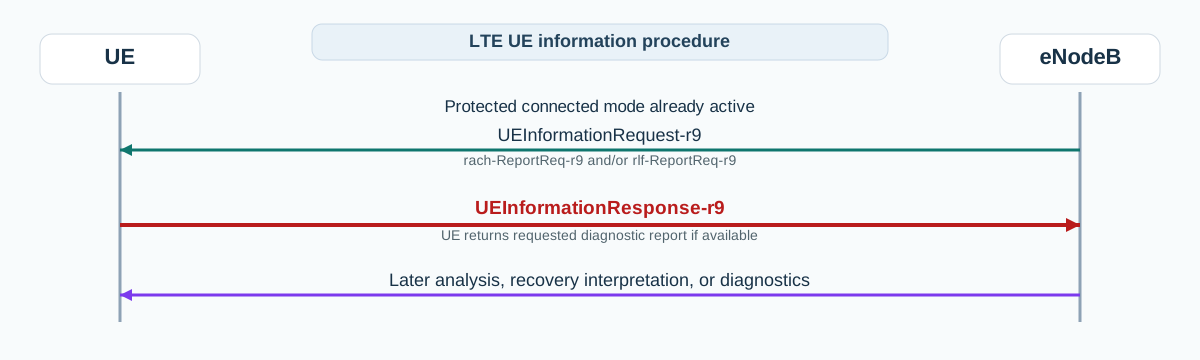
UE information procedure
In the basic LTE UE information procedure, UE Information Request r9 starts the protected diagnostic exchange and the next main step is UEInformationResponse-r9.
Call flow position: Downlink request message that starts the LTE UE information reporting step.
Typical state: UE is in connected mode and can return protected diagnostic information on SRB1.
Preconditions:
AS security activation has already completed successfully.
The network expects the UE to have useful diagnostic information available.
Next likely message: UEInformationResponse-r9
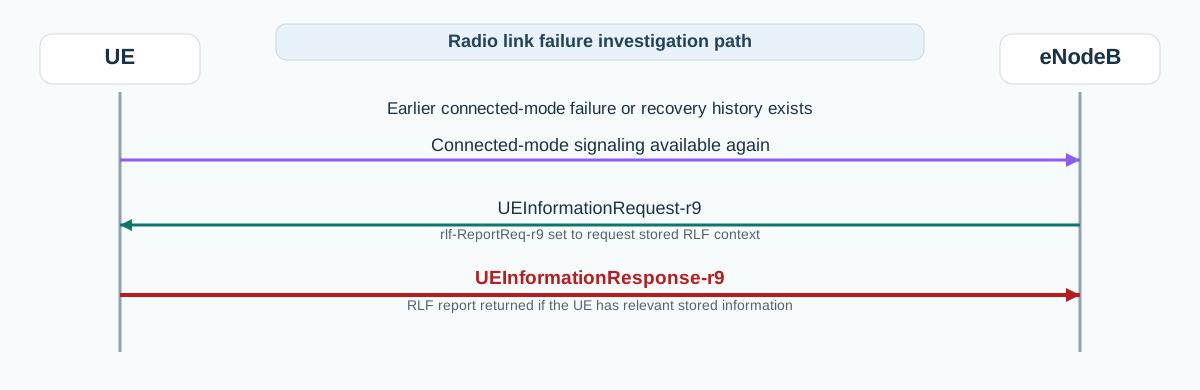
Radio link failure investigation
When the network investigates earlier radio link failure behavior, UE Information Request r9 asks the UE for stored RLF context that is not visible from network-side signaling alone.
Call flow position: Diagnostic request used when the network wants UE-side radio link failure context after recovery or failure analysis begins.
Typical state: The network is investigating an earlier failure path and wants stored UE-side context.
Preconditions:
The UE may have stored RLF information.
Connected-mode signaling is available for the diagnostic exchange.
Next likely message: UEInformationResponse-r9 carrying rlf-Report-r9 if available
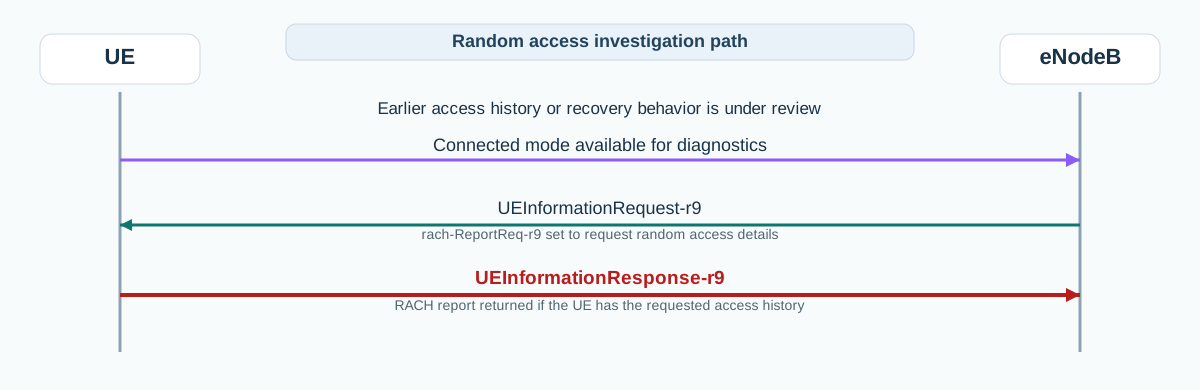
Random access investigation
When the network wants UE-side access history, UE Information Request r9 requests random access details and the response returns the report if the UE has it available.
Call flow position: Diagnostic request used when the network wants details about the last successfully completed random access procedure.
Typical state: The network wants UE-side access history rather than only network-side traces.
Preconditions:
The UE has relevant random access information available.
The diagnostic branch is active in connected mode.
Next likely message: UEInformationResponse-r9 carrying rach-Report-r9 if requested
Call flow position
Previous message(s):SecurityModeComplete, Connected-mode signaling before diagnostics start
The core read is simple: check whether the network requested random access information, radio link failure information, or both, then correlate the request with the later response.
Start with the flag combination because that tells you what the network wants next.
The next useful read is whether UEInformationResponse-r9 follows and what report blocks it returns.
If both flags are false, the request is not operationally meaningful.
Important Information Elements
IE
Required
Description
rrc-TransactionIdentifier
Yes
Transaction identifier used to match the request with the later UEInformationResponse-r9.
rach-ReportReq-r9
Yes
Boolean field showing whether the UE shall return random access information.
rlf-ReportReq-r9
Yes
Boolean field showing whether the UE shall return radio link failure information.
nonCriticalExtension
Optional
Extension branch for later release additions such as logged measurements, connection-establishment failure reporting, and other UE-side information requests.
Detailed field explanation
rrc-TransactionIdentifier
Transaction identifier used to match the request with the later UEInformationResponse-r9.
Presence: Required
In practice: In practice, compare this field with the original request and with any later release-dependent optional fields so you can see whether the network accepted the same service model the UE asked for.
rach-ReportReq-r9
Boolean field showing whether the UE shall return random access information.
Presence: Required
In practice: In practice, compare this field with the original request and with any later release-dependent optional fields so you can see whether the network accepted the same service model the UE asked for.
rlf-ReportReq-r9
Boolean field showing whether the UE shall return radio link failure information.
Presence: Required
In practice: In practice, compare this field with the original request and with any later release-dependent optional fields so you can see whether the network accepted the same service model the UE asked for.
nonCriticalExtension
Extension branch for later release additions such as logged measurements, connection-establishment failure reporting, and other UE-side information requests.
Presence: Optional
In practice: In practice, compare this field with the original request and with any later release-dependent optional fields so you can see whether the network accepted the same service model the UE asked for.
What to check in logs and traces
Confirm the message appears after successful AS security activation.
Check whether rach-ReportReq-r9 is set.
Check whether rlf-ReportReq-r9 is set.
Correlate the transaction identifier with the later UEInformationResponse-r9.
Verify that the requested report type matches the active investigation path.
If the response is missing, keep following the UL-DCCH sequence before treating the request itself as the end of the branch.
Common Issues and Troubleshooting
UE Information Request r9 appears but no UEInformationResponse-r9 follows.
Likely cause: The diagnostic branch may have been interrupted, the trace may be incomplete, or the UE may not have returned the requested information.
What to inspect: Check the transaction identifier, later UL-DCCH activity, and whether the connected diagnostic path continued.
Next step: Keep reading forward in the trace and confirm whether the response was missing or only delayed.
The network requests RLF information but the returned response has little or no useful report data.
Likely cause: The UE may not have stored relevant radio link failure context.
What to inspect: Check whether an actual RLF event existed and whether the later response contains rlf-Report-r9.
Next step: Correlate the request with re-establishment, recovery, or earlier failure history.
The network requests random access information unexpectedly.
Likely cause: The network is investigating an earlier access or recovery path that is not obvious from the current trace position alone.
What to inspect: Check the preceding access, recovery, and re-establishment branches and the returned rach-Report-r9 content.
Next step: Treat the request as a clue about the suspected failure domain and read backward into the earlier access path.
LTE / 5G / Variant Comparison
Compared with UEInformationResponse-r9
UE Information Request r9 asks for the report. UEInformationResponse-r9 carries the actual returned report blocks.
Base Release 9 scope versus later extensions
The base Release 9 message asks for random access and radio link failure information. Later release extensions add more diagnostic request types through the non-critical extension branch.
FAQ
What is UE Information Request r9 in LTE?
It is the downlink LTE RRC message the eNodeB sends when it wants UE-side diagnostic information such as random access details, radio link failure context, or both.
Who sends UE Information Request r9?
The eNodeB sends UE Information Request r9 to the UE.
What comes after UE Information Request r9?
The normal follow-up is UEInformationResponse-r9 from the UE.
Does UE Information Request r9 contain the report itself?
No. It only tells the UE which diagnostic information the network wants returned.
What should I inspect first in a trace?
Start with rach-ReportReq-r9, rlf-ReportReq-r9, the transaction identifier, and whether UEInformationResponse-r9 follows.
Decode this message with the 3GPP Decoder, inspect the related message database, or open the matching call flow to see where this signaling step fits in the full procedure.