What is Bearer Resource Allocation Reject in LTE?
It is the network message that rejects a UE-requested dedicated bearer resource and returns the reason as ESM cause.
| Protocol | nas | Network | lte |
|---|---|---|---|
| Spec | 3GPP TS 24.301 | Spec Section | 6.5.3, 8.3.7 |
| Direction | MME to UE | Message Type | ESM signaling |
| Full message name | LTE Bearer Resource Allocation Reject |
|---|---|
| Protocol | NAS |
| Technology | LTE |
| Direction | MME to UE |
| Interface | N1 over LTE access / S1-MME control path |
| Signaling bearer / channel | NAS signaling / Sent as the reject branch of a bearer resource allocation procedure. |
| Typical trigger | Triggered when the network does not accept the UE-requested dedicated bearer resource. |
| Main purpose | Returns the ESM cause that explains why the requested bearer resource was not allocated. |
| Main specification | 3GPP TS 24.301, 6.5.3, 8.3.7 |
| Release added | Release 8 |
| Procedures where used | Bearer Resource Allocation Procedure |
| Related timers | T3480 |
| Related cause values | ESM cause |
Bearer Resource Allocation Reject is the LTE NAS message the network sends when it refuses the UE's request for a dedicated bearer resource.
Returns the ESM cause that explains why the requested bearer resource was not allocated.
Bearer Resource Allocation Reject means the network refused to allocate the dedicated bearer resource the UE asked for.
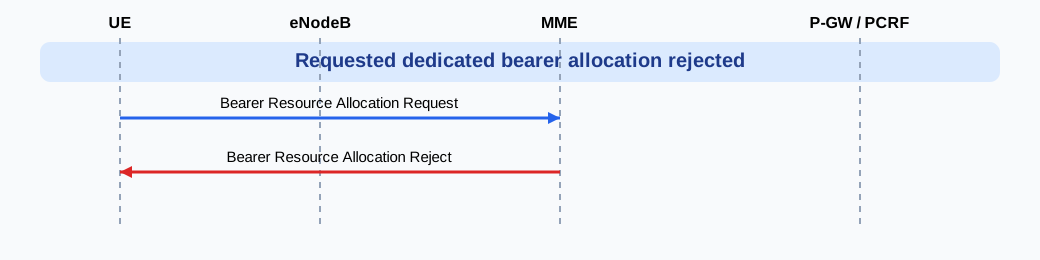
Call flow position: Network reject message used when the UE-requested dedicated bearer cannot be allocated.
Typical state: The default bearer may stay active while the additional resource request fails.
Preconditions:
Next likely message: Later retry or service continuation on existing bearers
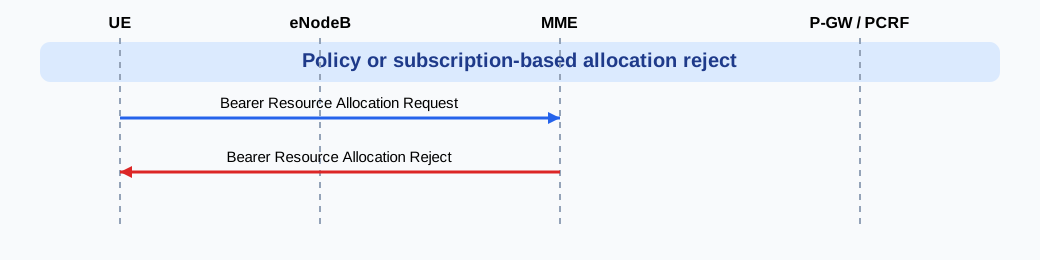
Previous message(s): Bearer Resource Allocation Request
Next message(s): Later retry or service continuation on existing bearers
Security context: Protected by the active NAS security context.
Bearer Resource Allocation Reject
  ESM cause
  Protocol configuration options       OPTIONAL
  Extended protocol configuration options OPTIONAL
Read the ESM cause first because it explains why the dedicated bearer resource was not granted.
Bearer Resource Allocation Reject
  Protocol discriminator: EPS session management
  EPS bearer identity: 0
  Procedure transaction identity: 9
  Message type: Bearer Resource Allocation Reject
  ESM cause: requested service option not subscribed
| IE | Required | Description |
|---|---|---|
ESM cause | Yes | Explains why the network rejected the requested bearer resource allocation. |
Protocol configuration options | Optional | May carry additional configuration-side detail related to the reject. |
ESM causeExplains why the network rejected the requested bearer resource allocation.
Presence: Required
In practice: In practice, compare this field with the original request and with any later release-dependent optional fields so you can see whether the network accepted the same service model the UE asked for.
Protocol configuration optionsMay carry additional configuration-side detail related to the reject.
Presence: Optional
In practice: In practice, compare this field with the original request and with any later release-dependent optional fields so you can see whether the network accepted the same service model the UE asked for.
Likely cause: The dedicated-bearer request may have ended in Bearer Resource Allocation Reject.
What to inspect: Check the requested QoS, traffic flow aggregate, and the returned ESM cause.
Next step: Treat the branch as failed resource allocation before blaming activation signaling.
It is the network message that rejects a UE-requested dedicated bearer resource and returns the reason as ESM cause.
Decode this message with the 3GPP Decoder, inspect the related message database, or open the matching call flow to see where this signaling step fits in the full procedure.