What is Bearer Resource Allocation Request in LTE?
It is the UE message that asks the network to allocate a dedicated bearer resource for an active PDN connection.
| Protocol | nas | Network | lte |
|---|---|---|---|
| Spec | 3GPP TS 24.301 | Spec Section | 6.5.3, 8.3.8 |
| Direction | UE to MME | Message Type | ESM signaling |
| Full message name | LTE Bearer Resource Allocation Request |
|---|---|
| Protocol | NAS |
| Technology | LTE |
| Direction | UE to MME |
| Interface | N1 over LTE access / S1-MME control path |
| Signaling bearer / channel | NAS signaling / Sent after a PDN connection already exists and the UE needs another dedicated bearer resource. |
| Typical trigger | Triggered when the UE needs a new dedicated bearer resource for an active PDN connection. |
| Main purpose | Requests dedicated bearer establishment with traffic-flow and QoS information so the EPC can decide whether to create additional bearer resources. |
| Main specification | 3GPP TS 24.301, 6.5.3, 8.3.8 |
| Release added | Release 8 |
| Procedures where used | Bearer Resource Allocation Procedure |
| Related timers | T3480 |
Bearer Resource Allocation Request is the LTE NAS message the UE sends when it wants the network to allocate a dedicated bearer resource for an active PDN connection.
Requests dedicated bearer establishment with traffic-flow and QoS information so the EPC can decide whether to create additional bearer resources.
Bearer Resource Allocation Request is the UE asking the network for a new dedicated bearer resource.
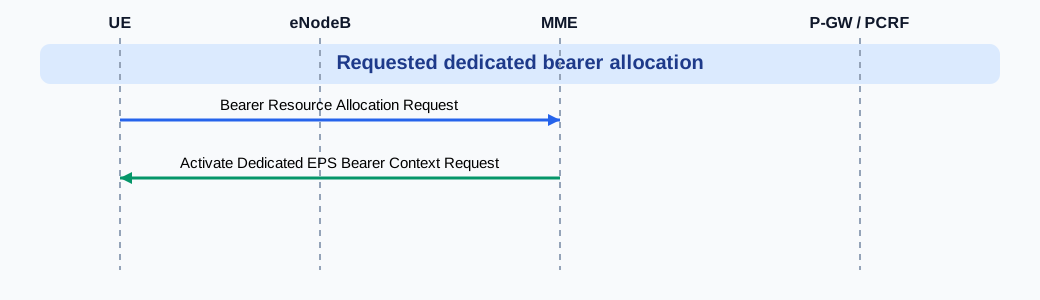
Call flow position: UE-originated bearer request sent when an active PDN needs a new dedicated resource.
Typical state: The UE already has a default bearer and is asking for another bearer tied to the same PDN.
Preconditions:
Next likely message: Activate Dedicated EPS Bearer Context Request or Bearer Resource Allocation Reject
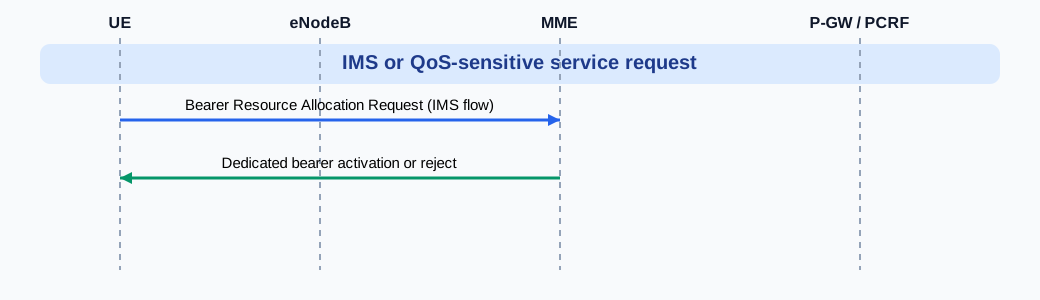
Call flow position: UE-originated bearer request used when a service path such as IMS needs a dedicated bearer.
Typical state: The UE is asking for a more specific bearer treatment than the default bearer can provide.
Preconditions:
Next likely message: Activate Dedicated EPS Bearer Context Request or Bearer Resource Allocation Reject
Previous message(s): Activate Default EPS Bearer Context Accept, PDN Connectivity Request
Next message(s): Activate Dedicated EPS Bearer Context Request
Security context: Protected by the active NAS security context because it changes active PDN bearer state.
Bearer Resource Allocation Request
  Linked EPS bearer identity
  Traffic flow aggregate
  Required traffic flow QoS
  Protocol configuration options       OPTIONAL
  Device properties                    OPTIONAL
  NBIFOM container                     OPTIONAL
  Extended protocol configuration options OPTIONAL
  Extended EPS QoS                     OPTIONAL
Read the linked bearer identity, traffic flow aggregate, and requested QoS first.
Bearer Resource Allocation Request
  Protocol discriminator: EPS session management
  EPS bearer identity: 0
  Procedure transaction identity: 9
  Message type: Bearer Resource Allocation Request
  Linked EPS bearer identity: 5
  Traffic flow aggregate: IMS signaling
  Required traffic flow QoS: QCI 5
| IE | Required | Description |
|---|---|---|
Linked EPS bearer identity | Yes | Identifies the default bearer and PDN connection the new resource should be linked to. |
Traffic flow aggregate | Yes | Describes the traffic flow the UE wants the dedicated bearer to cover. |
Required traffic flow QoS | Yes | Describes the QoS the UE is requesting for that dedicated bearer. |
Linked EPS bearer identityIdentifies the default bearer and PDN connection the new resource should be linked to.
Presence: Required
In practice: In practice, compare this field with the original request and with any later release-dependent optional fields so you can see whether the network accepted the same service model the UE asked for.
Traffic flow aggregateDescribes the traffic flow the UE wants the dedicated bearer to cover.
Presence: Required
In practice: In practice, compare this field with the original request and with any later release-dependent optional fields so you can see whether the network accepted the same service model the UE asked for.
Required traffic flow QoSDescribes the QoS the UE is requesting for that dedicated bearer.
Presence: Required
In practice: QoS rules are the real service profile of the session. Inspect the QFI mapping, packet filters, and precedence because those values explain how user traffic will actually be classified and forwarded.
Likely cause: The UE may have requested a dedicated resource, but the branch did not continue into activation.
What to inspect: Check Bearer Resource Allocation Request and the later activation or reject branch.
Next step: Decide whether the issue is request content, network policy, or later activation handling.
It is the UE message that asks the network to allocate a dedicated bearer resource for an active PDN connection.
Decode this message with the 3GPP Decoder, inspect the related message database, or open the matching call flow to see where this signaling step fits in the full procedure.