Telecom engineering reference for protocols, messages, call flows, troubleshooting, releases, and tools.
Menu
NASLTEMME to UE3GPP TS 24.301
LTE Deactivate EPS Bearer Context Request
Deactivate EPS Bearer Context Request is the EPS session-management message the network sends when it wants the UE to release a default or dedicated bearer context that is no longer needed.
Message Fact Sheet
Protocol
nas
Network
lte
Spec
3GPP TS 24.301
Spec Section
6.4.4.2, 8.3.12
Direction
MME to UE
Message Type
ESM signaling
Full message name
LTE Deactivate EPS Bearer Context Request
Protocol
NAS
Technology
LTE
Direction
MME to UE
Interface
N1 over LTE access / S1-MME control path
Signaling bearer / channel
NAS signaling / Commonly carried in downlink NAS transport after service policy changes, PDN cleanup, bearer reconfiguration, or session release handling.
Typical trigger
Sent when the network wants the UE to release an existing default or dedicated EPS bearer because the session branch is ending, changing, or being cleaned up.
Main purpose
Carries the bearer identity and deactivation reason so the UE can remove the requested bearer context and return the matching completion message.
What is LTE Deactivate EPS Bearer Context Request in simple terms?
Deactivate EPS Bearer Context Request is the EPS session-management message the network sends when it wants the UE to release a default or dedicated bearer context that is no longer needed.
Carries the bearer identity and deactivation reason so the UE can remove the requested bearer context and return the matching completion message.
Why this message matters
Deactivate EPS Bearer Context Request is the network telling the UE to release a bearer that was active earlier.
Where this message appears in the call flow
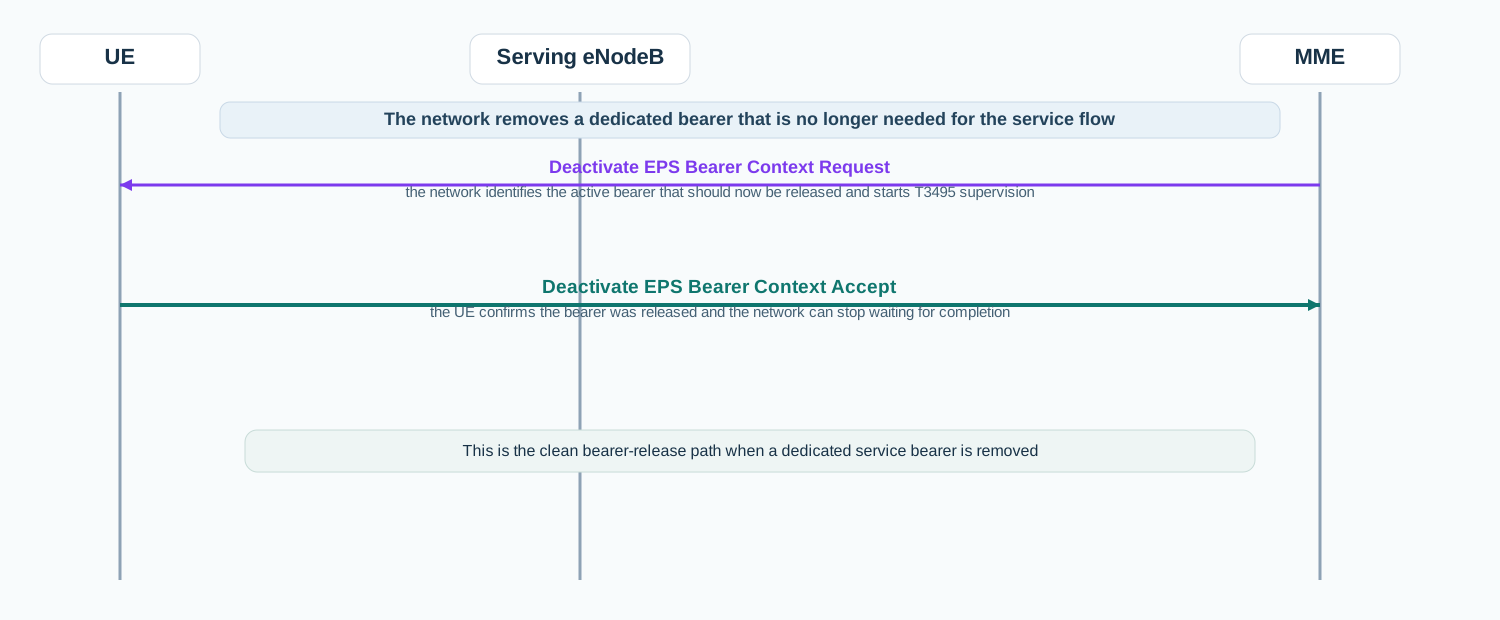
Dedicated bearer release after service change
When a service-specific bearer is no longer needed, Deactivate EPS Bearer Context Request starts the release branch for that dedicated bearer.
Call flow position: Network-initiated bearer release message sent when a previously active dedicated bearer is no longer needed for the service flow.
Typical state: The network is cleaning up a service-specific bearer while keeping the wider PDN connection active.
Preconditions:
The dedicated bearer was active earlier.
The network decided the service-specific bearer should now be released.
Next likely message: Deactivate EPS Bearer Context Accept
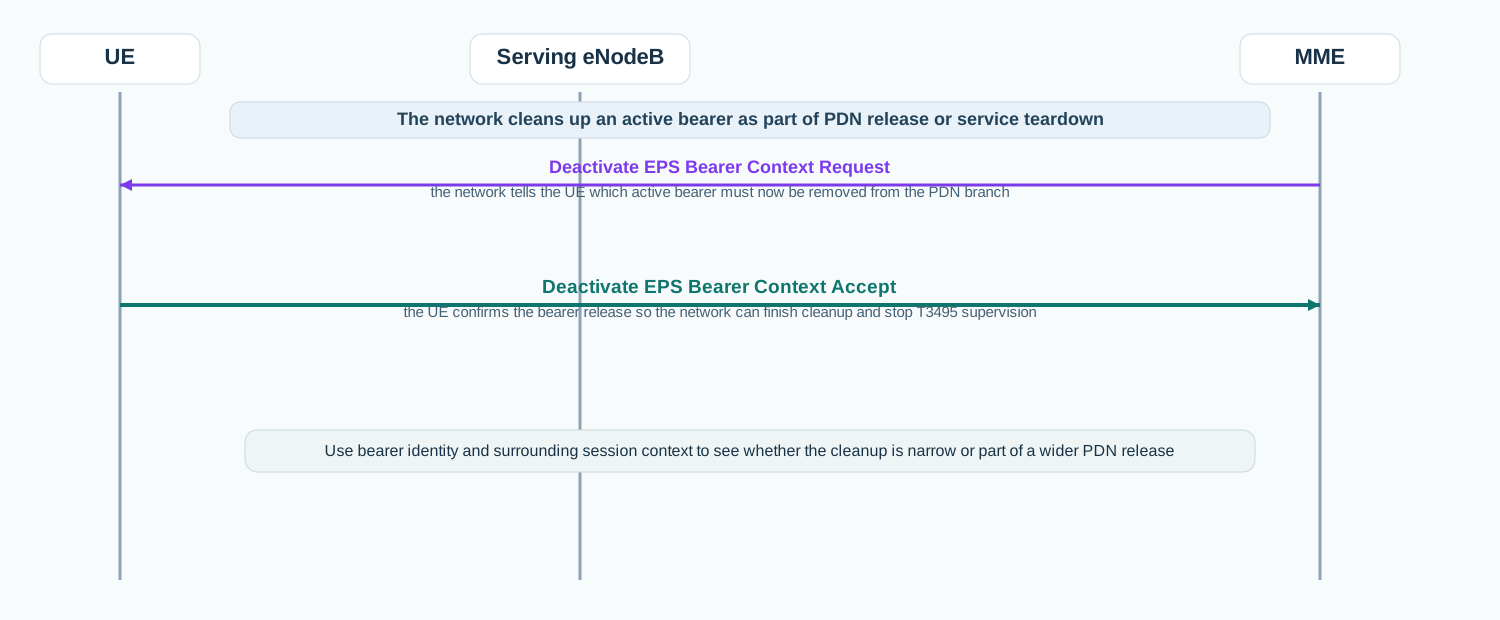
PDN connection cleanup or release
During PDN cleanup, Deactivate EPS Bearer Context Request tells the UE which active bearer should now be removed.
Call flow position: Bearer deactivation message sent when the network is cleaning up one or more bearers as part of PDN release handling.
Typical state: The bearer branch is moving from active service toward release and resource cleanup.
Preconditions:
The relevant bearer context is still active.
The network has decided that the bearer should be removed.
Next likely message: Deactivate EPS Bearer Context Accept
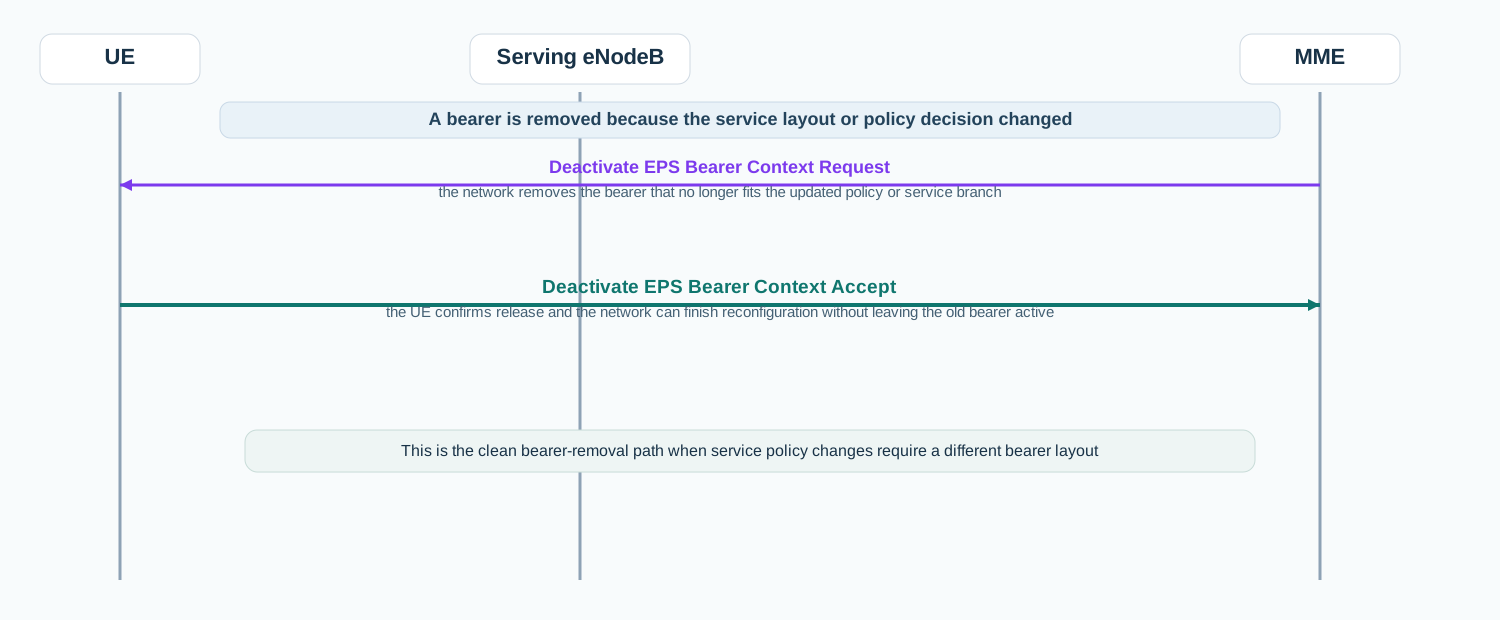
Bearer reconfiguration or policy update
When policy or service handling changes, Deactivate EPS Bearer Context Request removes the bearer that no longer fits the updated branch.
Call flow position: Network-driven bearer release used when policy, QoS handling, or service layout has changed and an existing bearer must be removed.
Typical state: The bearer layout is changing and the network is asking the UE to release the selected EPS bearer context.
Preconditions:
An active bearer exists for the targeted service branch.
The network has determined that the current bearer should be deactivated.
Next likely message: Deactivate EPS Bearer Context Accept
Interface: N1 over LTE access / S1-MME control path
Domain: Core-side EPS session management signaling used to release a previously active EPS bearer context.
Signaling bearer: NAS signaling
Logical channel: Commonly carried in downlink NAS transport after service policy changes, PDN cleanup, bearer reconfiguration, or session release handling.
Transport / encapsulation: EPS NAS ESM message sent by the MME and delivered to the UE through the eNodeB as part of bearer deactivation.
Security context: Deactivate EPS Bearer Context Request appears after EPS registration and bearer setup are already active, so it is normally seen in protected NAS continuation.
Message Structure Overview
Deactivate EPS Bearer Context Request is an EPS session-management message rather than an ASN.1 LTE RRC structure.
The practical reading path starts with which bearer is being released and whether it is a default or dedicated bearer.
In real traces, this message explains why the network is tearing down a bearer that was active earlier.
ASN.1 Message Syntax for LTE Deactivate EPS Bearer Context Request
Deactivate EPS Bearer Context Request is a NAS layer-3 ESM message, not an ASN.1 LTE RRC message. Read it first from the bearer identity, then from the broader service or PDN branch that is being cleaned up.
LTE Deactivate EPS Bearer Context Request - Example Dump
May explain why the bearer is being deactivated and what broader branch is changing.
Protocol configuration options
Optional
May carry additional release-related configuration information.
Detailed field explanation
EPS bearer identity
Identifies the bearer context the network wants the UE to deactivate.
Presence: Required
In practice: In practice, compare this field with the original request and with any later release-dependent optional fields so you can see whether the network accepted the same service model the UE asked for.
ESM cause
May explain why the bearer is being deactivated and what broader branch is changing.
Presence: Optional
In practice: In practice, compare this field with the original request and with any later release-dependent optional fields so you can see whether the network accepted the same service model the UE asked for.
Protocol configuration options
May carry additional release-related configuration information.
Presence: Optional
In practice: In practice, compare this field with the original request and with any later release-dependent optional fields so you can see whether the network accepted the same service model the UE asked for.
What to check in logs and traces
Confirm which bearer identity the request targets.
Check whether it is releasing a dedicated bearer or a wider PDN branch.
Inspect ESM cause when present.
Correlate the request with the later Deactivate EPS Bearer Context Accept.
Check whether repeated request retransmissions point to missing UE completion.
Common Issues and Troubleshooting
A service-specific bearer disappears unexpectedly.
Likely cause: The network may have intentionally deactivated the dedicated bearer because the service branch ended or policy changed.
What to inspect: Check the targeted bearer identity, the earlier dedicated bearer activation branch, and the later accept response.
Next step: Treat it first as a deliberate bearer release before assuming a user-plane failure.
The network keeps sending bearer deactivation requests.
Likely cause: The branch may still be under T3495 supervision because the UE did not complete bearer deactivation cleanly.
What to inspect: Check whether Deactivate EPS Bearer Context Accept appears and whether the same bearer identity is repeated.
Next step: Read the trace as a bearer-release completion problem rather than only a session-management policy issue.
PDN cleanup looks incomplete or delayed.
Likely cause: The network may have requested bearer release, but one or more deactivation completion branches may still be missing.
What to inspect: Compare the deactivation request, bearer identity, and the matching accept timing across working and failing traces.
Next step: Follow the bearer deactivation branch end to end before concluding the PDN release logic is wrong.
LTE / 5G / Variant Comparison
Compared with Activate Dedicated EPS Bearer Context Request
Activate Dedicated EPS Bearer Context Request creates a service-specific bearer. Deactivate EPS Bearer Context Request removes a bearer that was already active.
Compared with Activate Default EPS Bearer Context Request
Activate Default EPS Bearer Context Request builds the first bearer for a PDN connection. Deactivate EPS Bearer Context Request tears down an existing bearer after the session branch changes or ends.
Compared with Service Request
Service Request restores use of existing EPS context. Deactivate EPS Bearer Context Request removes a bearer from an already active or recently active service branch.
FAQ
What is Deactivate EPS Bearer Context Request in LTE?
It is the EPS NAS session-management message the network sends to ask the UE to release an active bearer context.
What should I inspect first in this message?
Start with the EPS bearer identity, then decide whether the request is removing a dedicated bearer or a wider PDN branch.
Why is this message important in troubleshooting?
Because it explains why a bearer disappeared and whether the bearer-release branch completed cleanly.
What usually comes after this message?
The UE normally replies with Deactivate EPS Bearer Context Accept if it releases the requested bearer successfully.
Decode this message with the 3GPP Decoder, inspect the related message database, or open the matching call flow to see where this signaling step fits in the full procedure.