Telecom engineering reference for protocols, messages, call flows, troubleshooting, releases, and tools.
Menu
NASLTEMME to UE3GPP TS 24.301
LTE EMM Information
EMM Information is the EPS mobility-management message the network sends when it wants to deliver operator display names, time zone information, or related informational context to the UE during an established EMM context.
Message Fact Sheet
Protocol
nas
Network
lte
Spec
3GPP TS 24.301
Spec Section
5.4.5, 8.2.12
Direction
MME to UE
Message Type
EMM signaling
Full message name
LTE EMM Information
Protocol
NAS
Technology
LTE
Direction
MME to UE
Interface
N1 over LTE access / S1-MME control path
Signaling bearer / channel
NAS signaling / Commonly carried in downlink NAS transport after attach, TAU, or later registered-state signaling while a valid EMM context already exists.
Typical trigger
Sent when the network wants the UE to update operator display names, local time zone context, or daylight-saving information after EMM context establishment.
Main purpose
Lets the network update UE-facing operator and time information without changing the existing EPS registration or bearer state.
EMM Information is the EPS mobility-management message the network sends when it wants to deliver operator display names, time zone information, or related informational context to the UE during an established EMM context.
Lets the network update UE-facing operator and time information without changing the existing EPS registration or bearer state.
Why this message matters
EMM Information is the network sending the UE operator-name or time-related information after EPS registration is already in place.
Where this message appears in the call flow
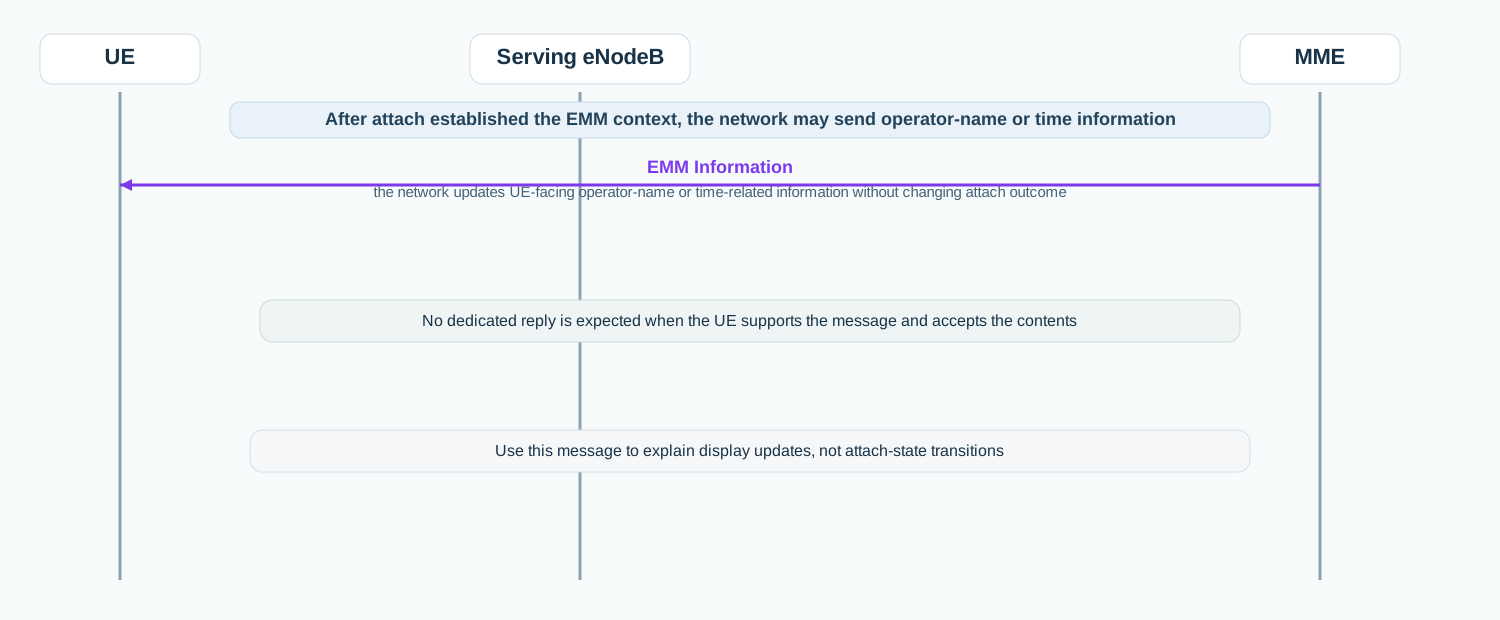
EMM information delivery after attach
After attach completes and the EMM context exists, the network may send EMM Information to update operator-display or time-related information.
Call flow position: Network-initiated informational message sent after attach has already established the EMM context.
Typical state: The UE is already registered and the network is adding display or time information rather than changing the attach outcome.
Preconditions:
A valid EMM context already exists.
The network wants to provide operator or local time information to the UE.
Next likely message: Protected service continuation with updated UE display context
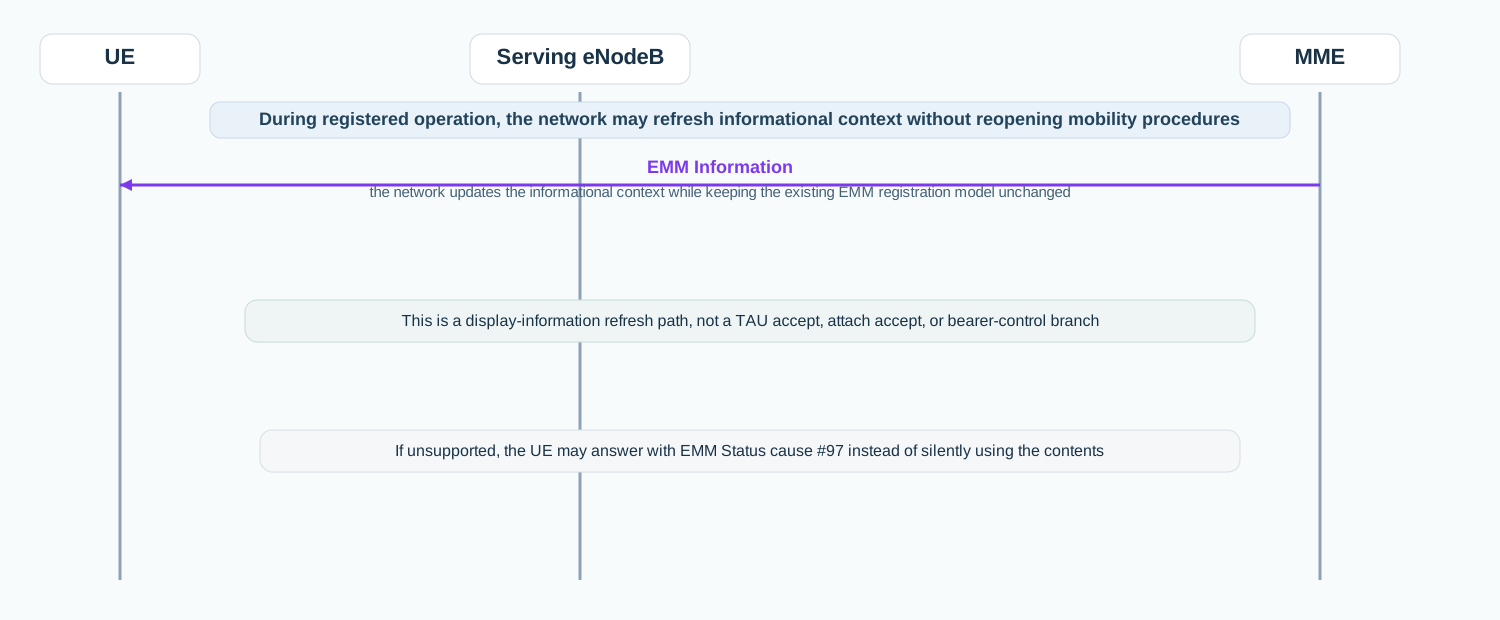
EMM information refresh during registered state
During an already established EMM context, the network may send EMM Information without changing the UE registration outcome.
Call flow position: Informational message sent later during an already established EMM context, including after TAU or other registered-state signaling.
Typical state: The UE stays registered and only the informational context is being refreshed.
Preconditions:
The UE is already in an established EMM context.
The network has updated name or time information to deliver.
Next likely message: Registered-state continuation without bearer or mobility rebuild
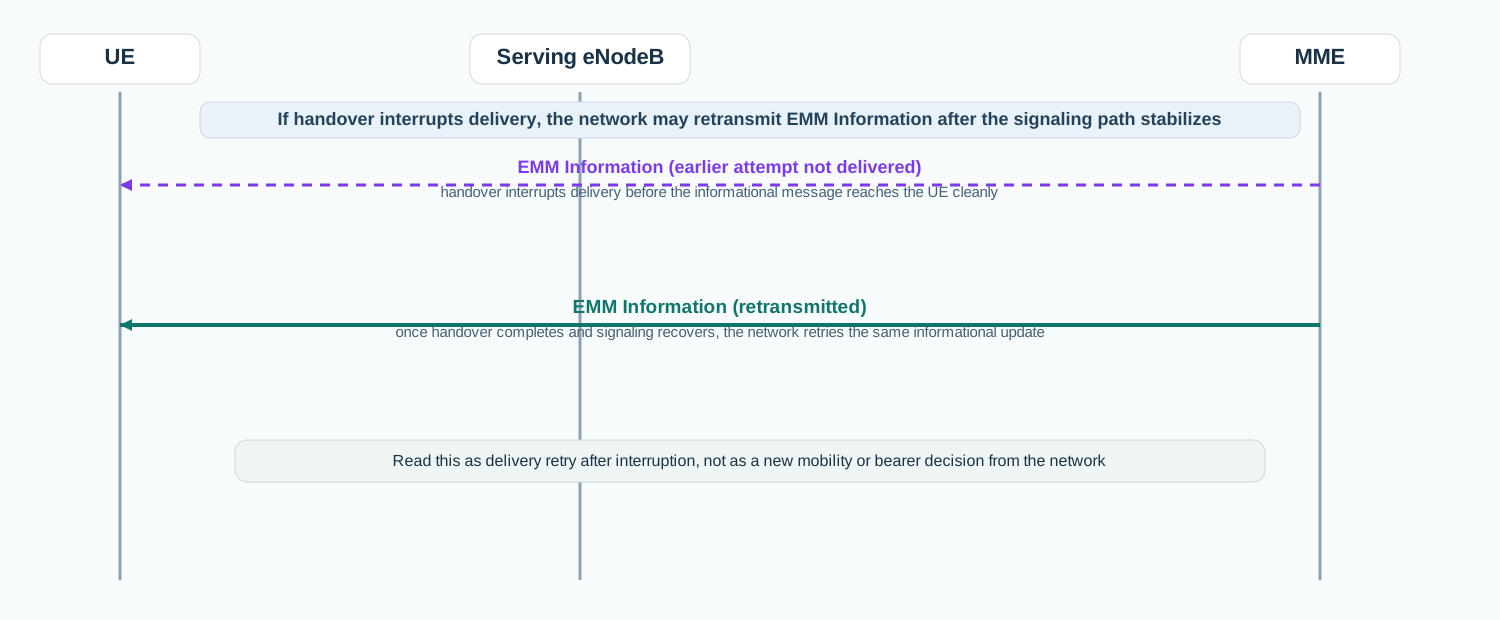
EMM information retransmission after handover delivery failure
If EMM Information could not be delivered because of handover, the network may retransmit it once the signaling path stabilizes.
Call flow position: Network retransmission branch used when the earlier EMM Information message could not be delivered because of handover handling.
Typical state: The network is retrying informational delivery after the access-side interruption cleared.
Preconditions:
The earlier EMM Information delivery failed because of handover.
The network still considers the EMM information relevant for delivery.
Next likely message: Protected continuation with the informational update finally delivered
Interface: N1 over LTE access / S1-MME control path
Domain: Core-side EPS mobility management signaling used to deliver informational updates rather than bearer activation or mobility rejection.
Signaling bearer: NAS signaling
Logical channel: Commonly carried in downlink NAS transport after attach, TAU, or later registered-state signaling while a valid EMM context already exists.
Transport / encapsulation: EPS NAS message sent by the MME and delivered to the UE through the eNodeB as part of the EMM information procedure.
Security context: EMM Information is sent during an established EMM context, so it normally appears in protected NAS continuation rather than in early unauthenticated access.
Message Structure Overview
EMM Information is an EPS mobility-management message rather than an ASN.1 LTE RRC structure.
The practical reading path starts with which optional informational IEs are present: network names, time, time zone, and daylight-saving context.
In real traces, this message matters more for what the UE may display than for mobility-state or bearer-state changes.
ASN.1 Message Syntax for LTE EMM Information
EMM Information
  Full name for network               OPTIONAL
  Short name for network              OPTIONAL
  Local time zone                     OPTIONAL
  Universal time and local time zone  OPTIONAL
  Network daylight saving time        OPTIONAL
How to read this message syntax
EMM Information is a NAS layer-3 message, not an ASN.1 LTE RRC message. Read it from the optional informational fields that are present, because the message may contain only a subset of the operator-name and time-related IEs.
LTE EMM Information - Example Dump
EMM Information
  Protocol discriminator: EPS mobility management
  Security header type: Integrity protected and ciphered
  Message type: EMM Information
  Full name for network: Example Operator LTE
  Short name for network: EXOP
  Local time zone: UTC +01:00
  Network daylight saving time: +1 hour
How to read this dump
Start by checking which informational fields are actually present because the network may send only part of the available IE set.
This message does not grant or reject EPS mobility state, so read it as informational delivery rather than a state-transition checkpoint.
If the UE does not support EMM Information, the expected fallback is EMM Status with cause #97.
Important Information Elements
IE
Required
Description
Full name for network
Optional
Carries the long-form operator name the UE may display.
Short name for network
Optional
Carries the short-form operator name the UE may display.
Local time zone
Optional
Provides the local time-zone offset that the UE may use for display purposes.
Universal time and local time zone
Optional
Provides current time together with local time-zone information.
Network daylight saving time
Optional
Indicates daylight-saving adjustment information for the UE display context.
Detailed field explanation
Full name for network
Carries the long-form operator name the UE may display.
Presence: Optional
In practice: In practice, compare this field with the original request and with any later release-dependent optional fields so you can see whether the network accepted the same service model the UE asked for.
Short name for network
Carries the short-form operator name the UE may display.
Presence: Optional
In practice: In practice, compare this field with the original request and with any later release-dependent optional fields so you can see whether the network accepted the same service model the UE asked for.
Local time zone
Provides the local time-zone offset that the UE may use for display purposes.
Presence: Optional
In practice: In practice, compare this field with the original request and with any later release-dependent optional fields so you can see whether the network accepted the same service model the UE asked for.
Universal time and local time zone
Provides current time together with local time-zone information.
Presence: Optional
In practice: In practice, compare this field with the original request and with any later release-dependent optional fields so you can see whether the network accepted the same service model the UE asked for.
Network daylight saving time
Indicates daylight-saving adjustment information for the UE display context.
Presence: Optional
In practice: In practice, compare this field with the original request and with any later release-dependent optional fields so you can see whether the network accepted the same service model the UE asked for.
What to check in logs and traces
Confirm the message appears only after an EMM context is already established.
Check whether full name, short name, time zone, or time IEs are present.
Decide whether the message is a fresh informational delivery or a retransmission after earlier non-delivery.
If a handover was in progress, compare delivery timing before and after handover completion.
If the UE behavior looks odd, check whether the UE ignored the contents or returned EMM Status.
Common Issues and Troubleshooting
The UE shows the wrong operator display name.
Likely cause: The network may have delivered a different full or short operator name than expected, or the UE may have kept older display information.
What to inspect: Check which network-name IEs were present in EMM Information and compare them with a known-good case.
Next step: Treat it as an informational-delivery issue before assuming a mobility registration problem.
Local time or daylight-saving display looks wrong.
Likely cause: The network may have provided different local time, time-zone, or daylight-saving information than expected.
What to inspect: Check Local time zone, Universal time and local time zone, and Network daylight saving time.
Next step: Read the trace as a UE-display information issue rather than a bearer or registration failure.
The network appears to resend EMM Information after handover.
Likely cause: The earlier message may not have been delivered because of handover and the network retried it once the signaling path stabilized.
What to inspect: Check the timing of handover completion and whether the same informational payload was retransmitted.
Next step: Treat it as a delivery-retry branch, not as repeated mobility reconfiguration.
LTE / 5G / Variant Comparison
Compared with Attach Accept
Attach Accept grants EPS registration and returns accepted mobility context. EMM Information only delivers informational fields after the EMM context already exists.
Compared with Tracking Area Update Accept
Tracking Area Update Accept refreshes mobility context. EMM Information updates operator-name or time information without changing the underlying registration outcome.
Compared with Service Accept
Service Accept restores service availability using existing context. EMM Information adds informational content without reopening bearer or mobility procedures.
FAQ
What is EMM Information in LTE?
It is the EPS NAS message the network sends to deliver operator-name or time-related information while an EMM context already exists.
Does EMM Information change attach or TAU outcome?
No. It is an informational message and does not grant or reject EPS mobility state by itself.
What should I inspect first in EMM Information?
Start with which optional fields are present, especially network names, time zone, and daylight-saving information.
What happens if the UE does not support this message?
The UE ignores the contents and returns EMM Status with cause #97, message type non-existent or not implemented.
Decode this message with the 3GPP Decoder, inspect the related message database, or open the matching call flow to see where this signaling step fits in the full procedure.